
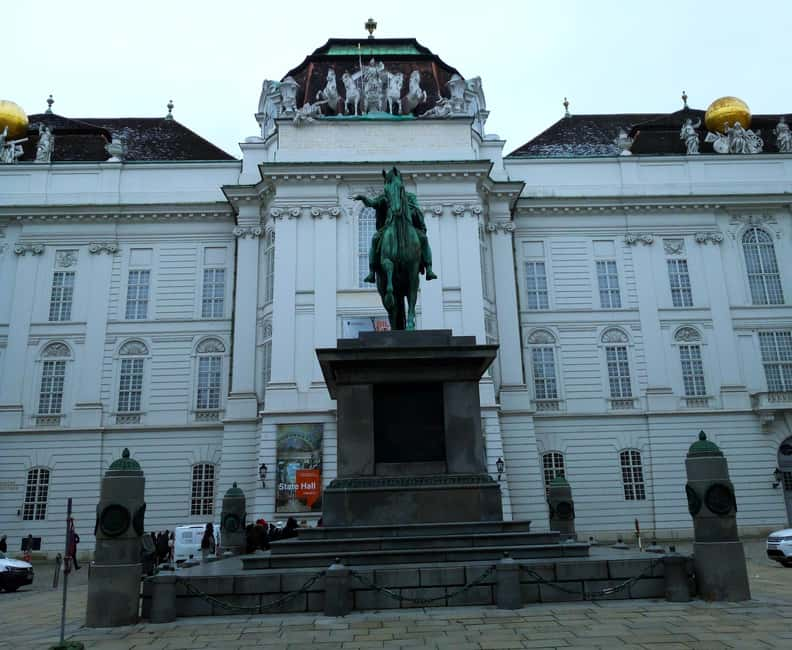
Reviewed · VIENNA WALKING TOURS
The unknown Vienna City- a guided walking tour in 3 hours
Vienna’s first district has more to tell than its grand facades suggest. This three-hour walk connects the Greek Quarter and Stubentor with the Hofburg, following narrow streets and courtyards into stories of medieval Vienna, Mozart, monsters and the city’s shift toward Catholic rule.
I like two things in particular: the mix of famous landmarks and lesser-known corners, and the way local legends give old streets a human scale. A guide can point out details you might pass on your own, from the basilisk story to architectural clues left by the re-Catholicization of Vienna.
One consideration: three hours on foot calls for comfortable shoes and a snack beforehand. The tour is not suitable for wheelchair users, and the stated finish information is inconsistent: the route names In der Burg 1, while the meeting details say you return to Stubentor. Confirm the endpoint before you go.
Key points to know before you book
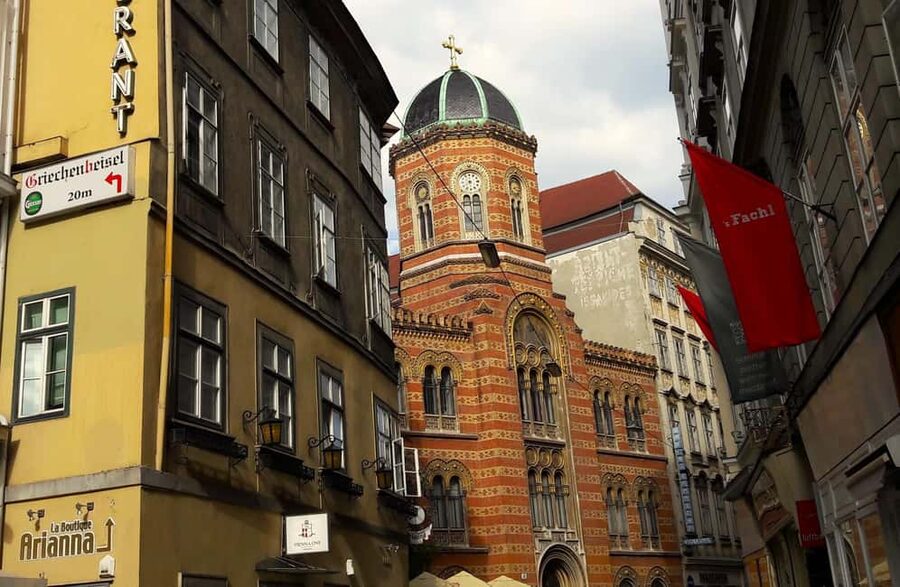
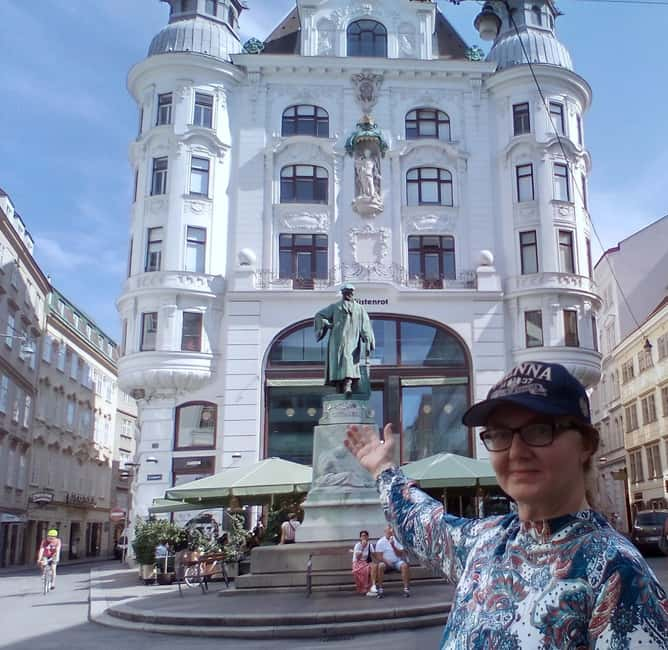
- Start near Stubentor: Meet by the Dr. Karl Lueger monument, close to the Stubentor subway station.
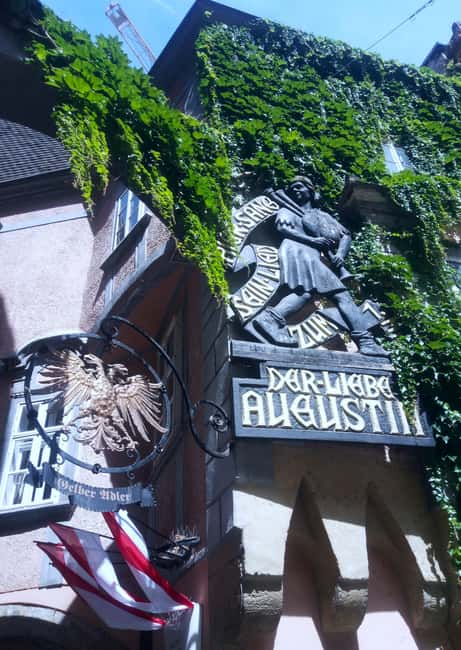
- Folklore is part of the route: Expect tales linked to Lugeck, Augustin and the basilisk.
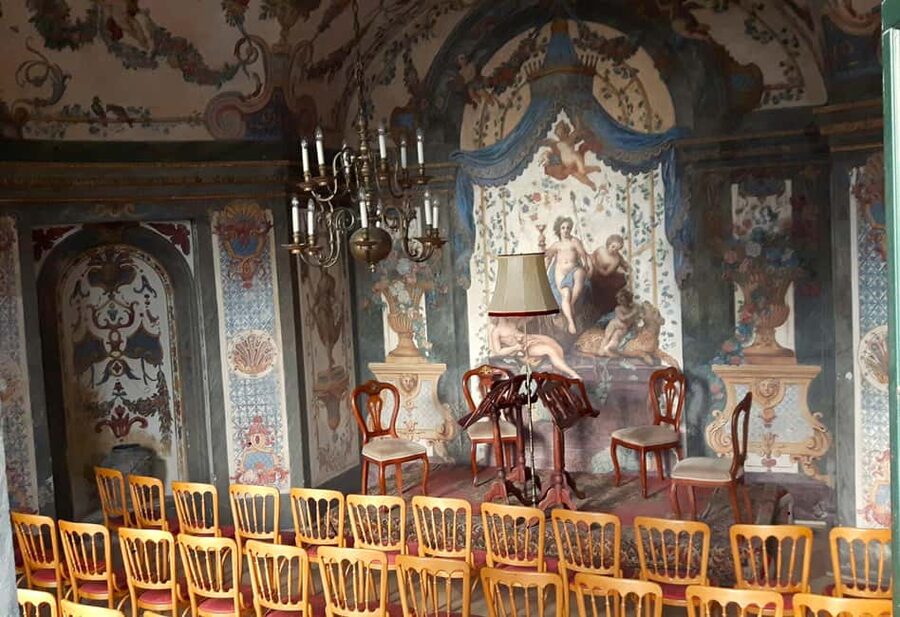
- Music and architecture meet: The Deutscher Orden Haus is associated with Mozart’s concert hall.
- Small group, three languages: Groups are limited to 10, with English, Italian and German available.
- The guide adds local context: Nicoleta is one guide associated with the experience, and has been praised for patient answers and detailed explanations.
- Check the finish point: The route description ends at In der Burg 1, but the meeting information says the tour returns to the start.
From Stubentor into Vienna’s older streets
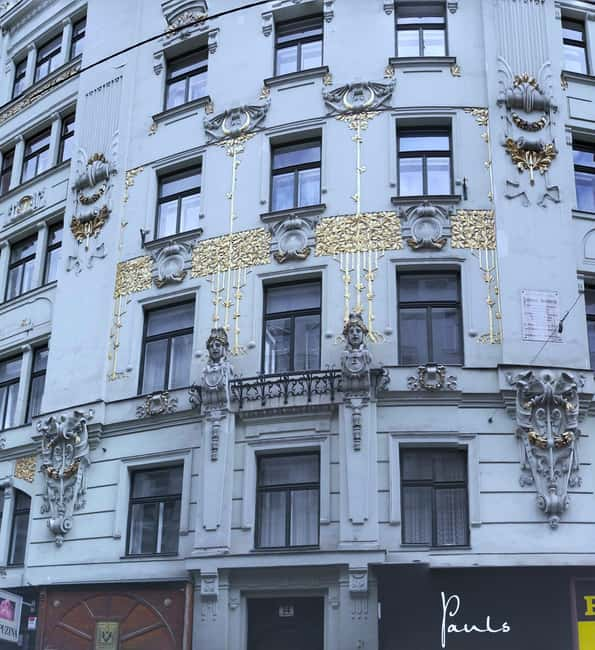
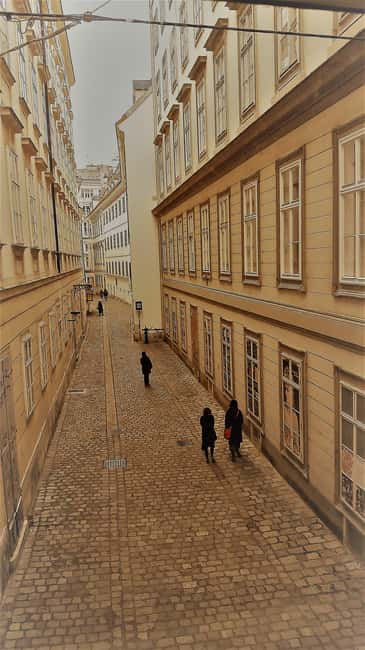
The walk begins by the Dr. Karl Lueger monument near Stubentor, on the edge of the historic center. From here, the guide leads you into the first district, where medieval street patterns and buildings sit close to later architecture. It is a useful starting point: you get a sense of how compact old Vienna is before the details begin to compete for your attention.
The route is described as running from the Greek Quarter toward the Hofburg. That gives the walk a clear arc through the center, but the point is not simply to march between famous sights. You’ll also follow winding, lesser-known streets, where the city’s past is easier to imagine than it is along a busy main road.
A guide matters here because much of the interest is in the story attached to a place, not just the building in front of you. You may come across courtyards, small churches and corners you would likely overlook while navigating on your own. One account of the walk included Mark Twain’s former residence and sites connected with local legends and important historical moments. Treat these as examples of the sort of discoveries the route can include, rather than a promise that every departure follows precisely the same sequence.
More walking tours in Vienna:
- Vienna: Guided Walking Tour of City Center Highlights
★ 4.7 · 4,989 reviews - Vienna: Vienna Central Cemetery Guided Walking Tour
★ 4.8 · 3,307 reviews - Vienna: Guided Walking Tour of City Highlights & Hidden Gems
★ 4.9 · 2,180 reviews
Lugeck, Augustin and Vienna’s monsters
Folklore is one of the tour’s most distinctive threads. The route includes the legend of Lugeck, the story of Augustin and tales of basilisks. These are not just spooky extras: they offer a way into the worries, beliefs and sense of humor of earlier Viennese life.
The basilisk is the most striking character in the lineup. The tour explores stories of monsters, where those stories came from and what they meant to people, including how Vienna’s residents were said to rid themselves of them. You don’t need to arrive knowing the legends. The guide supplies the setting and explains how a local tale fits into the wider story of the city.
I like this approach because it breaks up a long run of dates and dynasties. A story about a monster can make a street or building easier to remember than a list of rulers. If you prefer a tour focused only on formal political history, the folklore may feel like a detour. If you enjoy seeing how everyday beliefs shaped a city’s memory, it should be one of the walk’s pleasures.
Mozart at the Deutscher Orden Haus
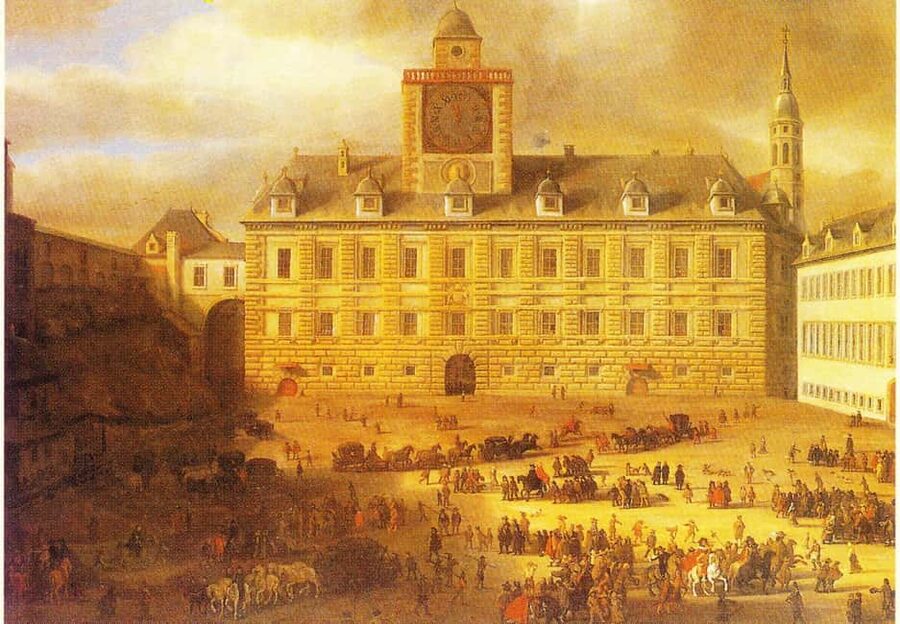
Music history enters the route at the Deutscher Orden Haus, identified as the site of Mozart’s concert hall. The tour follows the footsteps of musicians and the people who supported music and architecture, giving you a glimpse of how cultural life fitted into Vienna’s built environment.
That context helps you see the center as more than a set of imperial facades. Music depended on patrons, venues and the social circles that made performances possible. The stop also gives the walk a change of pace: after street legends and medieval traces, you turn to the people and institutions that helped shape Vienna’s artistic life.
The available details do not specify how long the group stays at each place or whether there is entry to any building. Plan on a guided walk with explanations, rather than a concert or an indoor visit. If you want to explore a particular music site in depth, ask the guide what the route covers on your departure.
Medieval Hofburg beside modern Vienna
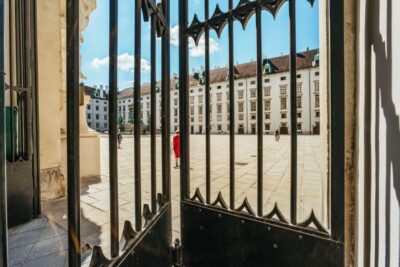
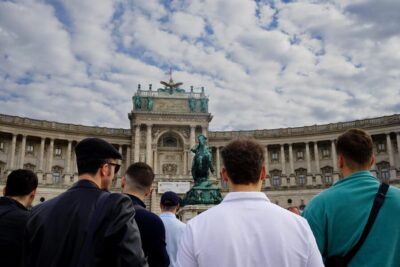
The Hofburg provides the walk’s grand historical endpoint, but the tour’s angle is deliberately more specific than a broad survey of the palace complex. It focuses on the lesser-known medieval Hofburg and on architecture that can be easy to miss when you’re concentrating on the best-known imperial image of Vienna.
One of the walk’s strengths is the range of periods it connects. You’ll encounter architectural traces from the Middle Ages through the Renaissance and Baroque, alongside art nouveau and strikingly modern buildings. These styles can sit surprisingly close together. With a guide to point out what you’re looking at, the city becomes a sequence of changes rather than a single, frozen imperial scene.
The tour also considers the re-Catholicization of Vienna through its architectural traces. That’s a useful theme for anyone who wants to understand how political and religious shifts left marks on the city’s buildings. The walk covers a broad span of history, from the 13th to the 21st century, and places Vienna’s story against periods including the Ottoman Wars and the end of Habsburg rule.
Three hours cannot explain every era in equal depth. Think of this as a guided framework for understanding the center, with a few stories and architectural details to follow up on later. The format works best if you’re curious and willing to ask questions; the guide can respond to what catches your attention.
More three-hour outings in Vienna:
- Classic Vienna: 3-Hour Guided Bike Tour
★ 4.7 · 1,846 reviews - Vienna by Bike 3-Hour All-In-One City Bike Tour in English
★ 4.7 · 438 reviews - Highlights of Vienna in a Historical & Cultural 3h Walking Tour
★ 5.0 · 74 reviews - 3-Hour Walking Tour of Vienna Central Cemetery
★ 4.7 · 71 reviews
What the small group changes
The maximum group size is 10, which is a practical advantage on a walking route through narrow streets and courtyards. A smaller group can make it easier to hear the guide and ask questions without turning each stop into a crowd scene. It also suits a tour built around details that might otherwise be lost in a large group.
Nicoleta is one guide associated with the experience. She has been described as gracious, attentive and ready to explain details, and as someone who answered questions and adapted the walk to the group’s interests. That style is especially valuable here: the route contains several different themes, and your questions can help steer the conversation toward history, architecture or local folklore.
The available tour languages are English, Italian and German. In rare cases, the walk may be conducted in two languages, for example if you book at short notice or during a crowded holiday period. If sharing a tour across languages would matter to you, contact the provider before booking. The supplied information says the other participants’ booked languages are not shown in advance.
Is $63 a fair price?
At $63 per person, this is not the cheapest way to see Vienna’s center. You can walk the first district independently, and many of its streets and exterior sights are free. The value here is the guide’s interpretation: legends, architectural context, music history and the less obvious corners that are easy to miss without local direction.
The small group also helps make the price more reasonable. One couple felt it was good value for two, while another wished for more historical anecdotes. That difference points to the main question to ask yourself: do you want a guided introduction that combines varied themes, or a tightly focused lecture on one period? The tour appears to offer the former.
If you’re traveling alone, or you have only a few days in Vienna, a three-hour walk can be a practical way to build a mental map of the old center. You may leave with places to revisit and restaurant suggestions for local food. If you already know the first district well, or prefer to spend several hours inside museums and palaces, the value may be less clear.
Before you set out
Eat something before the tour and wear comfortable shoes. Three hours on foot is a meaningful stretch, and the route is designed to move through streets and historic spaces rather than settle in one place. Wheelchair users should note that the activity is listed as unsuitable for them.
Check the starting time when you choose a date, since start times vary by availability. The meeting point is near the Dr. Karl Lueger monument by Stubentor. There is a small but important endpoint discrepancy: the route description names In der Burg 1, while the meeting details say the activity ends back at the starting point. Ask the provider which applies to your departure, especially if you have a timed reservation afterward.
The tour offers free cancellation up to 24 hours in advance, and you can reserve now and pay later. Those terms make it easier to hold a place while your schedule is still taking shape. Recording the guide’s explanations is prohibited, so plan to take notes afterward if you want to keep track of names and stories.
Who should book this Vienna walk?
I’d choose this tour if you like cities best when someone helps you read them. It suits first-time visitors who want more than a parade of famous facades, history-minded walkers who enjoy legends alongside dates, and repeat visitors looking for corners they may have missed. The small group and the chance to ask questions are good reasons to pick it over a large, fixed-script walk.
You may want a different activity if you need step-free access, dislike walking for several hours, or want guaranteed entry to specific buildings. The route’s broad sweep is a strength, but it also means you should not expect an exhaustive study of Mozart, the Hofburg or any single period.
Book it if you want a guided, story-led introduction to Vienna’s first district, especially if medieval streets, architecture and local folklore appeal to you. Before paying, confirm the endpoint and whether your departure will run in one language or two. Those small checks will help you decide whether this walk fits your day.
FAQ
How long is the tour?
The walking tour lasts three hours.
Where does the tour start?
Meet near the Dr. Karl Lueger monument by the Stubentor subway station.
Where does the tour end?
The route description gives In der Burg 1 as the finish, while the meeting details say the activity ends back at the meeting point. Confirm the endpoint with the provider before booking.
What languages are available?
The tour is offered in English, Italian and German.
Can the tour be conducted in more than one language?
In rare cases, it may be conducted in two languages. Contact the provider if you want to ask which languages are already booked for your departure.
How large is the group?
The group is limited to 10 participants.
What are some of the stories covered?
The tour includes the legends of Lugeck, Augustin and the basilisk, as well as stories about Vienna’s winding streets.
Does the tour include Mozart-related history?
Yes. The route includes Mozart’s concert hall at the Deutscher Orden Haus and follows the history of musicians and patrons of music and architecture.
Is the tour suitable for wheelchair users?
No. The activity is listed as unsuitable for wheelchair users.
What is the cancellation policy?
You can cancel up to 24 hours in advance for a full refund.
Newest tours in Vienna
- Vienna: ‘Armenia In The Heart Of Austria’ Tour★ 5.0 · 6 reviews
- Vienna: Mozart Private Guided Tour★ 5.0 · 4 reviews
- Vienna: Klimt Villa (Gustav Klimt Atelier & Museum) Ticket★ 4.7 · 50 reviews
- Vienna: Kunsthistorisches Museum Guided Tour incl. admission★ 4.9 · 32 reviews
- Vienna: Luxury Vintage Fashion Walking Tour★ 3.4 · 8 reviews
- Vienna: Johann Strauss – Immersive Audiovisual Experience Ticket★ 4.8 · 60 reviews
- Vienna: Kingdom of Railways Museum Entry Ticket★ 3.6 · 50 reviews
- Vienna: KuK Perfumery Filz – Viennese Perfume Tasting★ 4.3 · 23 reviews
Vienna Walking Tours, compared.
Guided Walking Tour of City Center Highlights
Read our review →
Guided Walking Tour of City Highlights & Hidden Gems
Read our review →

Vienna Historic Center Small Group Walking Tour
Read our review →
Browse the lists this tour appears in