
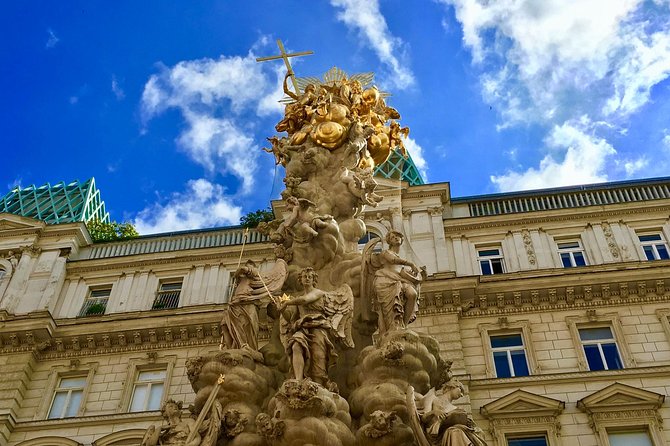
Reviewed · VIENNA WALKING TOURS
Vienna Historic Center Small Group Walking Tour
Vienna’s center makes a fine outdoor classroom: in a few hours, you can trace the old imperial heart from the museums at Maria-Theresien-Platz to the Hofburg and finish at St. Stephen’s Cathedral. I like the compact route through major sights and the small group of no more than 15, which gives you room to ask questions.
The main caveat is simple: this is chiefly a walking and storytelling tour, not a string of attraction visits. You’ll see many landmark buildings from outside, and museum entry is not included.
At a glance
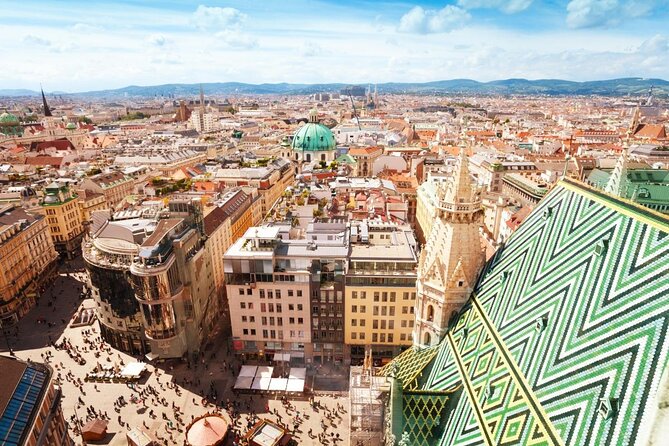
- The route links Vienna’s grand squares: Start at Maria-Theresien-Platz and end at Stephansplatz, with the Hofburg, Ringstrasse, Volksgarten, and Graben along the way.
- The group stays small: A maximum of 15 people means you can hear the guide and have a better chance to ask questions.
- The guide supplies the context: Expect stories about Habsburg rulers, Vienna’s politics and culture, and figures connected with the city.
- Audio devices are included: They help you hear the guide even as the group moves through busy streets and open squares.
- Plan for steady walking: The tour lasts about 2.5 hours, and one participant described covering 14,000 steps. Wear comfortable shoes.
- It works best as an orientation: You finish by St. Stephen’s Cathedral, well placed to keep exploring on your own.
A useful first walk through Vienna
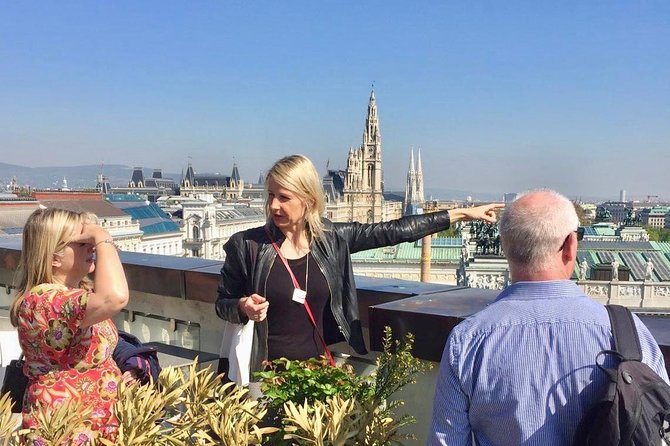
This tour is a strong choice if Vienna is new to you or your time is short. The route gathers much of the historic center’s architectural and political story into one walk, instead of sending you between far-flung sights. You’ll move from imperial monuments to government buildings, gardens, churches, and elegant shopping streets, with a guide to explain what you’re seeing.
I especially like that the walk gives you a sense of how Vienna’s center fits together. The Ringstrasse forms a broad loop around the old core, and the route crosses from its monumental edges into narrower central streets. That shift helps you understand the city as more than a parade of pretty façades.
The tour is offered in English, with several start times. It costs $72.56 per person, lasts about two and a half hours, and is booked an average of 39 days in advance. Those details make early planning sensible, particularly if your schedule is tight.
More walking tours in Vienna:
- Vienna: Guided Walking Tour of City Center Highlights
★ 4.7 · 4,989 reviews - Vienna: Vienna Central Cemetery Guided Walking Tour
★ 4.8 · 3,307 reviews - Vienna: Guided Walking Tour of City Highlights & Hidden Gems
★ 4.9 · 2,180 reviews
Maria-Theresien-Platz sets the scene
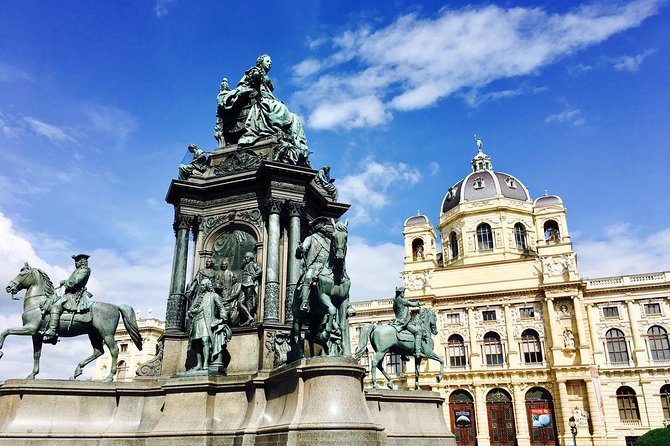
Meet your group at Maria-Theresien-Platz, between the Ringstrasse and the MuseumsQuartier. Two imposing museum buildings face each other across the square: the Natural History Museum and the Kunsthistorisches Museum, home to the royal art collection. The central monument honors Empress Maria Theresa, a major figure in Habsburg history.
The tour begins outside the museums, not inside them. That distinction matters: you’ll get a look at the buildings and hear about their place in the city, but museum admission is not part of the tour. If art or natural history is a priority, plan a separate visit.
The monument itself gives the guide a natural opening to talk about the people around Maria Theresa. The sculpture includes other figures, among them composer Wolfgang Amadeus Mozart. Even a short stop can make the square’s formal layout feel less like decoration and more like a public statement about Vienna’s past.
The Ringstrasse and its grand buildings
From the square, the walk takes in the Ringstrasse, the wide boulevard built where Vienna’s medieval fortifications once stood. The old walls were replaced in the second half of the 19th century, and the route’s grand buildings reflect that era’s ambition. The Ringstrasse is part of Vienna’s UNESCO-listed World Heritage Site.
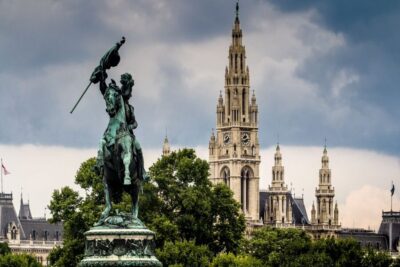
Expect to see the neo-Gothic City Hall and the Austrian Parliament Building, along with other major institutions along or near the boulevard. The architecture draws on several styles, including Classical, Gothic, Renaissance, and Baroque. A guide can help you notice how these different forms were used to give civic buildings a sense of authority and grandeur.
The itinerary also includes the Burgtheater and the University of Vienna. At the university, the guide connects Vienna’s academic life with figures such as Sigmund Freud and physicist Lise Meitner. It’s a welcome reminder that the city’s story reaches beyond emperors and palace rooms.
There is a tradeoff here. The buildings are impressive, but this portion is primarily about looking and listening outdoors. If you want to sit through a performance or go inside the university, theater, or government buildings, those are separate plans.
Through the Hofburg’s imperial center
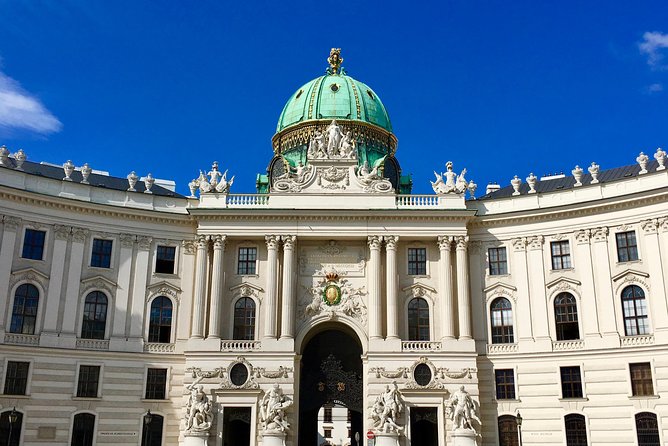
The Hofburg is the route’s historical centerpiece. Once the Habsburgs’ imperial palace, it grew over centuries into a large complex of courtyards and façades. Your guide explains how the palace developed and how it served both the rulers and the modern Austrian state.
The New Castle section houses institutions including the Austrian History Museum, World Museum, Imperial Armoury, and National Library. The complex also contains the Hofburg Congress Centre. You’ll see the palace buildings from outside, but the tour does not promise entry to these museums or palace rooms.
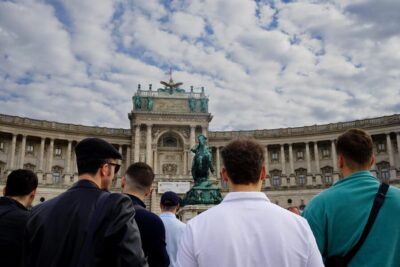
The Hofburg’s courtyards and nearby Heroes’ Square offer plenty to take in even without an indoor visit. Heroes’ Square is a broad open space created after a bastion beside the palace was demolished during the Napoleonic Wars. The square also carries a sobering modern history: from the balcony of the New Castle, Adolf Hitler proclaimed Austria’s annexation into the Third Reich.
Nearby points of interest include the Austrian National Library and the Spanish Riding School’s Baroque Winter Riding School, where Lipizzan stallions train and perform. The tour passes the riding school area, but a performance or stable visit is not included. Treat these as landmarks to note for a possible return, not as activities built into the walk.
You may also hear about the Habsburg empress whose life and personality have kept her a subject of fascination. The itinerary identifies this as a stop but does not name her, so ask your guide if you want the details.
More history tours in Vienna:
- Vienna: Time Travel and Magic Vienna History Tour
★ 4.6 · 3,879 reviews - Vienna: World War II Historical Walking Tour
★ 4.8 · 1,772 reviews - Time Travel-Magic Vienna History Tour Ticket
★ 4.5 · 1,099 reviews - Skip-the-Line Schonbrunn Palace Guided Tour and Vienna Historical City Tour
★ 3.5 · 940 reviews
Churches, gardens, and city life
St. Michael’s Church offers a change of pace from the palace façades. It dates to 1220 and is described as having a distinct atmosphere. The tour may visit some churches, but indoor access can depend on the day and conditions, so don’t count on a guaranteed interior visit.
The walk also passes the Office of the Federal Chancellor and reaches the Rathaus, Vienna’s neo-Gothic City Hall and the seat of the city government. Its exterior is a memorable example of the Ringstrasse’s grand civic style. Rathaus Square is also used for events, though the tour itself is not an event visit.
Volksgarten brings a little open space into the route. In its center is the Theseus Temple, a small replica of Athens’ Hephaisteion that was designed to house a sculpture by Antonio Canova. The garden also has a musical connection: composer Johann Strauss used to play waltzes at the former Cortisches coffee house there.
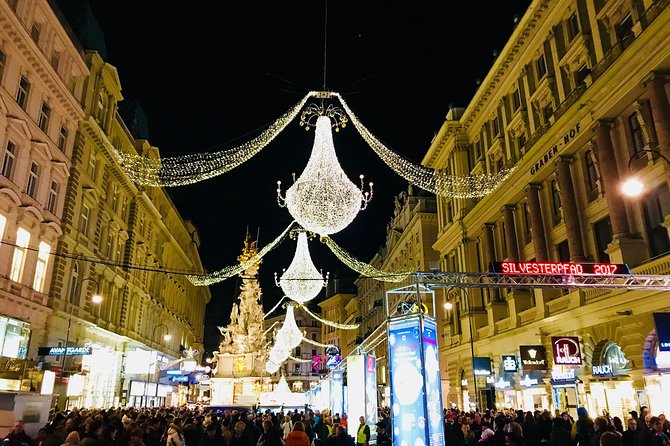
Other stops touch on Vienna’s literary, musical, and commercial life. You pass the former residence of Ludwig van Beethoven at Pasqualatihaus, the old square of Freyung, and the elegant pedestrian streets of Graben and Kohlmarkt. The route also points out Palais Ferstel, once home to the Austro-Hungarian National Bank and the Stock Exchange.
A coffee break is not listed as a standard part of the tour. One account of the walk describes a stop at Café Demel, but you should treat that as a possible variation, not a promise. The tour does include recommendations for cafés and restaurants, which can be more useful than rushing through a meal during the walk.
Finishing at St. Stephen’s Cathedral
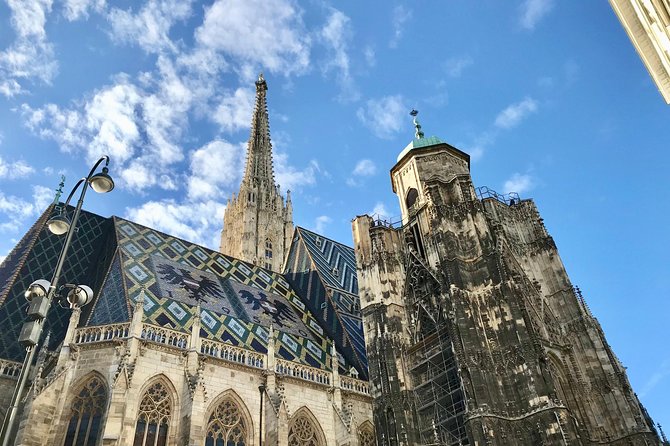
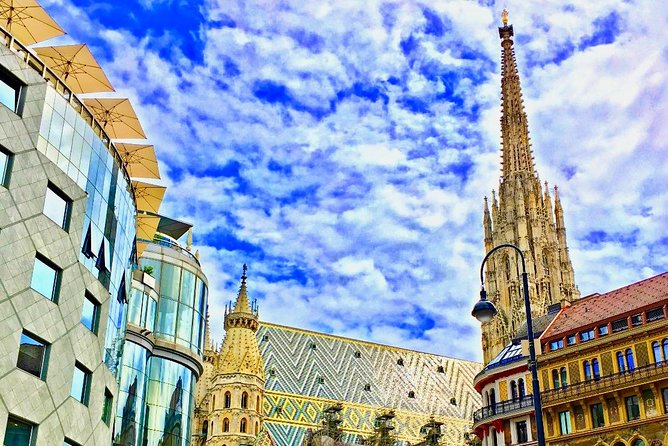
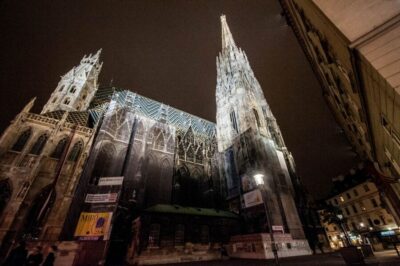
The tour ends at Stephansplatz, the central square where St. Stephen’s Cathedral rises above the surrounding streets. The cathedral is both a major landmark and a natural place to orient yourself before exploring further. You can stay in the area after the guide leaves, though any visit inside the cathedral is separate from the tour.
Ending here is practical. You’re at the heart of the old center, with Graben and Kohlmarkt nearby, and the guide’s restaurant and café suggestions can help shape the rest of your day. If this is your first morning or afternoon in Vienna, use the end of the tour to decide which places deserve a longer visit.
What the small group and guide add
A cap of 15 people is a meaningful advantage on a city walk. The group is small enough for questions and personal attention, while audio devices help keep the commentary audible without everyone crowding around the guide. Several guides named in accounts of the tour include Dace, Giselle or Gisele, Gabriela, Beatrice, and Annelie.
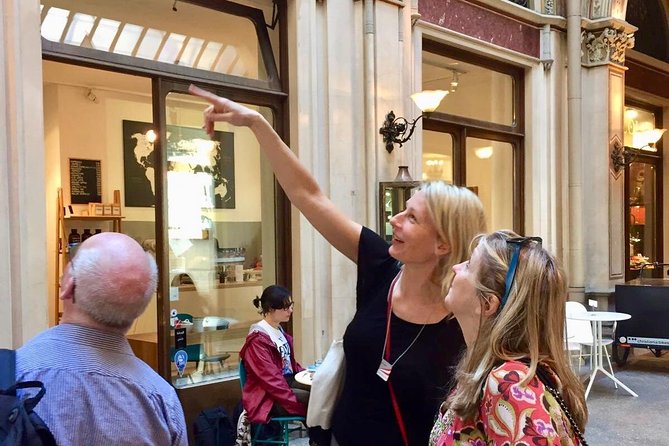
The best guides make a long sequence of buildings easier to remember by adding humor, personal perspective, and visual aids. Some have used images on a tablet to make historical figures or places clearer. The tour also comes with local tips on food, cafés, culture, and traditions, so you can leave with more than a list of monuments.
The commentary is the main event. If you enjoy a guided explanation of politics, architecture, and history, this format should suit you. If you prefer hands-on activities, long indoor visits, or plenty of unscheduled café time, you may find the pace and teaching style less appealing.
Price, pace, and practical details
At $72.56, this is not a bargain if you judge it by entry tickets: there are no museum admissions included. Its value comes from the certified local guide, carefully planned route, audio devices, small group, and useful orientation across the historic center. You’re paying for a well-structured introduction and interpretation, not access to Vienna’s interiors.
The walk requires a moderate level of fitness and is not recommended for people with walking disorders. Wear comfortable shoes and dress for the weather. One account described 14,000 steps over the 2.5-hour walk, which is a useful warning that the short duration does not mean a short stroll.
The tour requires suitable weather and a minimum number of participants. If poor weather cancels it, you’ll be offered another date or a full refund; if the minimum group size is not met, you’ll be offered a different date or experience, or a refund. You can cancel for a full refund up to 24 hours before the start time.
Should you book this Vienna walk?
Book it if you want a compact, guided introduction to Vienna’s historic center, especially at the start of your stay. The small group, audio devices, broad route, and practical local advice make it a useful way to get your bearings before choosing which museums or palace interiors to visit on your own.
Skip it if your main goal is to go inside attractions or spend time in a single site. This is mostly an outdoor walk, and the price makes the most sense when you value the guide’s stories and orientation as much as the landmarks themselves. If that sounds right, choose a start time that leaves you room afterward to explore St. Stephen’s Cathedral and the surrounding streets.
FAQ
How long is the Vienna Historic Center Small Group Walking Tour?
The tour lasts approximately 2 hours and 30 minutes.
Where does the tour begin and end?
It begins at Maria-Theresien-Platz and ends at Stephansplatz, beside St. Stephen’s Cathedral.
What is the tour price?
The listed price is $72.56 per person.
How large is the group?
The tour is capped at 15 participants.
What language is the tour offered in?
The tour is offered in English.
Are museum admissions included?
No. The tour does not include entry to museums.
Does the tour go inside any buildings?
It is mainly an outdoor walk. Some churches and, depending on the weekday, other indoor locations may be visited, but interior access is not guaranteed.
Are audio devices provided?
Yes. Audio devices are used so you can hear the guide during the walk.
How much walking should I expect?
The tour involves steady walking for about 2.5 hours. A moderate level of fitness is recommended, and the tour is not recommended for people with walking disorders.
Can I cancel for a refund?
Yes. You can cancel at least 24 hours before the start time for a full refund.
Newest tours in Vienna
- Vienna: ‘Armenia In The Heart Of Austria’ Tour★ 5.0 · 6 reviews
- Vienna: Mozart Private Guided Tour★ 5.0 · 4 reviews
- Vienna: Klimt Villa (Gustav Klimt Atelier & Museum) Ticket★ 4.7 · 50 reviews
- Vienna: Kunsthistorisches Museum Guided Tour incl. admission★ 4.9 · 32 reviews
- Vienna: Luxury Vintage Fashion Walking Tour★ 3.4 · 8 reviews
- Vienna: Johann Strauss – Immersive Audiovisual Experience Ticket★ 4.8 · 60 reviews
- Vienna: Kingdom of Railways Museum Entry Ticket★ 3.6 · 50 reviews
- Vienna: KuK Perfumery Filz – Viennese Perfume Tasting★ 4.3 · 23 reviews
Vienna Walking Tours, compared.
Guided Walking Tour of City Center Highlights
Read our review →
Guided Walking Tour of City Highlights & Hidden Gems
Read our review →
Ghosts and Legends Guided Nighttime Walking Tour
Read our review →Browse the lists this tour appears in