Reviewed · VIENNA TOURS
Alternative Tour in Vienna Off the tourist track
Vienna’s imperial streets are only part of the city’s story. On this two-hour walk, Martin, who once lived on the streets himself, takes you to places tied to homelessness, addiction, and squatting, and explains what those places meant in his life.
I like two things in particular: Martin’s first-hand perspective makes a difficult subject personal rather than abstract, and the tour also brings in Vienna’s anarchist and punk history, including the notorious eviction of Pizzeria Anarchia. One consideration: this is a serious, sometimes emotional subject, not a conventional sightseeing walk, and you should come ready to listen with an open mind.
Key points
- Martin’s story is central: Hear about street life from a guide who experienced it himself.
- Alfred-Grünwald-Park has personal meaning: Martin explains why he slept there and why choosing a place to sleep mattered.
- Squatting and punk history enter the picture: At Ilse-Pisk-Stiege, the tour covers the Pizzeria Anarchia eviction.
- The walk begins at Karlsplatz: The route passes through its subway passage and by the Secession before reaching the named stops.
- It is a small-group experience: The maximum group size is 20, with group discounts available.
- Plan for a thoughtful two hours: The focus is social history and personal experience, not a checklist of famous sights.
A different view of Vienna
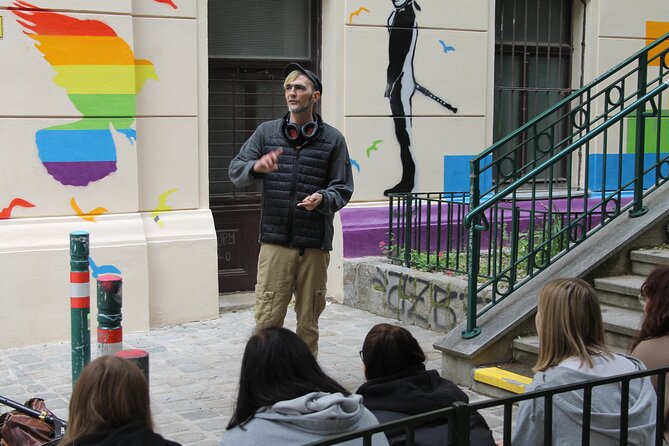
This tour trades palace interiors and grand avenues for places where daily life can be precarious. Martin leads you through parts of central Vienna connected to his own experience of homelessness, then talks about addiction, squatting, and the people who live beyond the city’s familiar postcard image.
The difference is not simply the route. It is the guide’s point of view. Martin is not offering a distant account of hardship: he speaks from personal experience and invites questions. The result is a tour built around listening, with Vienna as the setting for a much more intimate story.
That approach can be valuable if you want more than architecture and dates. It can also be challenging. The subjects include addiction and life on the street, and some of the stories are likely to stay with you after the walk ends. This is best approached with curiosity and respect, not as an opportunity to treat someone else’s difficult past as spectacle.
Other tours people book in Vienna:
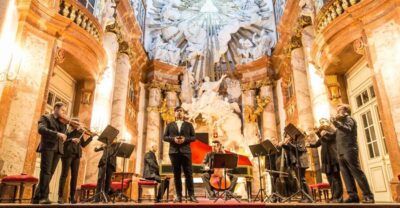
- Vienna: Vivaldi’s Four Seasons Concert in Karlskirche
★ 4.7 · 14,951 reviews - Vienna: Spanish Riding School Training
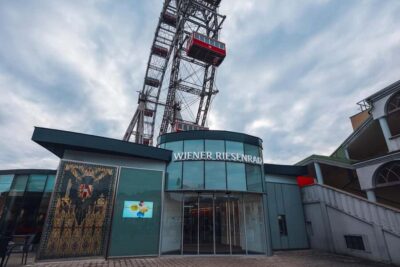
★ 3.9 · 9,281 reviews - Vienna: Skip-the-cashier-desk-line Giant Ferris Wheel Ride
★ 4.5 · 7,859 reviews
From Karlsplatz through the Secession area
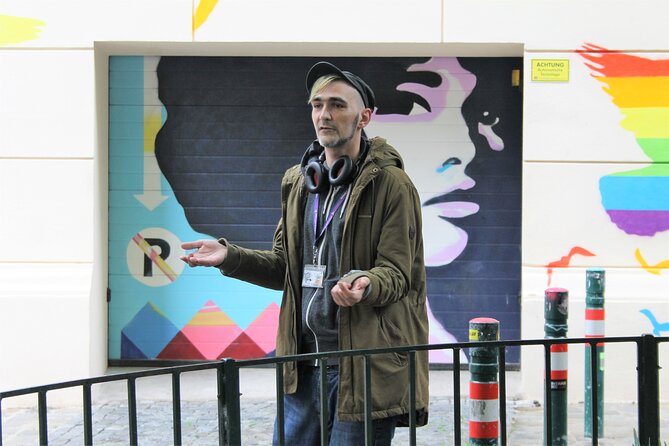
The meeting point is the Police Inspectorate at Kärntnertorpassage, by Karlsplatz. From there, the route goes through the subway passage and leaves at the exit beside the Secession. You pass the Secession on the way to the third station, Alfred-Grünwald-Park.
That short passage through an everyday transport hub is a fitting start for a tour about life beyond the polished visitor circuit. Karlsplatz is a practical meeting point, near public transportation, and the route makes a transition from the underground passage to the street-level city. The Secession adds a familiar landmark along the way, but it is not the main event.
The available route details name two stops, rather than describing every pause along the walk. Expect the emphasis to be on the places Martin connects to his own story, not on a formal tour of Vienna’s major monuments. The walk ends at Esterhazypark in the 6th district, next to Haus des Meeres.
Alfred-Grünwald-Park and the realities of sleeping outside
At Alfred-Grünwald-Park, the group has a place to sit while Martin talks about why the park became his sleeping place. He also explains why sleeping on the meadow is not necessarily a good choice. That practical detail gives the stop its force: it shifts the question from what a park looks like to how someone without a home has to judge it.
The stop is scheduled for about 20 minutes. Seating is a welcome feature on a two-hour walk, but the more important point is that this is a pause for a personal account, not a quick photo stop. Martin’s perspective can help you understand how decisions that seem minor to a passerby can become matters of safety and survival.
The subject may unsettle you. That is part of the point, but the tour is not described as a lecture or a scolding. Martin shares his own experience, and the tone, according to the information available, can include humor as well as painful material. Several people who have taken the tour found his openness and warmth a key part of the experience.
Ilse-Pisk-Stiege, squats, and punk history
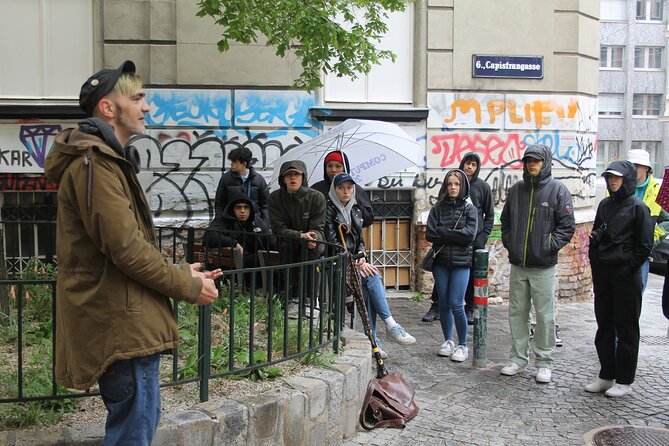
The other named stop is Ilse-Pisk-Stiege, also described as the Capistr Ascent. Here, Martin discusses squats and punks, with a story about the evacuation of Pizzeria Anarchia. The house had been occupied by 19 people and was cleared by 1,700 police officers, a striking example of how a local dispute can become a major confrontation.
This is a different strand of the tour from the account of sleeping in a park. It connects personal experience to a wider story about alternative communities, housing, and policing. You do not need to arrive with a background in Vienna’s anarchist history. Martin explains the events through storytelling, and the account has been described as engaging, sometimes funny, and thought-provoking.
The stop lasts about 20 minutes and offers a chance to catch your breath on the stairs. If you are hoping for an exhaustive history of squatting in Vienna, the supplied details do not promise that. The focus is Martin’s perspective and the specific Pizzeria Anarchia episode, which gives the tour a vivid local anchor.
Same city, a different kind of day:
- Vienna: Schönbrunn Palace & Gardens Skip-the-Line Tour
★ 4.7 · 7,739 reviews - Vienna: Light of Creation Votive Church Immersive Light Show
★ 4.8 · 6,779 reviews - Vienna Spanish Riding School Guided Tour
★ 4.7 · 6,765 reviews - Vienna: Classical Concert in the World-Famous Musikverein
★ 4.6 · 6,673 reviews
Why Martin’s personal account matters
A tour about homelessness can easily become a string of general facts. Martin’s first-hand experience changes the balance. He can talk about places he used, choices he faced, and what life on the street felt like from the inside. That does not make one person’s story a complete account of homelessness, but it gives you a direct human perspective that a standard city walk cannot provide.
The tour also covers addiction, and the supplied information identifies Martin as a former drug addict. His willingness to speak about that part of his life is central to the experience. The value is not in treating his past as a dramatic tale, but in hearing how a person describes the path through it and what he wants others to understand.
The tone matters. Martin has been described as open and warm, and his humor sometimes lightens serious material. Questions are welcome, according to the tour descriptions from people who have taken it. Ask with care: the aim is to learn, not to demand disclosure beyond what he chooses to share.
The experience has also worked for teenagers, school classes, and adult groups. That does not mean every young person will be comfortable with the subject matter, so teachers and parents should consider the group’s readiness. For older students, the mix of a personal account and social history can make an abstract topic easier to discuss.
Two hours, a group of up to 20, and a $46 price
At $46 for about two hours, this is not the cheapest way to fill time in Vienna. Its value depends on what you want. You are paying for a small-group walk led by someone whose first-hand experience is the heart of the subject, rather than for access to a building or a long list of sights.
The group is limited to 20 people, which should make it easier to hear Martin and ask questions than on a large coach tour. It is still a group experience, though, and the quality of the conversation may depend in part on how willing your fellow participants are to listen and engage.
Group discounts are available, and the ticket is mobile. The activity is listed as suitable for most people, with dogs and service animals allowed. It is near public transportation. Since the route moves between locations and includes stairs at Ilse-Pisk-Stiege, contact the provider if you need specific mobility information; no detailed step-free access information is provided.
The tour begins at Karlsplatz and finishes at Esterhazypark, next to Haus des Meeres. Keep in mind that the end point is not the start point, so allow for the return journey or for continuing your plans from the 6th district. Free cancellation is available up to 24 hours before the start; cancellations inside that period are not refunded.
Who will get the most from this walk
I would choose this tour if you have already seen some of Vienna’s grand sights and want to understand a less visible part of the city. It suits people interested in social issues, urban history, punk culture, and personal storytelling. It is also a strong choice for a school or youth group when the subject is appropriate for the students.
It may not suit you if you want a light, scenery-first stroll or a conventional overview of Vienna’s architecture. The subject matter can be emotional, and the itinerary’s named stops are places tied to the topic, not major tourist attractions. Go for the conversation, not the photo opportunities.
The tour is listed with a 5 out of 5 rating from 25 reviews and a 100 percent recommendation rate. Those figures are encouraging, though a small sample cannot guarantee that every group or visitor will connect with the experience. The consistent themes are Martin’s honest delivery, the personal insight, and the way the tour can prompt reflection without simply telling you what to think.
Should you book the Alternative Tour in Vienna?
Book it if you want a candid, human account of street life and a side of Vienna that most sightseeing walks leave out. Martin’s story, the park stop, and the Pizzeria Anarchia episode give the two hours a clear focus and real local texture.
Skip it if you are looking for a relaxed tour of landmarks or prefer not to spend part of your day with difficult subjects. For a thoughtful visitor, though, this can add something useful to a Vienna trip: not another list of sights, but a more grounded sense of the people and histories that share the city.
FAQ
How long is the tour?
The tour lasts about two hours.
Where does the tour start and end?
It starts at the Police Inspectorate at Kärntnertorpassage by Karlsplatz and ends at Esterhazypark, next to Haus des Meeres.
What is the price?
The listed price is $46. Group discounts are available.
How large can the group be?
The maximum group size is 20 people.
Are dogs allowed?
Yes. Dogs and service animals are allowed.
Can I cancel for a refund?
You can receive a full refund if you cancel at least 24 hours before the tour’s start time. Cancellations made less than 24 hours beforehand are not refunded.
Newest tours in Vienna
- Vienna: Private Guided Walking Tour★ 4.8 · 37 reviews
- Vienna: Private Jewish Walking Tour★ 4.9 · 12 reviews
- Vienna: Tour of Gustav Klimt’s Art in 3 Museums with Tickets★ 5.0 · 22 reviews
- Private Spooky Vienna Tour★ 4.8 · 19 reviews
- Vienna: Private tour Mauthausen and Linz★ 4.1 · 3 reviews
- Vienna: Private Music Tour★ 5.0 · 8 reviews
- Vienna: Private Half-Day Sightseeing Tour★ 4.1 · 9 reviews
- Vienna Private Full Day Tour – Tickets to Schönbrunn & Lunch★ 5.0 · 3 reviews
Vienna Tours, compared.
Vivaldi’s Four Seasons Concert in Karlskirche
Read our review →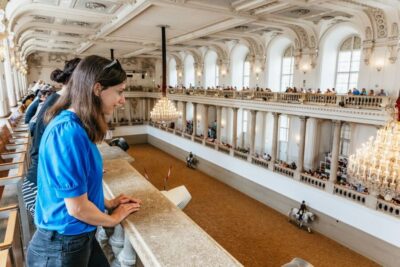
Skip-the-cashier-desk-line Giant Ferris Wheel Ride
Read our review →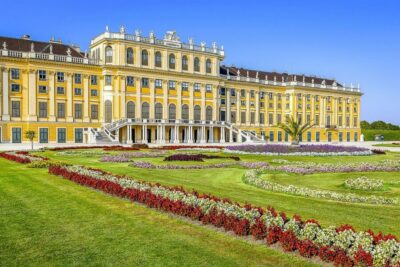
Schönbrunn Palace & Gardens Skip-the-Line Tour
Read our review →
Light of Creation Votive Church Immersive Light Show
Read our review →
Classical Concert in the World-Famous Musikverein
Read our review →