
Reviewed · SPANISH RIDING SCHOOL TICKETS
Vienna: Spanish Riding School Training
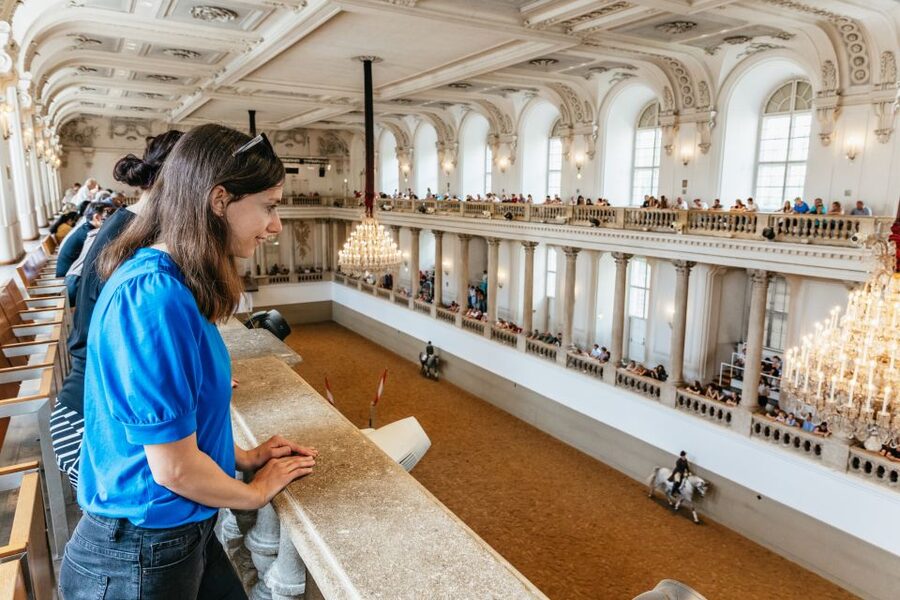
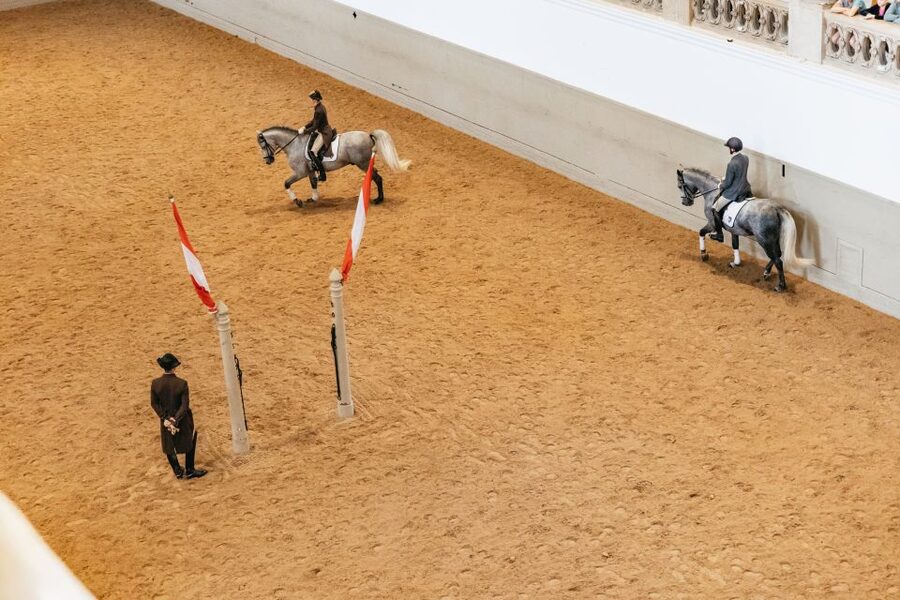
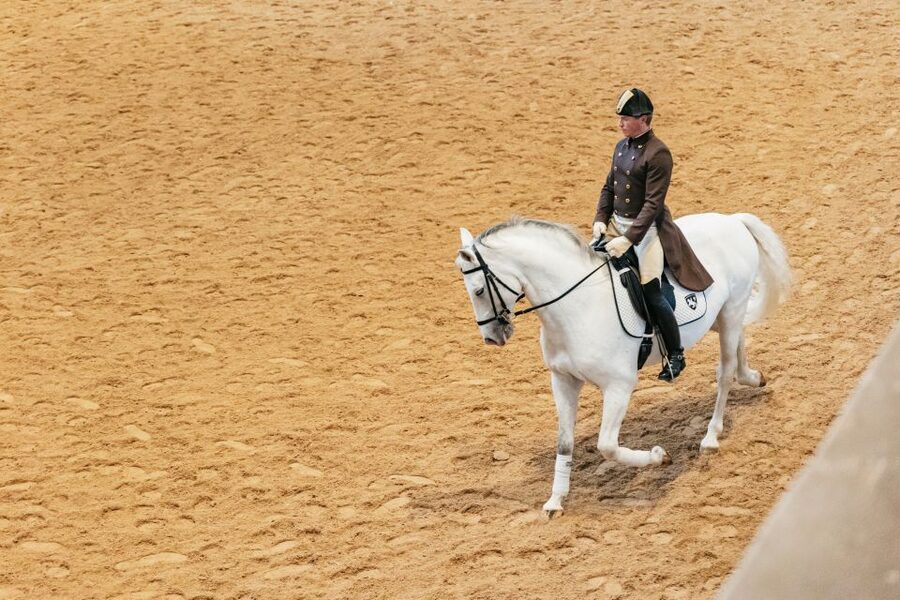
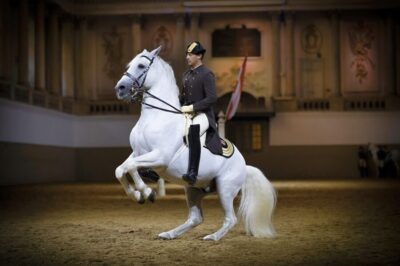
The striking part of this hour is the contrast between white Lipizzaner stallions at work and the ornate Baroque Winter Riding Academy around them. You watch horses and riders practice, not a polished show, so the interest lies in seeing the careful training behind the famous movements.
I like two things here: the classical music and historic arena make even simple exercises feel special, and the session offers a relatively affordable way to see the school if a full performance is out of reach. The hour can also show different horses and levels of training, from groundwork to ridden exercises.
The trade-off is that the spectacular school jumps are not guaranteed. You may see steady work at a walk or trot rather than a display of leaps, and standing tickets or high seats can make an hour harder for anyone with mobility or comfort concerns.
Key points
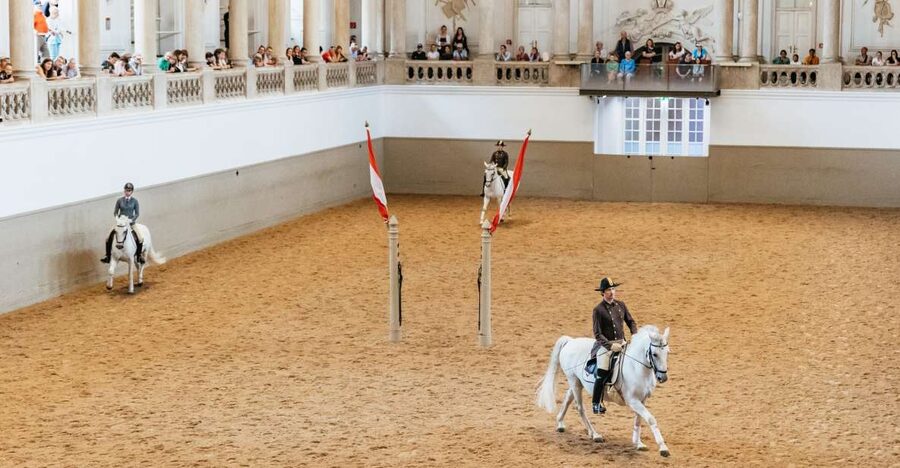
- A working session, not a full performance: The morning exercise maintains the stallions’ fitness and develops the muscles they need for advanced work.
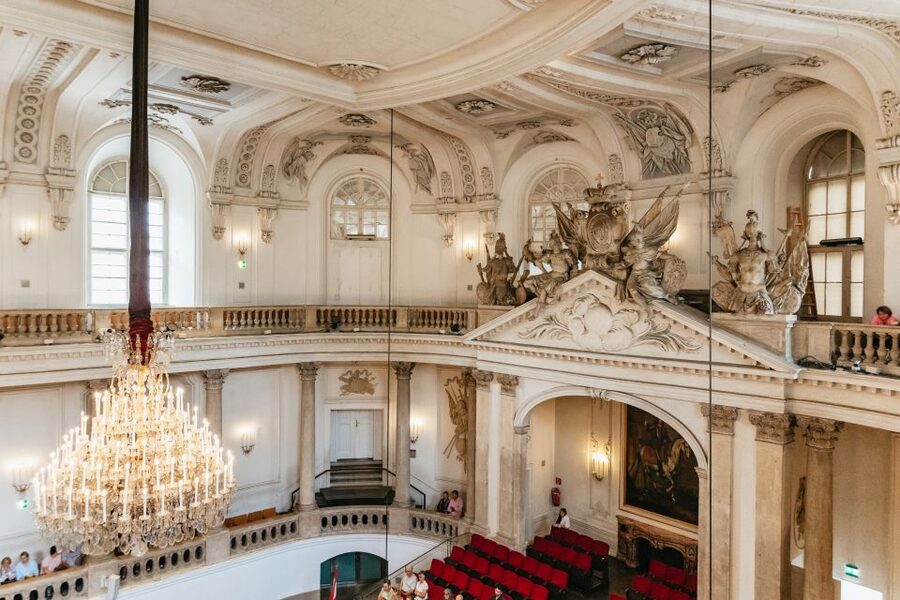
- The setting is part of the experience: Training takes place in the Baroque Winter Riding Academy, beneath its chandeliers.
- Expect varied exercises: You may see relaxation work, movement refinement, muscle-building exercises, groundwork, or ridden practice.
- The famous jumps are occasional: Levade, courbette, and capriole are not practiced every day.
- Plan for a strict no-camera rule: Photography and video recording are prohibited inside.
- Check the ticket type and access: Standing for an hour and climbing stairs can be demanding, and the building has no elevator.
The Winter Riding Academy sets the scene
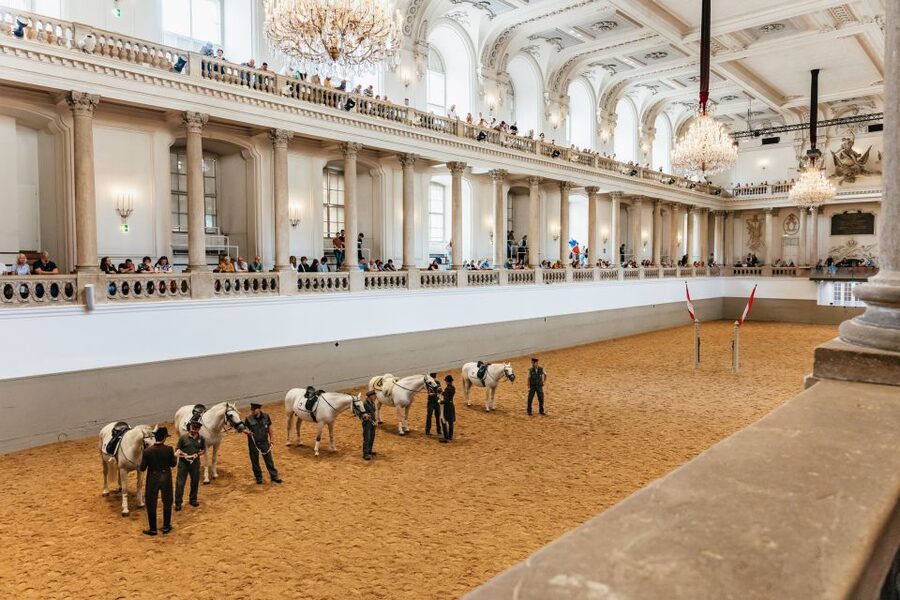
The Spanish Riding School’s training takes place in the Winter Riding Academy, a grand Baroque hall that gives an ordinary exercise session an unusually formal setting. Chandeliers hang above the arena, and the contrast between the elegant room and the practical work below is part of the appeal. The school’s tradition stretches back centuries, but the morning exercise shows that this is also a place where horses and riders keep learning.
There is a personal connection to Vienna’s imperial past, too. Empress Sisi frequently rode in this arena. You are not being offered a history tour, so the session’s main focus remains the horses, but knowing the room’s past adds another layer to the experience.
This is a good choice if you want to see the school in action without committing to a full performance. You get an hour in the historic arena and a look at daily training, rather than a staged program designed to present the most dramatic movements. That difference matters: the session can be quieter and more repetitive, but it also gives you a better sense of how the polished work is built.
More Spanish Riding School visits in Vienna:
- Vienna Spanish Riding School Guided Tour
★ 4.7 · 6,765 reviews - Performance Of The Lipizzans At Spanish Riding School
4,190 reviews - Vienna: Spanish Riding School 45-Minute Performance Show
★ 3.9 · 731 reviews
What the horses actually practice
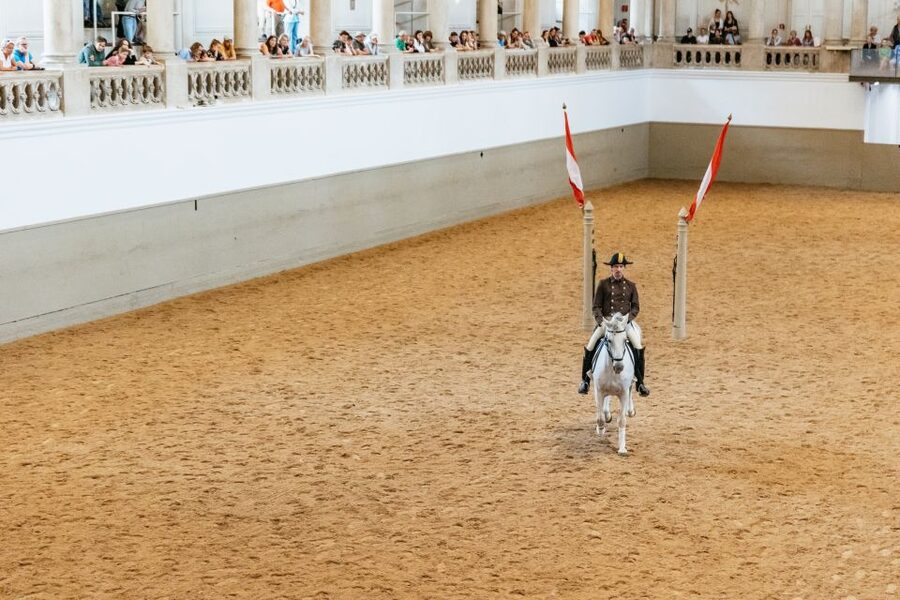
The morning exercise is meant to keep the stallions healthy and athletic. Riders work on relaxation, refine and perfect movements, and strengthen the muscle groups needed for the haute école, or high school, of classical dressage. Much of the work is steady and precise rather than showy.
You might see several horses exercising at once, or different groups using the arena during the hour. Some sessions include groundwork as well as ridden work. The horses and riders can be at different stages of training, so one pair may appear to be practicing familiar movements while another receives closer instruction.
That variation makes the session interesting if you like watching how a skill develops. It also means there may not be one horse or rider to follow from start to finish. With multiple pairs in the arena, it can be hard to focus on each one, especially if you are hoping for individual introductions or a clear account of every horse’s progress.
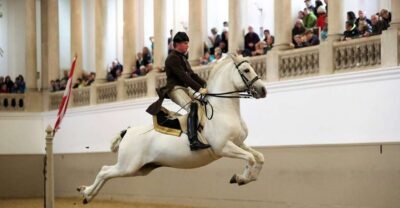
The levade, courbette, and capriole are the school’s best-known jumps, but they are not part of the daily routine. They may sometimes appear during morning exercise, but you should not book on the assumption that you will see them. If you want a planned display of the school’s most famous movements, look into a performance instead. If you are curious about the work that supports those movements, training is the more revealing option.
Music, commentary, and the pace of the hour
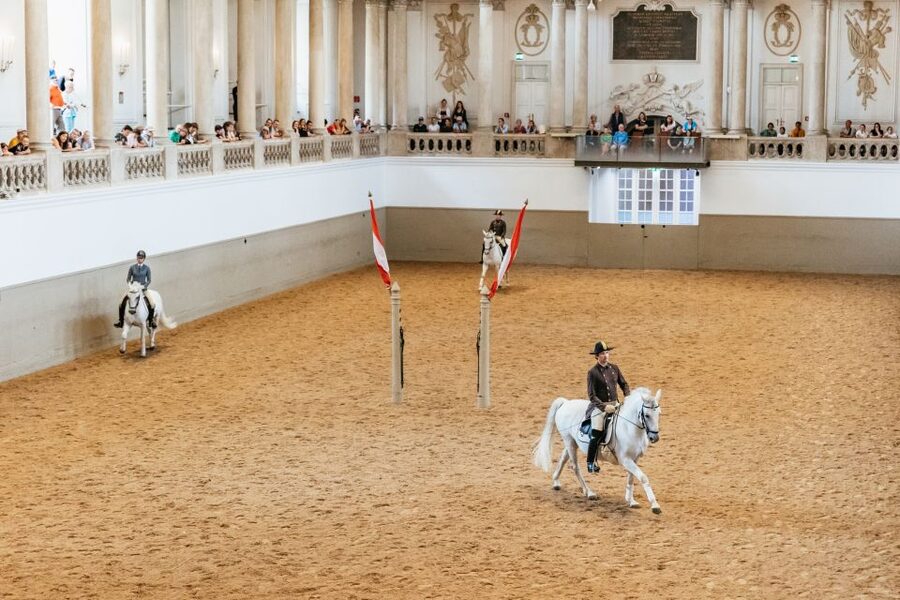
Classical Viennese music accompanies the exercise. It gives the session a measured rhythm and suits the room, though the horses are there to train, not to perform to a choreographed score. Expect stretches of repeated work and moments when riders and horses move around the arena at a calm pace.
Commentary may explain the history, the training, and differences between horses or riders. How much you take in can depend on where you are seated and how clearly the speaker carries across the hall. Some people find the narration hard to hear or too fast, so treat it as useful context rather than the only way to understand the session.
You can still follow the broad story without catching every word: the horses are building strength and keeping their movement supple, while riders work through exercises suited to their training. If you are keen to learn the details, a seat in the middle section may make the commentary easier to hear than a high position. This is a practical tip, not a guarantee of perfect sound.
Choosing where to watch
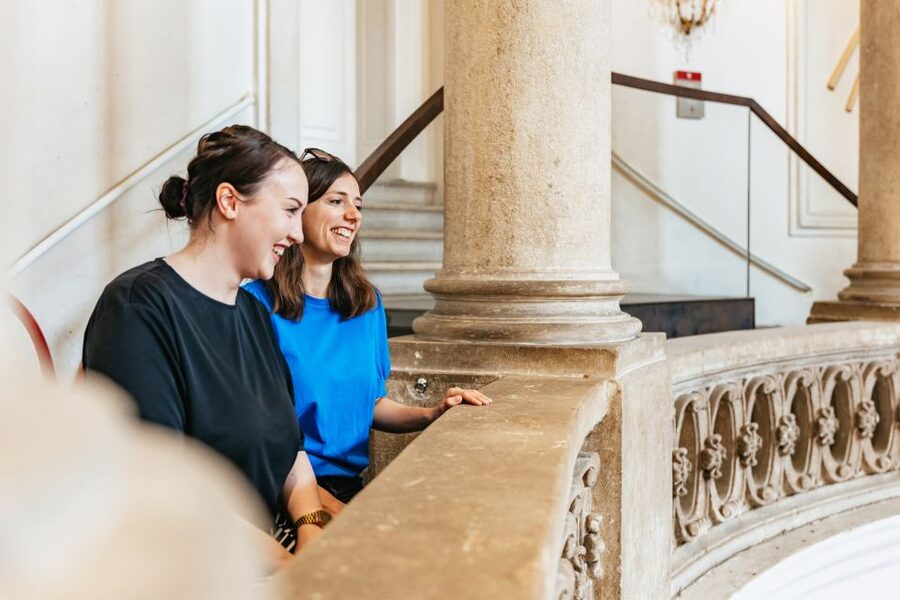
Ticket types and views matter here. Standing admission is a lower-cost option, but you will be on your feet for the full hour. Some standing areas provide a good view of one side of the arena, while leaving the opposite side less visible. Arriving early can help you find a position that suits you.
Seated areas vary, too. A high balcony can give you a broad view, but a tall wall may mean leaning forward or standing to see the arena clearly. Seating in the lower or middle sections may be preferable if you want to watch the floor without leaning over a barrier. The exact view depends on the ticket and position, so check what you are buying rather than assuming all seats offer the same perspective.
The room’s old architecture comes with a practical drawback: there is no elevator, and reaching some viewing areas involves stairs. If you use a wheelchair or have difficulty walking, contact the school in advance to request arrangements. Do not count on sorting out access only after you arrive.
Same city, a different kind of day:
- Vienna: Vivaldi’s Four Seasons Concert in Karlskirche
★ 4.7 · 14,951 reviews - Vienna: Skip-the-cashier-desk-line Giant Ferris Wheel Ride
★ 4.5 · 7,859 reviews - Vienna: Schönbrunn Palace & Gardens Skip-the-Line Tour
★ 4.7 · 7,739 reviews - Vienna: Light of Creation Votive Church Immersive Light Show
★ 4.8 · 6,779 reviews
Tickets, timing, and a smoother arrival
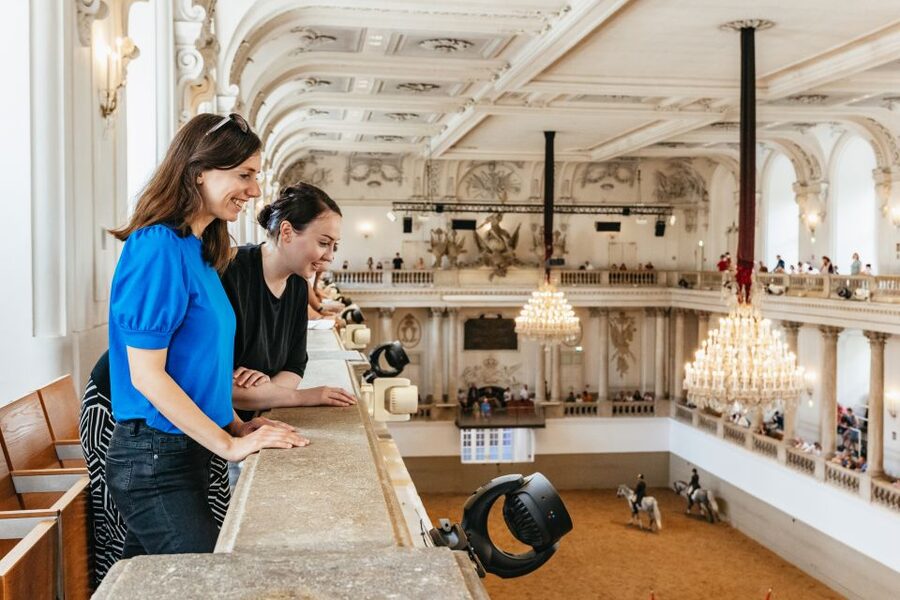
The activity lasts one hour, and starting times depend on availability. Your ticket includes entry to the training session; hotel pickup and drop-off are not included. Present your voucher at the Spanish Riding School entrance to exchange it for a ticket. Collection is available no earlier than one hour before the activity.
Build in time for that exchange. A phone voucher is not necessarily the ticket you use to enter, and collecting the paper ticket can involve a separate queue. Arriving with a little breathing room is wiser than reaching the door just before the session starts. The school’s entrance and ticket exchange process are worth checking in advance so you know where to go.
The program can change, so the exact exercises, number of horses, and amount of commentary are not fixed promises. This is one reason to approach the hour as a chance to observe training rather than a tightly scripted show.
Is $20 good value?
At about $20 per person, the training is an accessible way to see the Spanish Riding School and its horses in their own working environment. The value comes from the combination of the historic arena, the Lipizzaners, the music, and the chance to watch the riders’ daily practice. If you already have an interest in horses or dressage, that can make the hour feel like much more than a look around a famous building.
For a general sightseeing budget, it is also a useful alternative if a performance does not fit your plans. But the lower price reflects a different kind of experience: this is not a guaranteed sequence of signature movements. You may see repeated exercises and careful schooling rather than a dramatic display. Decide based on what you want to watch, not on the assumption that training is simply a cheaper version of the show.
There are discounted tickets for children aged 6 to 18. Children from 3 to 5 are admitted free but must sit on an adult’s lap. Children under 3 are not admitted. Since standing for an hour and the stairs may be tiring, consider your child’s comfort as well as the ticket price.
Rules and small planning details
Photography and video recording are not allowed inside. The rule is repeated, but people may still be tempted to take a quick phone picture. Please follow the restriction: it helps keep the session focused and avoids distracting the horses and riders. You will need to take away the memory rather than a photo.
Pets are not permitted. The program may change, and cancellation is available up to 24 hours in advance for a full refund. You can also reserve now and pay later, which is useful if your Vienna plans are not yet firm.
Who will enjoy this most?
This session is especially rewarding for horse lovers, riders, and anyone curious about how classical dressage is taught. If you ride, you may find the training details more compelling than the formal presentation of a performance. Even without equestrian experience, you can appreciate the horses, the riders’ concentration, and the room itself.
It also suits visitors who want a distinctive Vienna experience without spending a large part of the day at an attraction. One hour is enough to see the hall and get a sense of the school’s routine. The session is less suited to anyone expecting constant action, guaranteed jumps, or a fully narrated introduction.
If you have mobility concerns, standing tickets are a poor fit, and the building’s stairs require advance planning. If photography is important to you, this is not the right activity. For everyone else, the question is simple: are you interested in the process as much as the finished spectacle?
Should you book the training?
Book this if you want to see the Lipizzaners in the Baroque Winter Riding Academy and are happy to watch patient, repetitive work as well as more polished movement. At around $20, it is a strong-value way to experience the school, especially if you cannot attend a performance.
Choose a full performance if seeing the famous jumps is your main goal. For training, arrive early enough to exchange your voucher, check your ticket’s viewing position, and leave the camera put away. With those expectations in place, this hour offers a memorable look at the craft behind the spectacle.
FAQ
How long is the training session?
The session lasts one hour.
What does the ticket include?
It includes a ticket for training at the Spanish Riding School. Hotel pickup and drop-off are not included.
Will I see the levade, courbette, and capriole?
Not necessarily. These famous school jumps are not practiced every day and may only sometimes be seen during morning exercise.
Can I take photos or record video?
No. Photography and video recording are not allowed inside.
Are children admitted?
Children aged 3 to 5 may enter free but must sit on an adult’s lap. Children aged 6 to 18 receive discounted admission. Children under 3 are not admitted.
Is the venue accessible by elevator?
No. The building has no elevator. Wheelchair users and people with walking difficulties are asked to send a request in advance.
When can I collect my ticket?
You can collect your ticket no earlier than one hour before the activity. Present your voucher at the Spanish Riding School entrance to exchange it.
Can I cancel my booking?
Yes. You can cancel up to 24 hours in advance for a full refund.
Newest tours in Vienna
- Vienna: ‘Armenia In The Heart Of Austria’ Tour★ 5.0 · 6 reviews
- Vienna: Mozart Private Guided Tour★ 5.0 · 4 reviews
- Vienna: Klimt Villa (Gustav Klimt Atelier & Museum) Ticket★ 4.7 · 50 reviews
- Vienna: Kunsthistorisches Museum Guided Tour incl. admission★ 4.9 · 32 reviews
- Vienna: Luxury Vintage Fashion Walking Tour★ 3.4 · 8 reviews
- Vienna: Johann Strauss – Immersive Audiovisual Experience Ticket★ 4.8 · 60 reviews
- Vienna: Kingdom of Railways Museum Entry Ticket★ 3.6 · 50 reviews
- Vienna: KuK Perfumery Filz – Viennese Perfume Tasting★ 4.3 · 23 reviews
Spanish Riding School Tickets, compared.
Spanish Riding School 45-Minute Performance Show
Read our review →
Spanish Riding School Guided Architectural Tour
Read our review →Browse the lists this tour appears in