
Reviewed · VIENNA
Forchtenstein Castle Admission Ticket & Optional Guided Tour
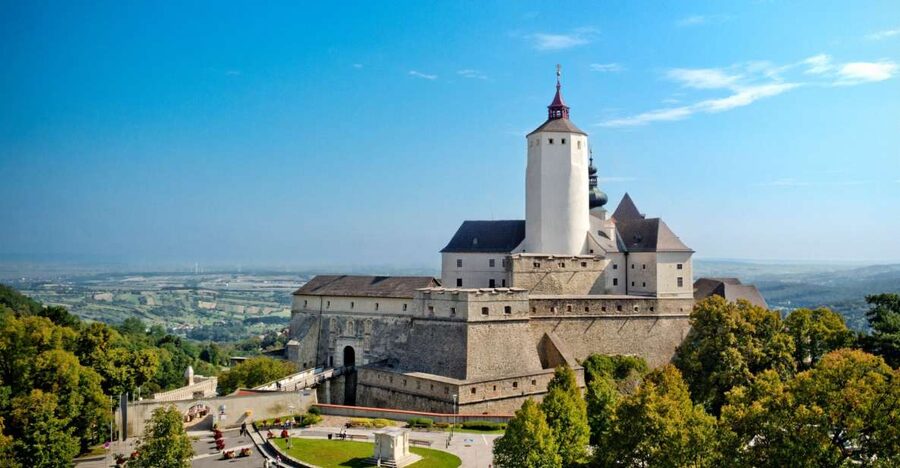
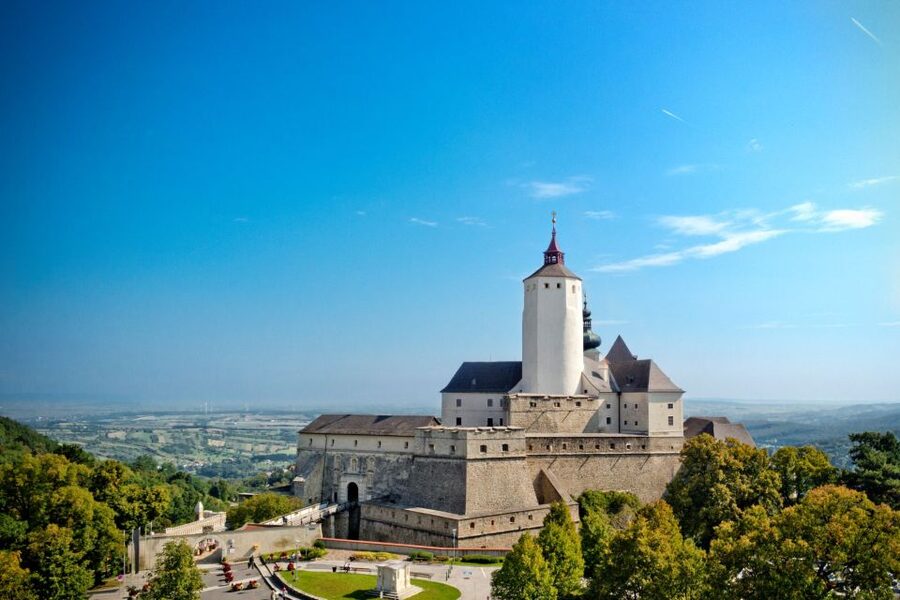
Forchtenstein Castle is not just a set of old walls. Its rooms hold an astonishing mix of weapons, silver furniture, family portraits and royal regalia, including a full-length portrait of Vlad the Impaler. The castle’s collections turn a short visit into a close look at the ambitions and tastes of the Esterházy family.
I especially like the secco murals in the inner courtyard, billed as the largest display of their kind north of the Alps, and the chance to see rare objects such as Hungary’s, Croatia’s and Serbia’s oldest known coronation flags. These are specific, memorable sights, not just another walk through furnished rooms.
The main consideration is access: the visit is listed as one hour, and not every floor may be open. A recent visit found the first level closed, so check what is accessible when you arrive, and allow extra time if you want to study the collections at an unhurried pace.
What to know before you go
- The courtyard murals are the castle’s standout architectural feature, painted in secco, a technique in which pigments are applied to dry plaster.
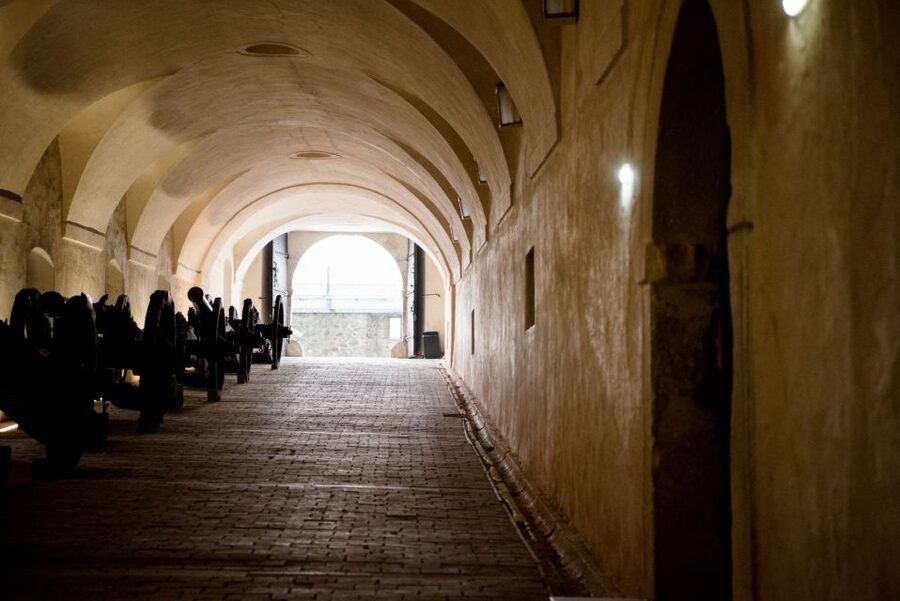
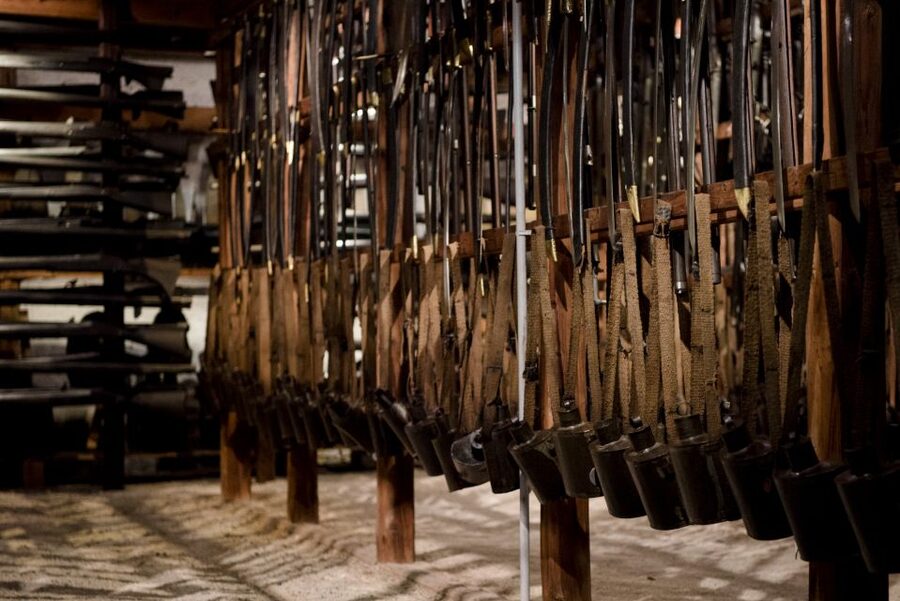
- The armory displays weapons from one of Europe’s largest private collections.
- The Esterházy collections include Europe’s largest and earliest collection of silver furniture.
- The Gallery of Ancestors includes a full-length portrait of Vlad the Impaler, alongside portraits of fictional family forebears.
- The coronation flags date from the 17th century and are described as the oldest known flags of Hungary, Croatia and Serbia.
- Plan for German: German is the stated language for the activity and audio guide. The audio guide is listed at an additional €2.
Start in the courtyard beneath the secco murals
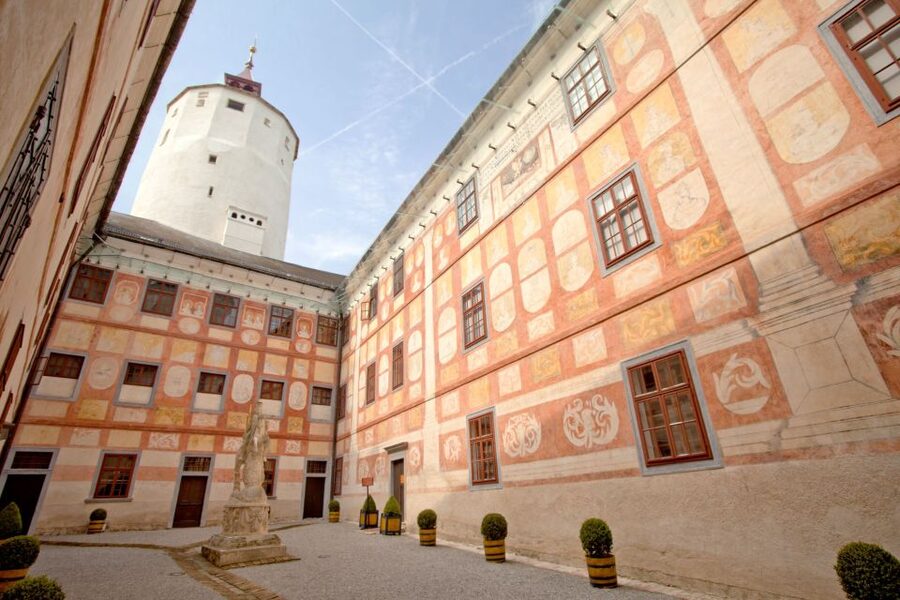
Begin in the inner courtyard, where the castle’s large-scale secco paintings set the tone for the visit. They are a fine reason to look up before you start reading labels: the walls themselves are part of the collection, and the murals give the buildings a sense of ceremony that a plain stone courtyard would lack.
Secco painting means the work is made on dry plaster rather than wet plaster. The technique matters here because the murals are presented as the largest display of secco wall paintings north of the Alps. You do not need to be an art specialist to appreciate their scale, but you may want to pause long enough to take in the whole courtyard before moving closer to individual details.
This is also a useful place to get your bearings. The visit moves from the courtyard to rooms on the first floor, then to the second-floor collections. The experience is relatively compact, so the courtyard is not just a passageway: it is one of the central sights, and worth giving a little time.
More tickets and passes in Vienna:
- Vienna: Classic Ensemble Vienna in St. Peter’s Church Ticket
★ 4.7 · 4,819 reviews - Vienna Kunsthistorisches Museum Day Admission Ticket
★ 4.6 · 3,690 reviews - Vienna: Tickets for Mozarthaus Vienna with Audio Guide
★ 4.2 · 2,344 reviews
First-floor rooms: chapel, oratory and armory
On the first floor, the route includes an oratory and chapel, followed by the castle’s armory. The religious rooms add a quieter note to a visit otherwise full of showpiece objects. They also help make sense of how a castle could serve as both a residence and a place of display.
The armory is the big draw for anyone interested in military history. Forchtenstein holds one of Europe’s largest private armories, with an impressive collection of weapons. That scale gives the display more weight than a handful of decorative swords: it reflects the collecting and status of a powerful family, as well as the practical role weapons played in the world around the castle.
A recent visit found the first level closed, which is a useful reminder that access to particular rooms can be affected by the day’s arrangements. If the armory or chapel is important to you, check what is open when you arrive rather than assuming every room will be available. The admission details do not promise access to every floor or room.
Second-floor treasures: silver, flags and an Ottoman tent
The second floor gathers many of the castle’s most unusual objects. Among them is an ornate Ottoman tent, around 400 years old. A tent may sound like an odd fit for a castle display, but it hints at the reach of the Esterházy collections and the range of objects the family valued. Its age and elaborate character make it one of the more distinctive pieces to look for.
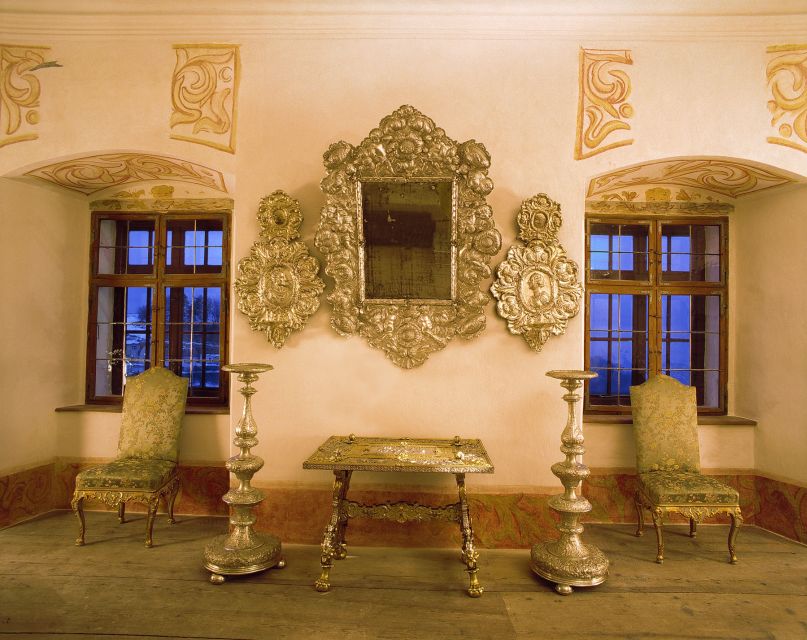
Another highlight is the silver furniture collection, described as Europe’s largest and earliest. Furniture made from silver is an arresting idea in itself, but the collection also offers a glimpse of wealth expressed through objects meant for use as well as display. If you tend to skim past decorative arts, this is a good place to slow down and look at the craftsmanship.
The three coronation flags, dating from the 17th century, represent Hungary, Croatia and Serbia. They are identified as the oldest known flags of their kind. Their importance is not only visual: flags carried public meaning, and these give the castle’s collections a link to the ceremonial life of the region. You do not need to know the finer points of royal history to understand why such objects were carefully preserved.
Taken together, these rooms reward a visit that moves at a deliberate pace. With only an hour listed for the experience, you will have to choose where to linger. I would give priority to the tent, silver furniture and flags, then circle back to anything that catches your eye if time allows.
The Gallery of Ancestors and its startling portraits
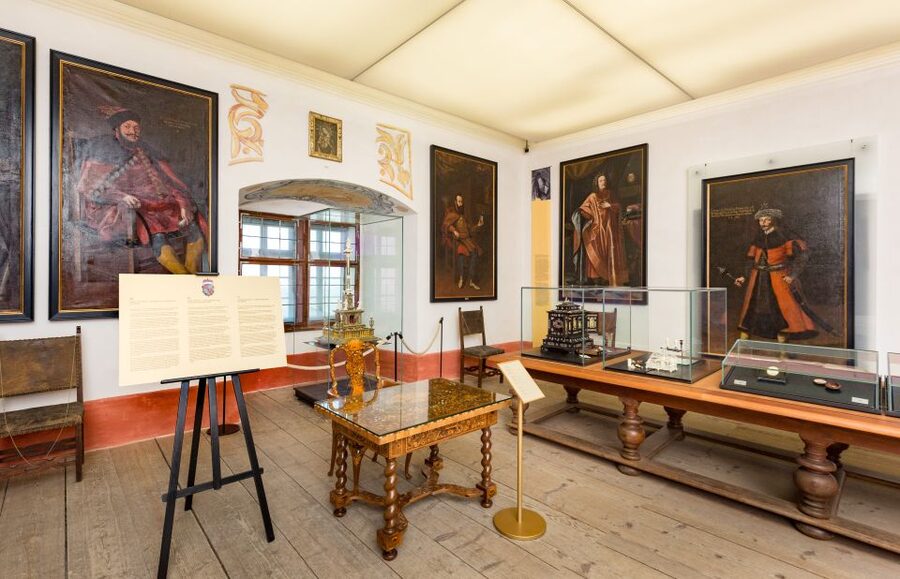
The Gallery of Ancestors is one of the castle’s more unusual rooms. It contains portraits of Esterházy family members, but the collection also includes images of fictional ancestors, among them Attila the Hun and Vlad the Impaler. The family’s history is presented not only through documented relatives but through figures chosen to suggest a grand, dramatic lineage.
The most remarkable image is the only known full-length portrait of Vlad the Impaler. That distinction makes it a rare sight for anyone interested in the historical figure behind the Dracula legend. It is worth approaching the portrait as both an artwork and a statement: the gallery brings real and invented ancestry together, and that mixture says something about how families shaped their public image.
These portraits may appeal especially to visitors who enjoy the stories behind old paintings. If you prefer objects with a clear practical purpose, the armory and coronation flags may hold your attention longer. Still, the Gallery of Ancestors gives the castle a memorable twist, and it is not the usual lineup of solemn family faces.
More guided tours in Vienna:
- Vienna Spanish Riding School Guided Tour
★ 4.7 · 6,765 reviews - Vienna: Guided Walking Tour of City Center Highlights
★ 4.7 · 4,989 reviews - Vienna: Vienna Central Cemetery Guided Walking Tour
★ 4.8 · 3,307 reviews - Vienna: Bus & Schönbrunn Palace Skip-the-Line Guided Tour
★ 4.3 · 2,802 reviews
The Kunstkammer: a prince’s cabinet of curiosities
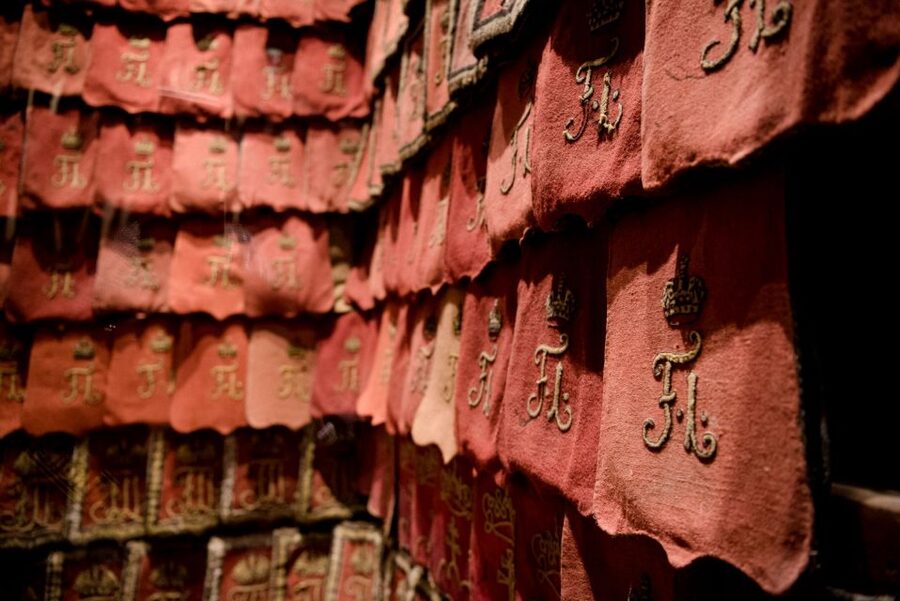
The castle’s art collections include a Kunstkammer, or cabinet of curiosities, formed from the late 16th to the early 18th century. It reflects Prince Paul Esterházy’s appetite for collecting and offers a window into the way elite collectors assembled objects before modern museums took shape.
A cabinet of curiosities was meant to bring varied objects together for close inspection and conversation. That makes this collection a good counterpoint to the castle’s grand portraits and military display. Rather than telling one story through a single room, it shows the breadth of one collector’s interests.
For you, the value lies in seeing how personal taste shaped a historic collection. The Kunstkammer is not just a room of old things; it represents a period when collecting could be a way to display curiosity, learning and status. If you are short on time, pair it with the silver furniture and flags, then decide whether to spend longer on the portraits or the armory.
Is one hour enough, and is $22 good value?
Admission costs $22 per person, and the stated visit lasts one hour. That is a fair price if you want to see the castle’s major collections and are comfortable moving at a steady pace. You are paying for access to a distinctive group of historic rooms and objects, not simply a view of the exterior.
The value improves if you take time with the pieces that make Forchtenstein different: the secco murals, private armory, silver furniture, Ottoman tent, coronation flags and Gallery of Ancestors. A castle visit can blur into a sequence of rooms if you rush. Here, a little attention to the stories behind the objects gives each section a purpose.
One hour is enough for a focused visit, but it is not generous if you like to read every label or study every portrait. The experience duration is listed as one hour, so if you want a slower pace, check the available start times and plan around the visit rather than treating it as a quick stop between other activities.
The audio guide needs a small clarification. German is listed as the language, while the activity information also says the audio guide costs €2 and is not included in the admission ticket. Budget for the extra charge if you want it, and confirm the arrangement at the castle. No English guide or audio option is specified in the information provided.
Who will enjoy Forchtenstein most?
I would recommend this visit to anyone who likes historic interiors, family collections, arms and armor, or objects with unusual stories. The range is a strength: you can move from sacred spaces to weapons, then from silver furniture to a portrait of Vlad the Impaler. That variety helps keep a one-hour visit lively.
It is also a good fit if you are interested in the Esterházy family and the way wealth and status were expressed through art and collecting. You do not need specialist knowledge to appreciate the objects, but a guided explanation can add useful context. The experience is in German according to the stated language details, and no guide’s name or English-language option is provided.
The visit is not suitable for people with mobility impairments. If stairs or access between floors are a concern, check the arrangements before booking. And if seeing a particular room is your main reason for going, confirm that it will be open: the first level was unavailable on at least one recent visit.
Should you book this castle visit?
Book Forchtenstein if you want more than a quick look at a medieval exterior. The murals, armory, silver furniture, flags and portraits make the collections unusually varied, while the full-length Vlad the Impaler portrait gives the visit a detail you are unlikely to forget.
At $22 for an hour, it is best for visitors who enjoy looking closely and can accept that some rooms may not always be open. If you want a longer, fully accessible visit or need an English-language guide, the available details do not confirm those options. For a compact stop focused on distinctive historic objects, Forchtenstein is a strong choice.
FAQ
How long does the visit take?
The stated duration is one hour. If you like to spend time with labels and individual objects, you may want to check the available starting times and plan accordingly.
What does admission cost?
The ticket costs $22 per person. The audio guide is listed separately at €2.
What language is the activity in?
German is the stated language for the activity and audio guide. No other language is specified.
Is the audio guide included?
The information gives conflicting details: one part says an audio guide is included in German, while another says it costs €2 and is not included. Confirm the arrangement when you arrive, and budget €2 if you want one.
Is the visit suitable for people with mobility impairments?
No. The activity is listed as not suitable for people with mobility impairments.
Can I cancel for a full refund?
Yes. You can cancel up to 24 hours in advance for a full refund. Booking now and paying later is also offered.
Newest tours in Vienna
- Vienna: ‘Armenia In The Heart Of Austria’ Tour★ 5.0 · 6 reviews
- Vienna: Mozart Private Guided Tour★ 5.0 · 4 reviews
- Vienna: Klimt Villa (Gustav Klimt Atelier & Museum) Ticket★ 4.7 · 50 reviews
- Vienna: Kunsthistorisches Museum Guided Tour incl. admission★ 4.9 · 32 reviews
- Vienna: Luxury Vintage Fashion Walking Tour★ 3.4 · 8 reviews
- Vienna: Johann Strauss – Immersive Audiovisual Experience Ticket★ 4.8 · 60 reviews
- Vienna: Kingdom of Railways Museum Entry Ticket★ 3.6 · 50 reviews
- Vienna: KuK Perfumery Filz – Viennese Perfume Tasting★ 4.3 · 23 reviews