
Reviewed · VIENNA WALKING TOURS
Vienna: City of Music Private Walking Tour
Vienna’s musical past makes more sense when you can connect its composers to the streets and buildings where they lived, worked, and performed. On this private three-hour walk, a historian guide leads you from St. Stephen’s Cathedral through Mozart and Beethoven sites, then finishes at the Hofburg.
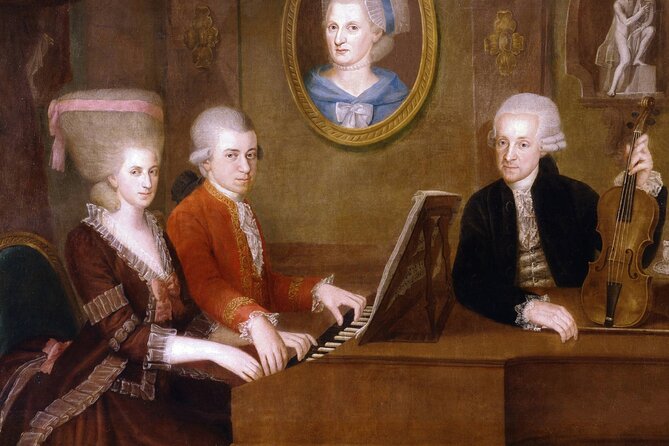
I like two things in particular: you hear classical music on headphones as you explore, and a private guide can shape the conversation around your questions, whether you know opera well or are starting from scratch. The guide may also bring photos to help put the people behind the music in view.
One consideration: several stops are viewed from outside, and entrance fees are not included where admission is listed as not included. If you want to tour Mozart’s former home or attend a performance, you’ll need to plan that separately.
- Hear music along the route: The walk includes selections of Vienna’s musical masterpieces on headphones.
- Follow Mozart and Beethoven through the city: Visit or pass sites tied to their lives, including Mozart’s former home and Beethoven’s Pasqualati-House.
- Book for your own group: The $564.72 fee covers up to 10 people, so the per-person cost falls as your party grows.
- Choose a morning or afternoon start: The departure choice helps you fit the walk around other plans.
- Meet where it suits you: Your guide can come to your hotel or holiday flat, or meet you at Café Mozart near Albertinaplatz.
What this private music walk gives you
This tour is a city walk with a musical thread, not a string of museum visits. Its appeal lies in linking names you may know from concert programs to places in central Vienna. You’ll hear how a cathedral served as a performance venue, see buildings associated with Mozart and Beethoven, and consider how Vienna remains a major center for opera and classical music.
The private format matters. Your group is the only group on the tour, and the guide can spend time on the questions that interest you. That could mean more context about a composer’s working life, or a straightforward introduction if you have little background in classical music. You do not need to arrive as a music scholar to follow the route.
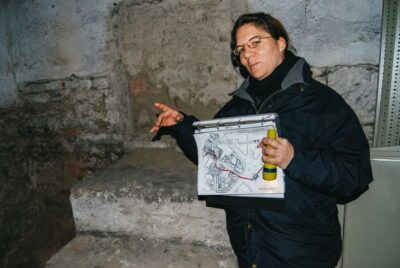
The guide is described as a historian, and after booking you receive a photo, phone number, and biography. One guide named in a personal account is Annelie, also spelled Annalie in that account. The details of the guide are worth checking when you book, since a personal guide’s stories and photos are part of what makes a walking tour feel less like a list of dates.
Starting at St. Stephen’s Cathedral
St. Stephen’s Cathedral, or Stephansdom, is the natural opening stop: it is one of Vienna’s defining landmarks, and it also has a musical past. Your guide explains its role as a performance venue in earlier centuries, connecting it with Haydn, Mozart, Salieri, and Vivaldi.
The planned visit is about 20 minutes, with no admission ticket required for this stop. That timing gives you a focused introduction rather than a long cathedral tour. If you want to spend time inside on your own, keep in mind that the walk’s emphasis is the musical story, not an extended independent visit.
This first stop also sets up a useful theme for the rest of the route. Vienna’s musical life was not confined to one concert hall or one era. Churches, aristocratic households, residences, and major performance venues all played a part.
More walking tours in Vienna:
- Vienna: Guided Walking Tour of City Center Highlights
★ 4.7 · 4,989 reviews - Vienna: Vienna Central Cemetery Guided Walking Tour
★ 4.8 · 3,307 reviews - Vienna: Guided Walking Tour of City Highlights & Hidden Gems
★ 4.9 · 2,180 reviews
Mozart’s former home, seen from the street
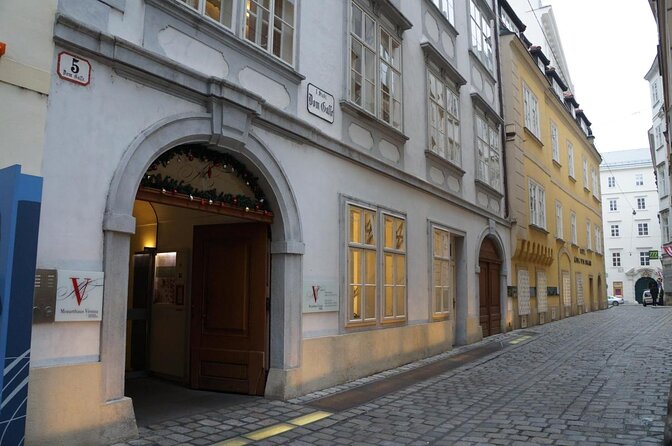
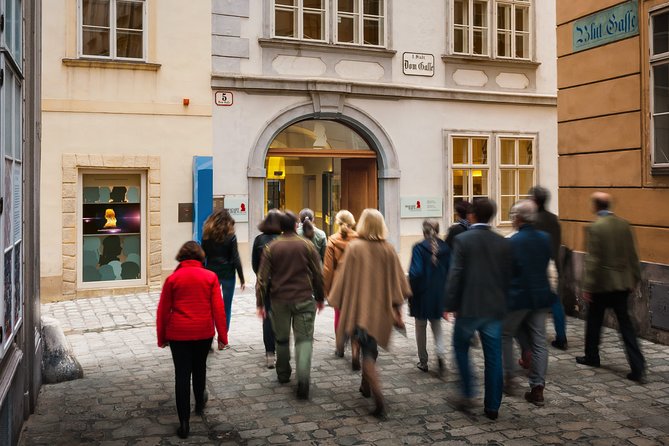
The group then strolls by Mozarthaus Vienna, also known as Figaro House. Mozart lived here from 1784 to 1787, a period associated with many of his best-known operas and instrumental works. Hearing that timeline while standing near the residence helps connect the music to the practical reality of a composer’s life in the city.
Allow about 20 minutes for this stop. The tour does not include admission to Mozarthaus, and the description is to stroll by rather than enter. That distinction is useful when planning: if seeing the interior and exhibits matters to you, arrange a separate visit and leave enough time around the walk.
The private format should make it easy to ask what you most want to know, from Mozart’s years in the house to the works he created during that period. Still, the tour is not a substitute for the museum visit. It gives you the location and context, then keeps moving.
Beethoven’s statue and a restless address book
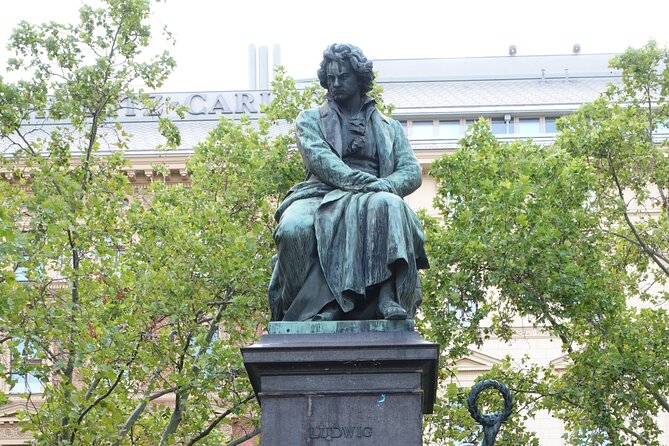
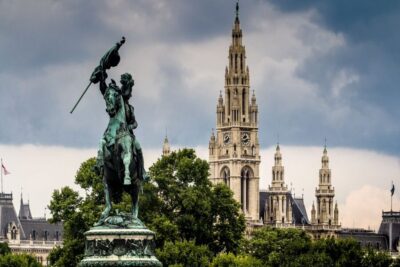
At Beethoven’s monument, the guide turns to a life marked by frequent changes of address. Beethoven lived in roughly 60 different apartments around Vienna, a striking contrast with the monument’s sense of permanence. The stop is listed at about 20 minutes and requires no admission ticket.
That detail gives the tour a human scale. Rather than treating Beethoven only as a great name on a concert poster, you get a glimpse of someone whose daily life involved repeated moves around the city. It also prepares you for the later stop at the Pasqualati-House, one of his many residences.
If you enjoy music but have little formal training, this kind of personal detail can be a welcome entry point. A past participant specifically praised the tour as accessible to someone with little classical music knowledge. The route does not require you to recognize every composition or know the difference between musical periods before you arrive.
The State Opera and Vienna’s continuing music life
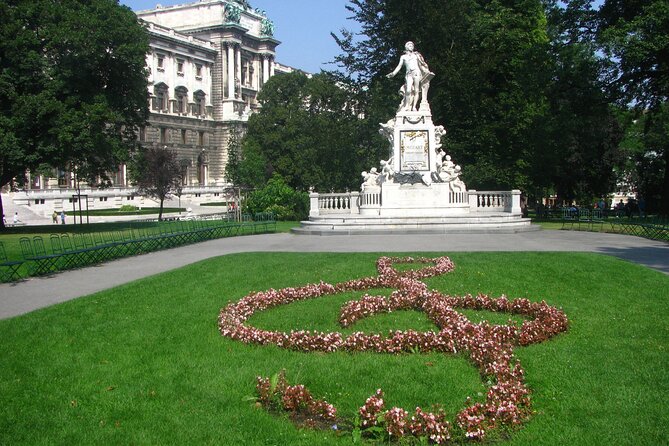
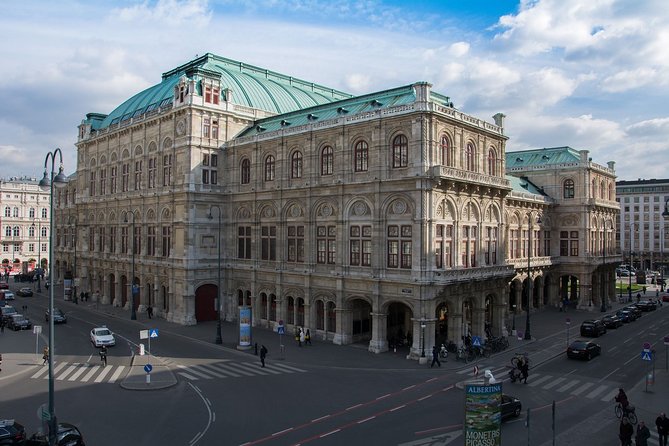
Outside the Wiener Staatsoper, the guide shifts from the past to Vienna’s present-day musical reputation. The State Opera remains one of the city’s major opera stages, and the nearby Musikverein is home to the Vienna Philharmonic. You consider how the city’s musical identity continues beyond the composers whose names dominate its history.
This stop is also an exterior visit. Admission to the opera house is not included, and the tour does not promise a performance. Think of it as a chance to place these institutions in the city’s story, not as a backstage visit or concert ticket.
For a visitor deciding how to spend a short stay, this distinction helps. The walk gives you context that can make a later concert or opera feel more connected to the city. If you want to attend a performance, you’ll need a separate ticket and schedule.
More private tours in Vienna:
- Vienna: Private Walking Tour with a Local Guide
★ 4.6 · 1,420 reviews - Vienna: Private Walking Tour with a Guide
★ 4.7 · 962 reviews - Vienna: Wine Tasting Experience in a Private Wine Cellar
★ 4.8 · 413 reviews - Private Day Tour Trip Salzburg Hallstatt and Melk from Vienna
★ 5.0 · 388 reviews
Beethoven at Mölker Bastei
At Mölker Bastei, the route passes Beethoven’s Pasqualati-House, directly opposite the University of Vienna. Beethoven stayed here among the many Vienna residences he used. The stop is scheduled for about 20 minutes, but admission is not included, so expect to view the site from outside unless you arrange a separate visit.
The guide’s account links Beethoven’s restless living arrangements with the shift from the Classical period toward the Romantic era. His music is described as reaching the height of Classicism while pointing toward important changes in Romantic music. That makes this more than another address on a composer’s biography: it helps explain why Beethoven’s work is often treated as a bridge between musical periods.
You might find this stop especially rewarding if you already know a few Beethoven works and want a stronger sense of their place in Vienna. If you are new to the subject, the guide can provide the story in everyday terms. The tour’s headphone selections add another way to connect what you hear with the buildings around you.
Ending at the Hofburg and Archduke Rudolph
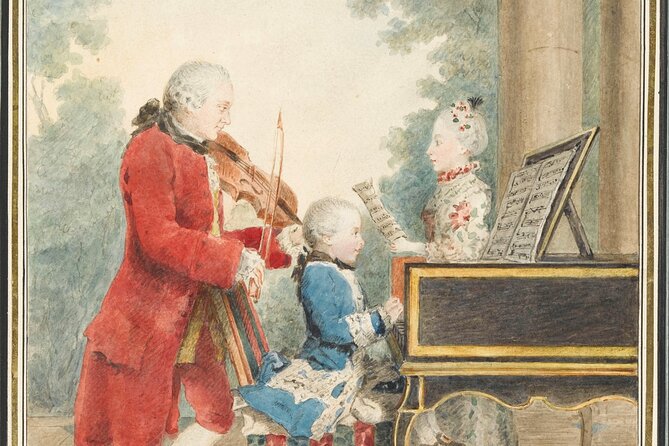
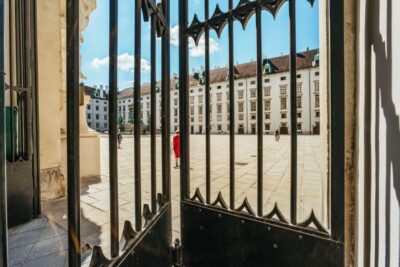
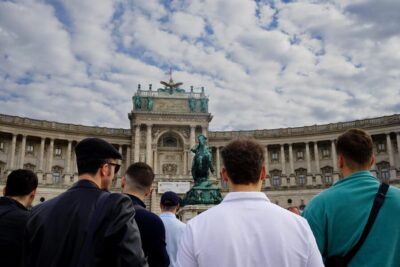
The circuit finishes at the Hofburg, the former residence of Archduke Rudolph, Beethoven’s friend and patron. Their relationship adds a social and personal angle to the walk. Beethoven’s ties with the aristocracy could be strained, but Rudolph became one of his strongest supporters and took piano lessons with him.
Beethoven dedicated the Missa Solemnis to Rudolph. The connection illustrates how the Habsburg family and major musicians interacted in Vienna during the 18th and 19th centuries. It also gives the tour a satisfying closing point: the route has moved from public performance spaces to the homes and relationships that supported musical work.
The Hofburg stop is listed at about 20 minutes, with admission not included. As elsewhere, the focus is on the site and its story rather than entry to a paid attraction. If you want to explore the palace complex beyond the tour’s explanation, plan extra time separately.
Music on headphones changes the pace
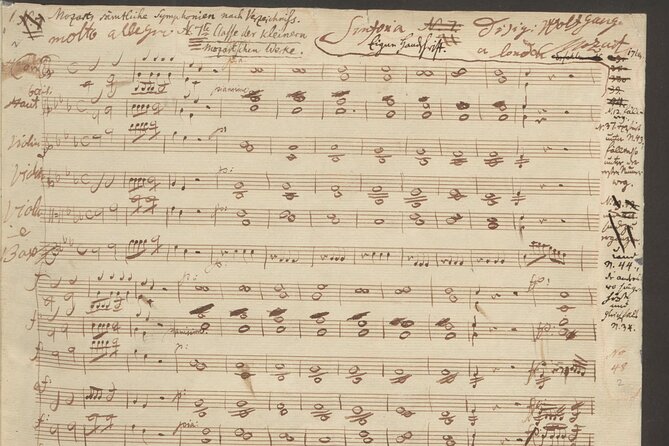
During the three-hour walk, the group pauses to listen to selections of Vienna’s musical masterpieces on headphones. This is one of the tour’s most distinctive features. Instead of only hearing about a composer or a venue, you get a chance to listen while moving through the places connected to the city’s music.
The music is not described as a live performance, so set expectations accordingly. It is a guided listening element built into the walk. For some people, that will be a welcome change of pace from continuous narration; for others, the main draw will remain the guide’s stories and the city sites.
Personal accounts highlight the combination of music, photos, and the guide’s own stories. One person found the photos helpful for bringing historical figures into focus, while another called the music on headphones an unexpected pleasure. If those details appeal to you, ask your guide how the listening pauses fit into the route.
Price, group size, and practical planning
The price is $564.72 per group, with up to 10 people included. That makes the value depend heavily on your party size. For a couple, it is a substantial outlay for a three-hour walk. For a family or group of friends near the 10-person limit, the shared flat fee can make a private guide much more affordable per person than paying individually.
You’re paying for a private experience with a historian guide, not a ticket bundle. Admission is free at St. Stephen’s Cathedral and the Beethoven statue, while entry is not included at Mozarthaus, the State Opera, Mölker Bastei, or the Hofburg. The route is largely presented through exterior stops and commentary, so factor any separate museum or performance plans into your budget.
The tour lasts about three hours, with morning and afternoon departures. It is booked on average 111 days in advance, so if your dates are fixed, it makes sense to look early. Pickup is offered at your hotel or holiday flat. A central alternative is Café Mozart at Albertinaplatz 2.
If you need public transport to reach the tour sites, tram and metro tickets are not included. Your guide can help you purchase them if you do not have a pass. Confirmation is provided at booking, and the activity is private, with only your group taking part. Free cancellation is available up to 24 hours before the start time; changes made inside that window are not accepted.
Who will get the most from this walk
I’d choose this tour if you want a well-structured introduction to Vienna’s musical history, especially if you value a guide who can adapt the discussion to your group. It suits classical music fans, but it is not only for them. A personal account from someone with little classical music training described the tour as enjoyable, and the guide’s stories and listening breaks can make the subject approachable.
It is also a sensible choice for a larger party that wants to stay together. The flat fee for up to 10 can be attractive when divided among a family or group of friends. A private guide can also make it easier to ask questions without worrying about holding up a larger public group.
I would look elsewhere if you want a concert, an in-depth museum visit, or extensive time inside every landmark. Those are not included. This walk is strongest as a guided outdoor route that connects significant places and musical ideas, with separate admission and performance plans left to you.
The tour has a perfect rating from 15 reviews, but that is still a small sample. I’d take it as encouraging rather than a guarantee. The most persuasive details are practical: the private format, music on headphones, and personal storytelling all suit a tour built around making Vienna’s musical past feel close at hand.
Should you book the Vienna City of Music tour?
Book it if you want a private, three-hour orientation to Mozart, Beethoven, and Vienna’s classical music institutions, and you’re happy to see several sites from outside. It is especially good value when your group is large enough to share the flat rate, and the headphone listening gives the walk a memorable feature beyond standard sightseeing.
Skip it if you mainly want interior access or a live performance. For the best fit, decide in advance whether you want to add a visit to Mozarthaus or attend an opera or concert, then plan those separately around the walk.
FAQ
How long is the Vienna City of Music tour?
The walk lasts approximately three hours.
How much does the tour cost?
The listed price is $564.72 per group, for up to 10 people.
Is this a private tour?
Yes. Only your group participates.
Is the tour offered in English?
Yes, English is the offered language.
Can the guide meet me at my hotel?
Pickup is offered, and the guide can meet you at your hotel or holiday flat. Café Mozart at Albertinaplatz 2 is an alternative meeting point.
Are morning and afternoon departures available?
Yes. You can choose a morning or afternoon departure.
Are entrance tickets included?
Admission is free at St. Stephen’s Cathedral and the Beethoven statue. Admission is not included at Mozarthaus Vienna, the State Opera, Mölker Bastei, or the Hofburg.
Do you hear music during the walk?
Yes. The group pauses to listen to selections of Vienna’s musical masterpieces on headphones during the tour.
Are public transport tickets included?
No. Tram or metro tickets are not included if you need public transport to reach the tour sites. Your guide can help you purchase tickets if you do not have a pass.
Can I cancel for a refund?
You can cancel up to 24 hours before the experience starts for a full refund. Cancellations or changes made less than 24 hours before the start time are not accepted for a refund or change.
Newest tours in Vienna
- Vienna: ‘Armenia In The Heart Of Austria’ Tour★ 5.0 · 6 reviews
- Vienna: Mozart Private Guided Tour★ 5.0 · 4 reviews
- Vienna: Klimt Villa (Gustav Klimt Atelier & Museum) Ticket★ 4.7 · 50 reviews
- Vienna: Kunsthistorisches Museum Guided Tour incl. admission★ 4.9 · 32 reviews
- Vienna: Luxury Vintage Fashion Walking Tour★ 3.4 · 8 reviews
- Vienna: Johann Strauss – Immersive Audiovisual Experience Ticket★ 4.8 · 60 reviews
- Vienna: Kingdom of Railways Museum Entry Ticket★ 3.6 · 50 reviews
- Vienna: KuK Perfumery Filz – Viennese Perfume Tasting★ 4.3 · 23 reviews
Vienna Walking Tours, compared.
Guided Walking Tour of City Center Highlights
Read our review →
Guided Walking Tour of City Highlights & Hidden Gems
Read our review →
Vienna Historic Center Small Group Walking Tour
Read our review →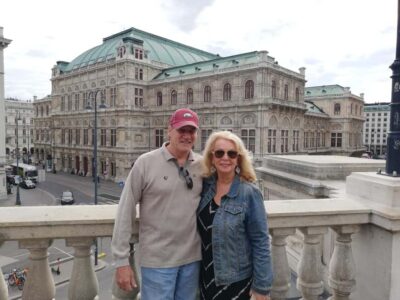
Browse the lists this tour appears in