
Reviewed · VIENNA WALKING TOURS
Vienna: History Highlight Walking Tour
Vienna’s imperial center makes more sense when someone connects its grand facades to the people and events behind them. On this two-hour walk, you trace the city from Roman remains at Michaelerplatz through the Hofburg district and finish near St. Stephen’s Cathedral.
I like two things here: the route packs major landmarks into a short walk, and the guide’s stories add human detail to buildings that can otherwise feel imposing and hard to read. Guides Herbert and Wolfgang have led the tour, with humor and practical tips as part of the mix.
The main consideration is that this is a brisk, outdoor introduction, not an in-depth visit to museums or palaces. Entrance fees are extra, and the tour is not suited to children under 12 or people with mobility impairments.
What to know before you book
- Roman Vienna starts the story: At Michaelerplatz, you see excavations that bring the city’s early history into the present-day center.
- The Hofburg takes center stage: The former imperial complex covers 555,000 square meters, and the guide explains what its scale and buildings meant.
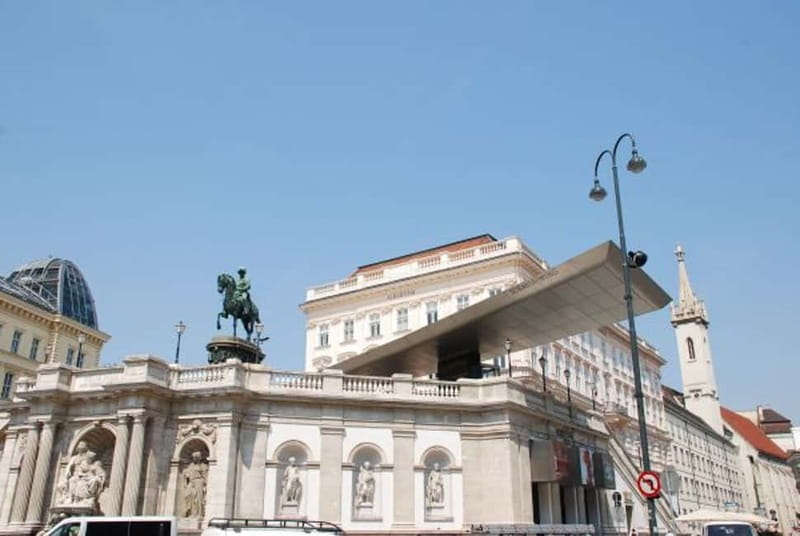
- Major sights come with context: The route includes Heroes’ Square, the Austrian National Library, the Albertina and the Imperial Crypt.
- A guide supplies the missing links: Expect history, architecture, customs and anecdotes, rather than a simple list of dates.
- Plan for an outdoor walk: The tour runs in all weather, lasts two hours and does not include entrance fees.
A fast, well-told introduction to central Vienna
At $33 per person, this walk is a reasonably priced way to make sense of a historic district packed with palaces, churches and monuments. You are paying for a guide’s interpretation and a route that links the sights, not for museum admission or a long indoor visit.
That distinction matters. Vienna’s grand buildings can be impressive from the street, but their facades do not explain who built them, how the Habsburgs used them or what changed after the monarchy. The guide fills in those connections, then points out details you could easily pass without noticing.
The strongest part of the experience is the balance between history and storytelling. Guides such as Herbert and Wolfgang have been praised for making the material clear, lively and funny. Herbert has also used images on an iPad to show how buildings looked after the Second World War. That kind of visual aid can help you picture damage and reconstruction, though the specific guide and approach may vary.
I would take this tour early in a Vienna stay if you want a useful orientation before deciding which museums or interiors deserve more of your time. Some people have used the guide’s recommendations to plan later visits, including a better-prepared trip to the Imperial Treasury. If you already know the central district well, the broad introductory format may feel less essential.
More walking tours in Vienna:
- Vienna: Guided Walking Tour of City Center Highlights
★ 4.7 · 4,989 reviews - Vienna: Vienna Central Cemetery Guided Walking Tour
★ 4.8 · 3,307 reviews - Vienna: Guided Walking Tour of City Highlights & Hidden Gems
★ 4.9 · 2,180 reviews
From Roman remains to the Hofburg
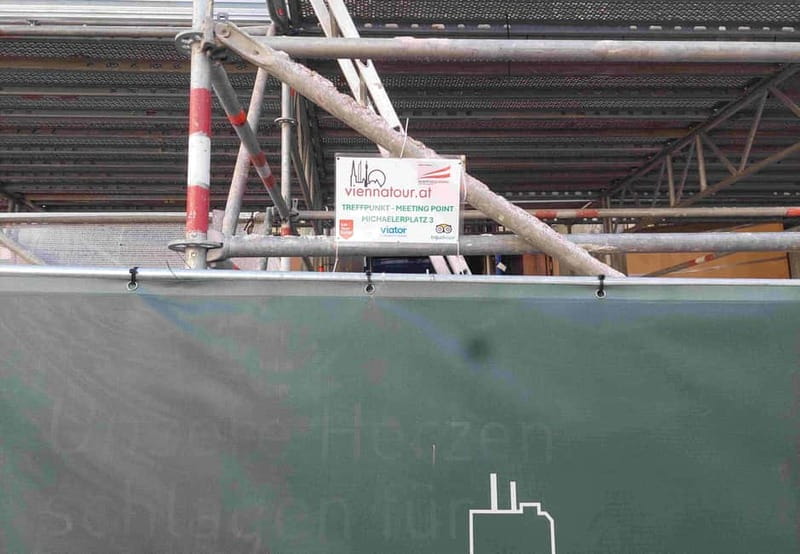
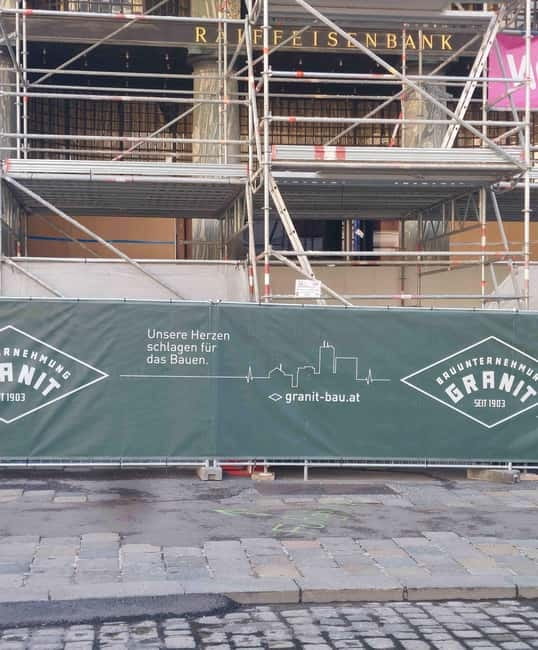
The meeting point is outside Loos Haus at Michaelerplatz 3, between Kohlmarkt and Herrengasse. The building has Raiffeisenbank on its facade, and Herrengasse metro station on U3 is about a three-minute walk away. That is a handy central start, though Michaelerplatz can be busy, so give yourself time to locate the right entrance and group.
The first stop is the Michaelerplatz excavations. Here the tour starts with Roman Vienna and the question of why a castle was built in this spot. It is a good opening because it pushes the story further back than the imperial buildings most people associate with the city.
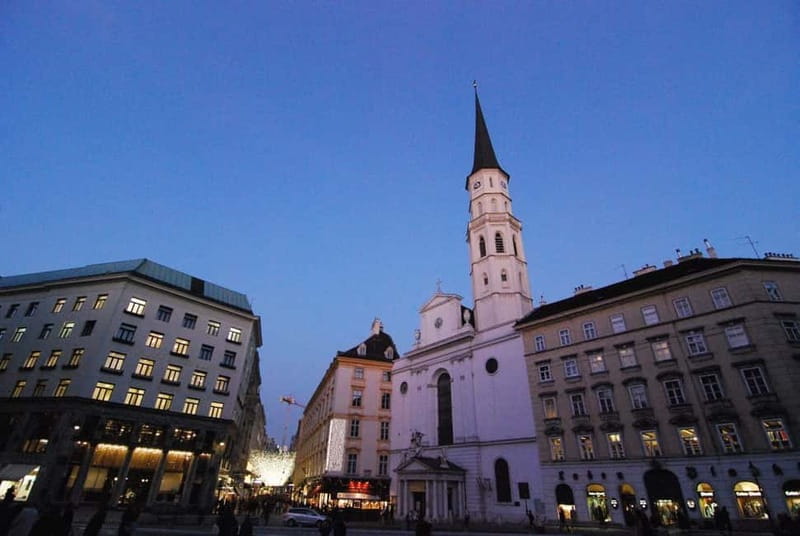
St. Michael’s Church is another early landmark, described as Vienna’s third-oldest church. Its architecture combines three styles, a useful reminder that the city’s buildings were shaped across different periods rather than assembled in one grand imperial moment. The walk offers a street-level look and explanation, not a church visit with guaranteed interior access.
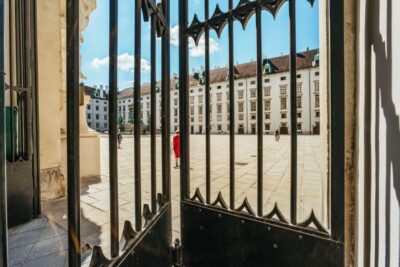
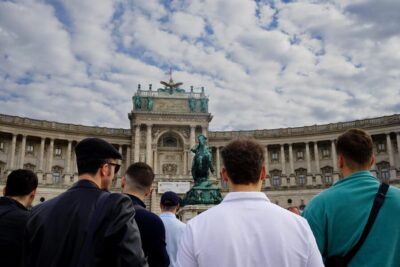
Next comes the Hofburg Palace, whose enormous 555,000-square-meter grounds make clear that this was not simply a residence. The guide discusses its role and the rulers connected to it, helping you understand how the complex served as a center of power. You will see the palace area as part of the walk; entrance fees to attractions are not included.
Heroes’ Square and the imperial story
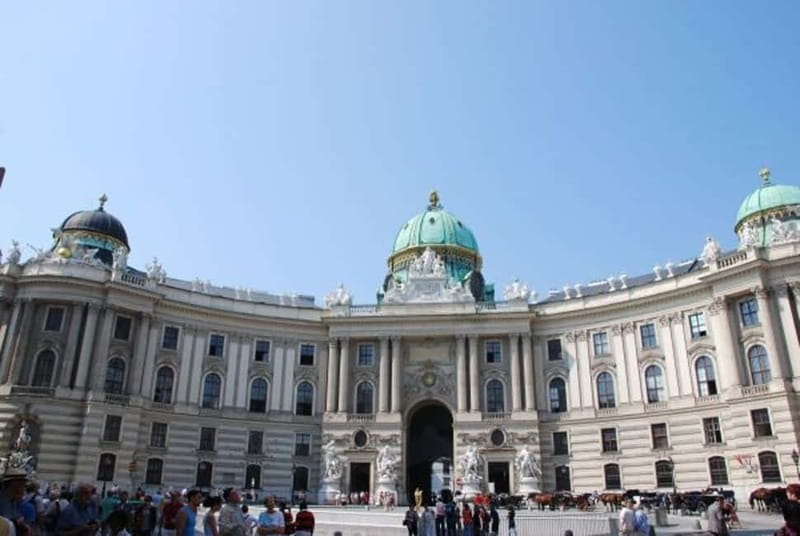
Heroes’ Square, or Heldenplatz, gives you room to take in the scale of the imperial setting. The guide explains what lies behind the facades and why the square matters, turning a broad ceremonial space into part of Vienna’s political story.
The tour also points out the Imperial Treasury and explains why it deserves a place on your own itinerary. This is particularly useful if you are deciding how to spend a limited amount of time in the Hofburg area. The tour itself does not include admission, so treat this as orientation and background rather than a ticketed visit.
From there, the Austrian National Library brings a different kind of grandeur. You pass the library and hear about its State Hall, the symbol on the roof and the reason the square is named for Emperor Joseph II. The hall is a major sight in its own right, but the walk does not include its entrance fee. If you want to go inside, set aside separate time and budget.
The value of this stretch lies in having someone connect the locations. Without a guide, it is easy to see the Hofburg, square and library as a sequence of handsome buildings. With the historical links, they become parts of a larger account of rulers, ceremony and cultural authority.
Wedding customs, war and the Albertina
The route includes the church where Habsburg weddings were held. The guide explains why, in some cases, the groom was not even present at the ceremony. That detail brings dynastic marriage down from the level of family trees and into the practical customs of court life.
The church is closed on Sundays and public holidays. Since the itinerary describes a visit but does not promise access to every interior, check what you can expect on your chosen day if seeing inside is important to you.
At the Albertina, the guide introduces a museum known for its large graphic art collection. The tour then turns to the Monument Against War and Fascism, where Vienna’s more painful 20th-century history comes into view. This shift is important: the city’s story is not only palaces, ceremony and artistic achievement.
The guide discusses the horrors of the Second World War and the damage the city suffered. Images shown on an iPad have helped illustrate how buildings looked after the war on some tours. Even without entering a museum, the stop gives you a chance to consider how the city’s streets carry both imperial memory and the consequences of conflict.
The State Opera is another landmark on the route. Here you hear why the Hotel Sacher stands where the Carinthian Gate Theatre once stood. It is a small urban change with a larger lesson: Vienna’s famous cultural institutions and buildings have not remained untouched by time.
More history tours in Vienna:
- Vienna: Time Travel and Magic Vienna History Tour
★ 4.6 · 3,879 reviews - Vienna: World War II Historical Walking Tour
★ 4.8 · 1,772 reviews - Vienna Historic Center Small Group Walking Tour
★ 5.0 · 1,746 reviews - Time Travel-Magic Vienna History Tour Ticket
★ 4.5 · 1,099 reviews
The Imperial Crypt and the walk’s final stretch
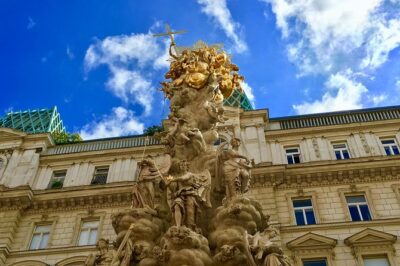
At Neuer Markt, the Providentia Fountain provides a setting for more local anecdotes. The tour also discusses the Habsburg burial ritual at the Imperial Crypt, a memorable subject because it links ceremony, family tradition and the city’s imperial past.
The Imperial Crypt is an important stop for anyone curious about Habsburg history, but the tour does not include entrance fees. If you want to go inside, plan a separate visit rather than assuming the walking tour covers it.
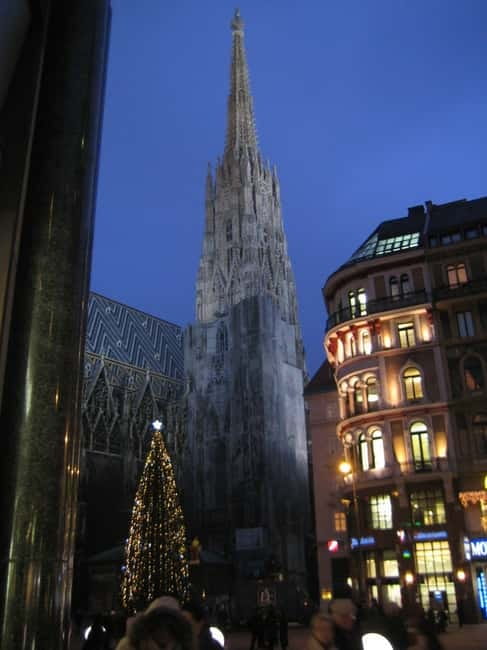
The walk’s listed route ends at St. Stephen’s Cathedral, Vienna’s best-known landmark. The guide covers its partial destruction during the Second World War and challenges a familiar version of the story that may have followed you from school. This is a fitting final stop: the cathedral is instantly recognizable, but the details of its damage and survival add a layer beyond the postcard view.
There is a small point to clarify before setting off. The route information names Stephansplatz as the final stop, while the meeting details say the activity ends back at the starting point. Ask the guide at the beginning where the group will finish, especially if you have a timed reservation or another plan immediately afterward.
Group size, pace and practical details
The tour is described as a small-group walk, and the intimate format suits a route built around explanation and questions. A few people have had particularly small groups, even a private-feeling outing, but group size can vary. The guide’s ability to adapt to questions and interests is one of the experience’s main strengths.
Expect two hours on foot, in all weather. Wear shoes you are comfortable walking in and bring weather-appropriate clothing. The tour is not suitable for people with mobility impairments, and children under 12 are not considered a good fit. Large bags and luggage are not allowed, and audio or video recording is prohibited.
Tours run in English and German, with starting times dependent on availability. The listed price is $33 per person, and entrance fees are separate. You can cancel up to 24 hours ahead for a full refund, and the reserve-now, pay-later option lets you hold a place without paying at the time of booking.
Who will get the most from this walk?
This tour is best for a first-time visitor who wants a clear introduction to central Vienna without spending half a day on a formal museum tour. The short format lets you see a string of major landmarks while learning enough context to choose which places to revisit.
It also suits anyone who enjoys historical anecdotes and a guide who can explain architecture in plain language. The comments about Herbert and Wolfgang point to the kind of tour this is at its best: informed, personable and lightly funny, with room for questions and practical advice.
If you want to enter the State Hall, the Treasury, the Imperial Crypt or other attractions, you will need separate tickets and time. If your priority is a slow, accessible stroll or a detailed indoor experience, this is not the right fit.
Should you book it?
Book this walk if you want the imperial center to feel less like a parade of impressive facades and more like a connected story. For $33 and two hours, you get a helpful overview, a route through several major sights and a guide who can point you toward worthwhile next stops.
Skip it if you already know the area well, need an accessible route or want admission to the attractions included in the price. For most first visits, I would put it near the start of the stay, then use the guide’s tips to decide where to spend the rest of your time.
FAQ
How long is the Vienna History Highlight Walking Tour?
The tour lasts two hours. Starting times depend on availability.
What languages are available?
The live guide leads tours in English and German.
Where does the tour start?
Meet outside Loos Haus at Michaelerplatz 3, 1010 Vienna. The building is between Kohlmarkt and Herrengasse, and Herrengasse metro station on U3 is about a three-minute walk away.
Where does the tour end?
The route lists Stephansplatz as its final stop, while the meeting details say the activity ends back at the starting point. Ask the guide to confirm the finish location before the walk.
Are entrance fees included?
No. Entrance fees are not included in the $33 price.
Can I bring luggage or record the tour?
Large bags and luggage are not allowed. Audio and video recording are also prohibited.
Is the tour suitable for children and people with mobility impairments?
It is not suitable for children under 12 or people with mobility impairments. The tour takes place in all weather conditions.
Newest tours in Vienna
- Vienna: ‘Armenia In The Heart Of Austria’ Tour★ 5.0 · 6 reviews
- Vienna: Mozart Private Guided Tour★ 5.0 · 4 reviews
- Vienna: Klimt Villa (Gustav Klimt Atelier & Museum) Ticket★ 4.7 · 50 reviews
- Vienna: Kunsthistorisches Museum Guided Tour incl. admission★ 4.9 · 32 reviews
- Vienna: Luxury Vintage Fashion Walking Tour★ 3.4 · 8 reviews
- Vienna: Johann Strauss – Immersive Audiovisual Experience Ticket★ 4.8 · 60 reviews
- Vienna: Kingdom of Railways Museum Entry Ticket★ 3.6 · 50 reviews
- Vienna: KuK Perfumery Filz – Viennese Perfume Tasting★ 4.3 · 23 reviews
Vienna Walking Tours, compared.
Guided Walking Tour of City Center Highlights
Read our review →
Guided Walking Tour of City Highlights & Hidden Gems
Read our review →
Vienna Historic Center Small Group Walking Tour
Read our review →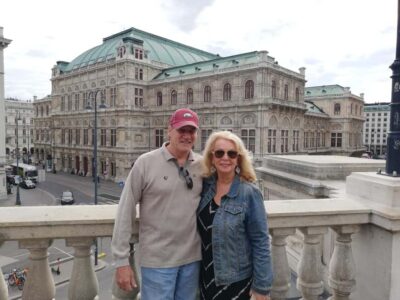
Browse the lists this tour appears in