

Reviewed · VIENNA WALKING TOURS
Vienna: Private Walking Tour of the Central Cemetery
Vienna’s Central Cemetery is a city of the dead with a very Viennese sense of theater: grand tombs, sober memorials, and an Art Nouveau church all share the grounds. On this private two-hour walk, a guide helps you make sense of the place and its stories, from the famous names above ground to the tragedies remembered here.
I like the contrast between monumental private tombs and public memorials, and the chance to step inside the cemetery church with a guide. I also like that the tour ends at the forest cemetery, where you see a more modern approach to burial. One consideration: the tour is in German, so it may not suit you if you need an English-language guide.
Key points
- A private walk in a vast cemetery: The tour explores Europe’s second-largest cemetery in a two-hour guided visit.
- A close look at Viennese memorials: See graves connected with the 1881 Ringtheater fire and the 1945 Battle of Vienna.
- An Art Nouveau church visit: Admission to the cemetery church is included, with its architectural history explained on the tour.
- A modern final stop: The forest cemetery offers a contrast with the older monumental tombs.
- A German-speaking, accredited guide: Christian Pacic is the named provider, and the tour is led by a state-certified Austrian guide.
- A fixed group price, plus a contribution: The listed price is $217 for a private group of up to 10, with a €3 per-person solidarity contribution payable on site.
Reading Vienna through its cemetery
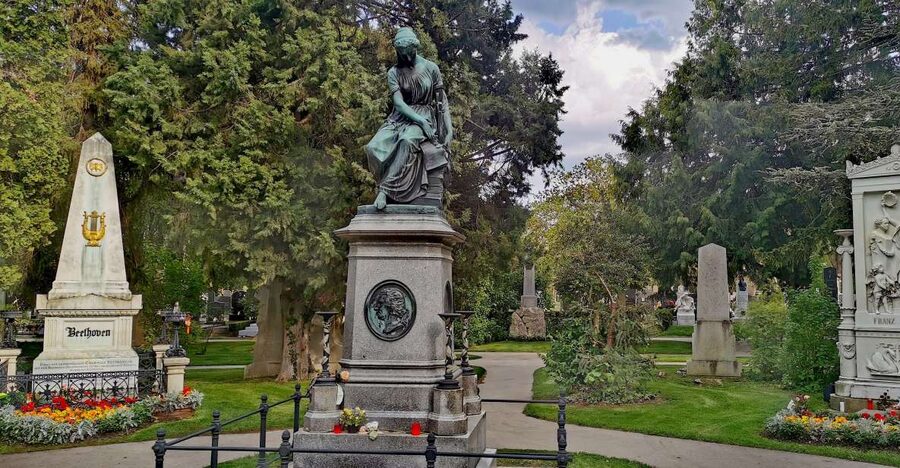
Vienna’s Central Cemetery is not just a place to visit the graves of notable people. Its monuments also show how families, institutions, and the city itself chose to remember the dead. The tour’s central idea is that death may level people beneath the ground, but above it, wealth, reputation, and status often remain on display.
That contrast gives the walk a useful thread. You can look at grand tombs not only as works of stone, but as statements about the people and families who commissioned them. A private guide can explain what you are seeing and help connect individual memorials with the city’s past.
The cemetery has not always enjoyed its present reputation. It began as a much-criticized burial place and is now regarded as one of Vienna’s most beautiful cemeteries. That change is part of what makes a guided visit worthwhile: you are not simply walking among graves, but seeing how attitudes toward death and remembrance have shifted.
The cemetery is described as the second-largest in Europe, so a two-hour visit is best understood as a focused introduction rather than an attempt to cover every corner. The private format lets the guide shape the walk around the tour’s featured sites and stories. You get a planned route and context, not an unstructured wander through a very large place.
More walking tours in Vienna:
- Vienna: Guided Walking Tour of City Center Highlights
★ 4.7 · 4,989 reviews - Vienna: Vienna Central Cemetery Guided Walking Tour
★ 4.8 · 3,307 reviews - Vienna: Guided Walking Tour of City Highlights & Hidden Gems
★ 4.9 · 2,180 reviews
Meeting at Gate 2 and finding your bearings
The meeting point is the cemetery’s second gate. After entering, look to the right for the guide at the water hydrant. That specific landmark should make the start easier, but it is worth checking that you have the correct gate before setting off. A large cemetery is not the place to guess your way to the meeting point.
The tour lasts two hours, a practical length for seeing several different parts of the grounds without turning the visit into an all-day outing. The walk includes the monumental graves, memorials, the cemetery church, and the forest cemetery. Since no detailed route or walking distance is specified, allow for time on your feet and wear shoes suitable for a cemetery walk.
This is a private group experience, with the price covering up to 10 people. That arrangement suits families, friends, or a small work group who want to hear the guide clearly and ask questions without joining a larger party. It also means the per-person cost changes with your group size. At the full 10-person limit, the listed $217 price works out to $21.70 per person, before the required solidarity contribution.
The tour is offered in German. If you are comfortable following a German-language guide, that is a useful detail to know in advance. If you need another language, the information provided does not list one.
Monumental tombs and public remembrance
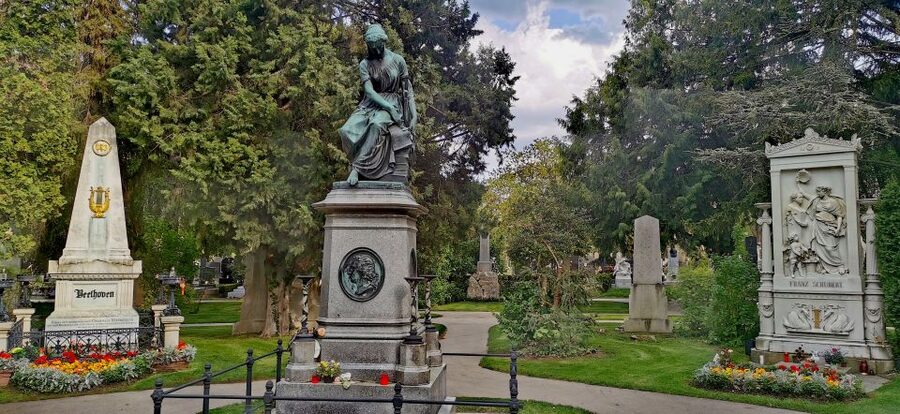
The cemetery’s grand graves are a striking introduction to the way Vienna’s dead are remembered. The tour points out monumental tombs of famous people and invites you to notice the difference between public memory and private display. Some memorials are built to preserve a name; others carry a broader message about loss and the cost of conflict.
I find that mix more interesting than a simple roll call of famous residents. Names can be hard to connect with a place unless you know why they mattered, but the guide’s stories give the monuments a human and historical frame. The details can also reveal the social distinctions that remain visible in a cemetery, even when the old saying insists that everyone is equal in death.
The tone is not meant to be solemn from start to finish. Christian Pacic is associated with an engaging style that combines historical detail with Viennese humor, or Wiener Schmäh. That balance matters here. A little humor can make a serious subject easier to follow, while the memorials themselves keep the visit from becoming a lighthearted sightseeing stop.
This part of the tour should appeal if you enjoy architecture, local history, or the way a city commemorates its prominent residents. If your interest is limited to seeing a particular famous person’s grave, keep in mind that no individual celebrity graves are named in the tour information. The emphasis is on the cemetery’s broader stories and notable tombs.
The Ringtheater fire and the Battle of Vienna
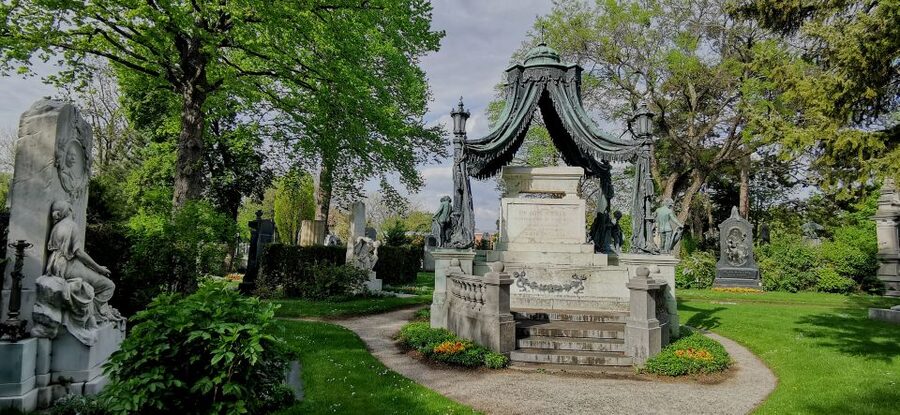
The cemetery also holds memorials that turn attention away from fame and toward collective loss. You’ll see graves for victims of the Ringtheater fire in 1881, as well as graves for Soviet soldiers who died in the Battle of Vienna in 1945. These stops give the tour a more sobering counterweight to the grand family tombs.
The Ringtheater memorial recalls a deadly fire, while the Soviet soldiers’ graves connect the cemetery to the final fighting in Vienna during the Second World War. The provided tour information does not give casualty figures or a detailed account of either event, so think of these as places where the guide can set the story in context rather than as a full history lecture on each tragedy.
The memorials also help explain why the cemetery is described as a place of warning as well as remembrance. Some monuments preserve a person’s status or family name. Others ask you to remember how senseless death can reach beyond one household and touch a whole community.
These stops are a reason the tour’s title promises a morbid encounter with Viennese death. That phrase sounds playful, but the subject is not treated as a novelty alone. The walk moves between grand memorials and painful events, making room for both the city’s theatrical side and its grief.
More private tours in Vienna:
- Vienna: Private Walking Tour with a Local Guide
★ 4.6 · 1,420 reviews - Vienna: Private Walking Tour with a Guide
★ 4.7 · 962 reviews - Vienna: Wine Tasting Experience in a Private Wine Cellar
★ 4.8 · 413 reviews - Private Day Tour Trip Salzburg Hallstatt and Melk from Vienna
★ 5.0 · 388 reviews
Inside the Art Nouveau cemetery church
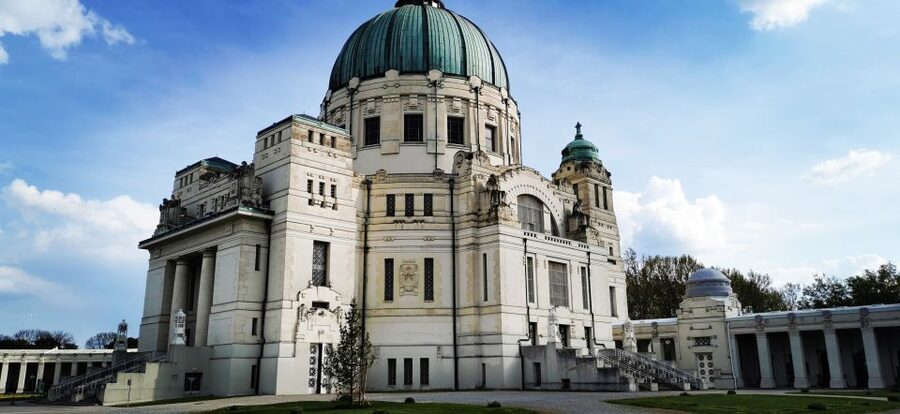
Near the center of the cemetery, in a commanding position, stands the cemetery church. Its Viennese Art Nouveau design gives the tour a change of scale and mood: after the open grounds and individual monuments, you step into a building whose architecture makes remembrance part of the city’s public life.
The guide explains the church’s architectural history, and free admission is included. That is a practical bonus, but the real value is having someone point out why the building looks as it does and how it fits into the cemetery. Without that context, you might admire the design and move on without understanding its place in the wider story.
The church is one of the tour’s clearest highlights for anyone interested in architecture. The description does not promise particular interior features or a specific amount of time inside, so go in expecting an architectural explanation rather than a lengthy specialist visit. Its central location makes it a natural anchor for understanding the cemetery as a whole.
The forest cemetery and a newer way to remember
The tour ends at the forest cemetery, a modern burial area that brings the walk into the present. After seeing ornate tombs and memorials designed to preserve names for generations, you finish with a form of burial that reflects changing ideas about what a resting place can look like.
That final contrast gives the tour a satisfying shape. You begin with Vienna’s established customs and prominent monuments, then encounter public memorials to tragedy, an Art Nouveau church, and finally a newer approach to burial. The forest cemetery is not just an extra stop; it shows that the city’s relationship with death continues to change.
The description does not detail the forest cemetery’s burial practices or layout, so expect an introduction rather than a technical account. Still, it is a useful way to end a tour that might otherwise feel fixed in the past. You leave with a sense of how burial traditions can adapt along with society.
What the private format is worth
The listed cost is $217 per private group of up to 10. For a full group, that is a reasonable per-person price for a two-hour tour with a state-certified Austrian guide and included access to the cemetery church. For a couple or a very small group, the individual cost is higher, so the value depends on how much you want a guided, personal visit.
A private guide is particularly useful in a cemetery this large. You are paying for a clear route and the explanations that connect the monuments, tragedies, architecture, and present-day burial practices. The guide’s role is not simply to lead you from one grave to another, but to keep the visit coherent and engaging.
There is also a required solidarity contribution of €3 per person, charged on site before the tour. Remember to include it when calculating the total. The listed tour price and the contribution are given in different currencies, so check your payment arrangements rather than assuming the amounts will be combined into one charge.
Christian Pacic is the named provider, and the tour information identifies a state-certified Austrian guide. The guide is an important part of the experience: the history is the subject, but the guide’s ability to explain it with warmth and humor shapes how the two hours feel. The German language is a firm practical limit for anyone who cannot comfortably follow a German tour.
The experience is wheelchair accessible. Headsets are listed for groups from 15, while this private tour is priced for groups of up to 10, so headsets are not a feature you need to count on for this booking. If you have specific access needs beyond the stated wheelchair accessibility, confirm the details before reserving.
Is this Central Cemetery tour right for you?
I would consider booking this tour if you want to understand Vienna through its funerary history, enjoy architecture and memorials, or prefer a guide to give shape to a large site. The mix of grand graves, tragic events, the church, and the forest cemetery gives the visit more range than a walk focused only on famous names.
It is also a good fit for a group that likes conversation and is happy to spend two hours with a serious subject handled in an engaging way. Christian’s blend of history and Viennese humor sounds particularly well suited to the cemetery’s unusual mix of grandeur and grief.
I would skip it if you need a tour in English, want a fast visit to a single grave, or are uncomfortable spending time around burial sites and memorials to death. For everyone else, it offers a thoughtful, distinctly Viennese way to see how a city remembers its dead, and how those ideas keep changing.
FAQ
How long is the tour?
The tour lasts two hours.
What language is the tour in?
The live tour guide speaks German.
Where is the meeting point?
Meet at the second gate. After you enter, the guide will be on the right by the water hydrant.
How much does the private group tour cost?
The listed price is $217 per group of up to 10 people. A €3 solidarity contribution per person is charged on site before the tour.
Is admission to the cemetery church included?
Yes. Free admission to the cemetery church is included.
Is the tour wheelchair accessible?
Yes, the tour is listed as wheelchair accessible.
Newest tours in Vienna
- Vienna: Mozart Private Guided Tour★ 5.0 · 4 reviews
- Vienna: ‘Armenia In The Heart Of Austria’ Tour★ 5.0 · 6 reviews
- Vienna: Klimt Villa (Gustav Klimt Atelier & Museum) Ticket★ 4.7 · 50 reviews
- Vienna: Kunsthistorisches Museum Guided Tour incl. admission★ 4.9 · 32 reviews
- Vienna: Luxury Vintage Fashion Walking Tour★ 3.4 · 8 reviews
- Vienna: Johann Strauss – Immersive Audiovisual Experience Ticket★ 4.8 · 60 reviews
- Vienna: Kingdom of Railways Museum Entry Ticket★ 3.6 · 50 reviews
- Vienna: KuK Perfumery Filz – Viennese Perfume Tasting★ 4.3 · 23 reviews
Vienna Walking Tours, compared.
Guided Walking Tour of City Center Highlights
Read our review →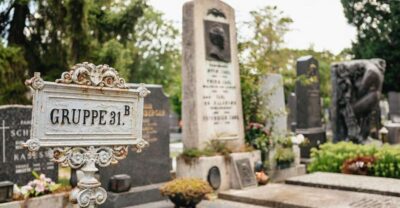
Guided Walking Tour of City Highlights & Hidden Gems
Read our review →
Vienna Historic Center Small Group Walking Tour
Read our review →
Browse the lists this tour appears in