
Reviewed · VIENNA WALKING TOURS
Vienna: Walking Tour of the Historic Ringstrasse
Vienna’s Ringstrasse is more than a parade of grand buildings. It is an imperial-era project built to put cultural institutions, government, and private wealth on display, and this private walk gives you a guide to the stories behind that spectacle.
I like two things especially: a guide can point out details you might otherwise walk past, including the story of the Ephrusi family, and the route makes room for garden breaks among the buildings and statues. The small-group format also leaves space to ask questions instead of simply keeping pace with a crowd.
The main consideration is the two-hour limit. There is a lot to see, and the value depends on how much detail your guide can fit into that time. The available feedback ranges from praise for lively, story-filled guiding to one brief assessment that the content felt thin, so do arrive ready to ask about the subjects that interest you.
- The Ring began as an imperial plan: Emperor Francis Josef ordered the city walls demolished about 150 years ago to make way for a broad boulevard and public buildings.
- Palais Ephrusi brings the grand facades down to family scale: The Jewish banking family’s story is told in The Hare with Amber Eyes.
- Culture and government share the route: You’ll see the Opera, Burgtheater, Parliament, City Hall, museums, and the University of Vienna.
- The walk includes open-air pauses: Volksgarten and other spacious garden areas offer a change of pace, with flowers and statues to take in.
- It is a private group for up to eight: At $353 per group, the per-person cost falls to about $44 when all eight places are filled.
A boulevard built to display imperial Vienna
The Ringstrasse began with a bold decision. Emperor Francis Josef commissioned the demolition of Vienna’s city walls, then set out to replace them with a broad boulevard and a collection of public buildings that would give the capital a new face.
The plan brought cultural institutions and government offices together in one grand setting. The Opera, theater, museums, university, Academy of Fine Arts, Parliament, and City Hall were among the institutions the project was intended to house. You’ll see the scale of that ambition as you walk, with one large public building after another marking the route.
The boulevard also became a stage for private fortunes. Industrialists and bankers built oversized palaces along it, using architecture to show their wealth and, in some cases, to pursue a title. That contrast matters: the Ring was not only a civic project, but also a place where powerful families made their mark.
A guide can help you read these buildings as more than impressive facades. Look for the way grand public ambition and private display sit side by side, and ask who paid for the buildings, who designed them, and who worked to construct them. The story includes artists and architects drawn to Vienna from across Europe, as well as poor workers who came seeking jobs and labored under difficult conditions.
Start at Liebenberg-Denkmal

The meeting point is Liebenberg-Denkmal at Mölker Bastei 8, in central Vienna. Arrive ten minutes before the scheduled start, and have your public transport ticket with you, as the tour information lists one among the things to bring.
The tour is described as a walking experience, but a tram ticket is not included and is also listed among the items you may need. The details do not explain when or why it might be used, so it is sensible to check with the provider before the walk if you want to know whether it is needed for your particular departure.
Starting at the Liebenberg monument gives the guide a chance to orient you around the Ring and its monuments. The route includes a statue of the mayor Liebenberg, along with other public sculptures, so this first stop helps set up one of the walk’s recurring themes: how Vienna commemorated its leaders and civic life in public spaces.
More walking tours in Vienna:
- Vienna: Guided Walking Tour of City Center Highlights
★ 4.7 · 4,989 reviews - Vienna: Vienna Central Cemetery Guided Walking Tour
★ 4.8 · 3,307 reviews - Vienna: Guided Walking Tour of City Highlights & Hidden Gems
★ 4.9 · 2,180 reviews
Palais Ephrusi and the people behind the palaces
Palais Ephrusi is one of the most distinctive stops because its story connects the Ring’s grand architecture to a family’s fate. The palace was commissioned by a wealthy Jewish banking family, and that family’s history is told in The Hare with Amber Eyes.
That personal thread can make the architecture feel less remote. Instead of treating the building as just another oversized residence, you can ask what the family’s place in Vienna meant and how its fortunes changed. The tour description does not promise a specific amount of time at the palace, so if this story interests you, say so early and make space for questions.
A guide who points out details you might miss can be especially useful here. One of the strongest ways to experience a palace exterior is to look beyond its size and decoration: ask about the owners, the architects, and what the building was meant to signal. The tour is at its best when those stories put faces and fates to the Ring’s display of wealth.
Churches, university, and public ambition
The Votive Church and the main building of the University of Vienna show the range of institutions represented along the route. They sit within the same larger civic vision as the government buildings and cultural venues, but each gives you a different way to think about the city’s priorities.
The university stop is a useful chance to ask how education fitted into the imperial capital’s plans. The tour information does not specify a visit inside, so expect to encounter the building from the route rather than assume an interior tour. The same practical caution applies to the other stops: this is a guided city walk, not a ticketed visit to each landmark.
The Votive Church adds a striking religious presence to a route best known for its public and cultural buildings. Together, these stops help you see that the Ring was planned as an ensemble, not simply a line of handsome facades. Your guide’s background stories can make that larger plan easier to follow.
City Hall, Burgtheater, and Parliament
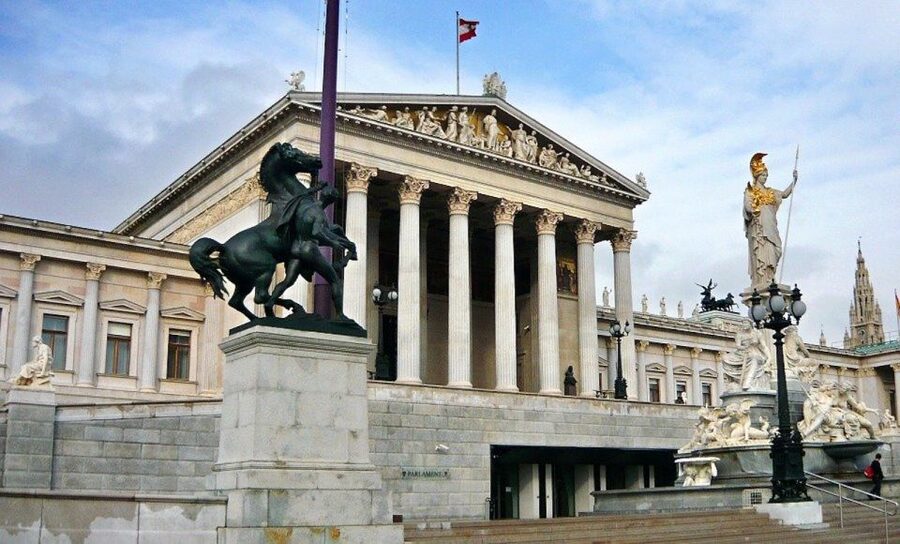
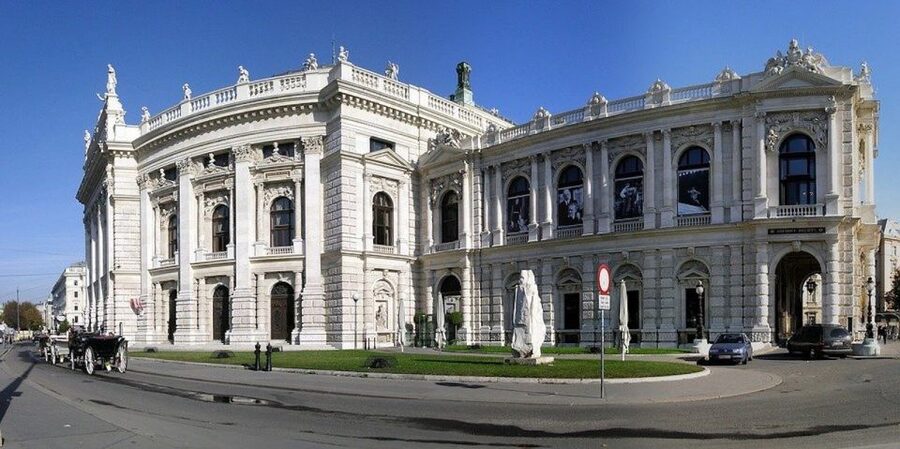
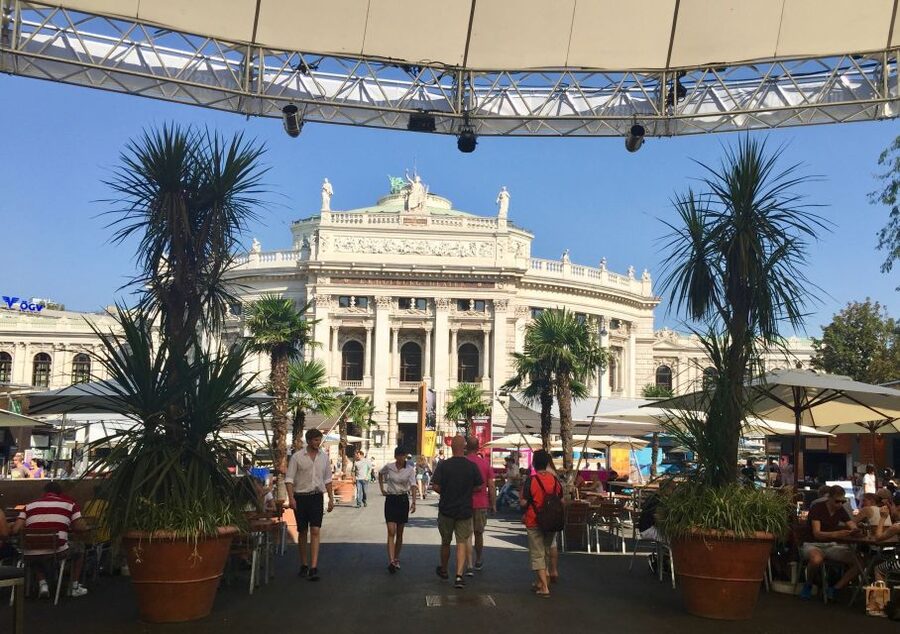
City Hall, the Burgtheater, and Parliament are among the most representative buildings on the Ring. They give the walk a clear sequence of civic life: municipal government, theater, and national politics, each housed in architecture designed to make an impression.
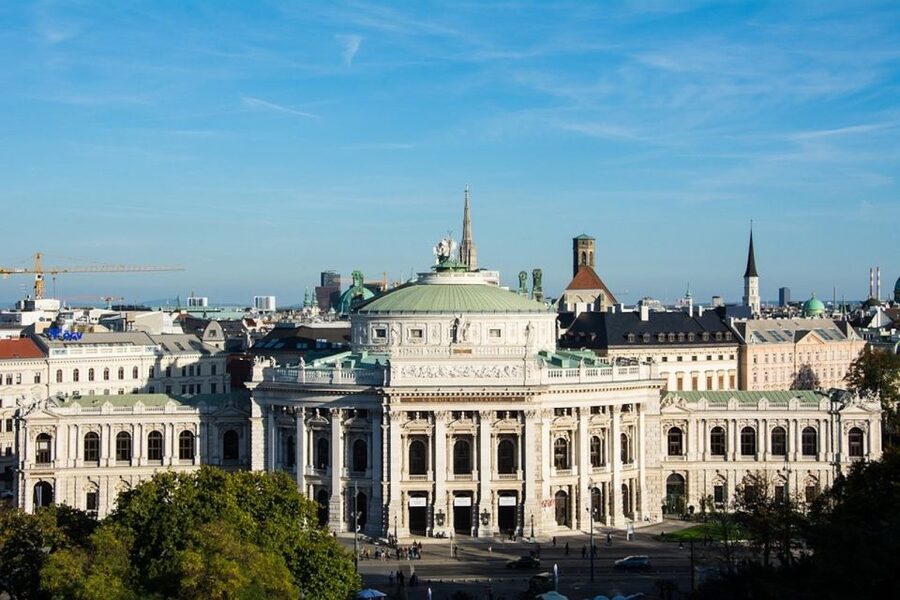
The Burgtheater connects the Ring’s cultural ambitions to its public life. It was part of the plan for a capital with prominent venues for the arts, while Parliament and City Hall show how the boulevard also served government. You do not need to know architectural terminology to appreciate the contrast. Notice how different institutions occupy a shared ceremonial setting, then ask your guide what each building was designed to communicate.
This is a good stretch for questions. The guide-led format has the potential to make the facades more legible, especially if you ask about the people who commissioned, designed, or used them. The available comments describe guides who shared stories about palace owners and answered questions, but the depth of the discussion will depend on the guide and the group’s interests.
More history tours in Vienna:
- Vienna: Time Travel and Magic Vienna History Tour
★ 4.6 · 3,879 reviews - Vienna: World War II Historical Walking Tour
★ 4.8 · 1,772 reviews - Vienna Historic Center Small Group Walking Tour
★ 5.0 · 1,746 reviews - Time Travel-Magic Vienna History Tour Ticket
★ 4.5 · 1,099 reviews
Heldenplatz, museums, and the garden pauses
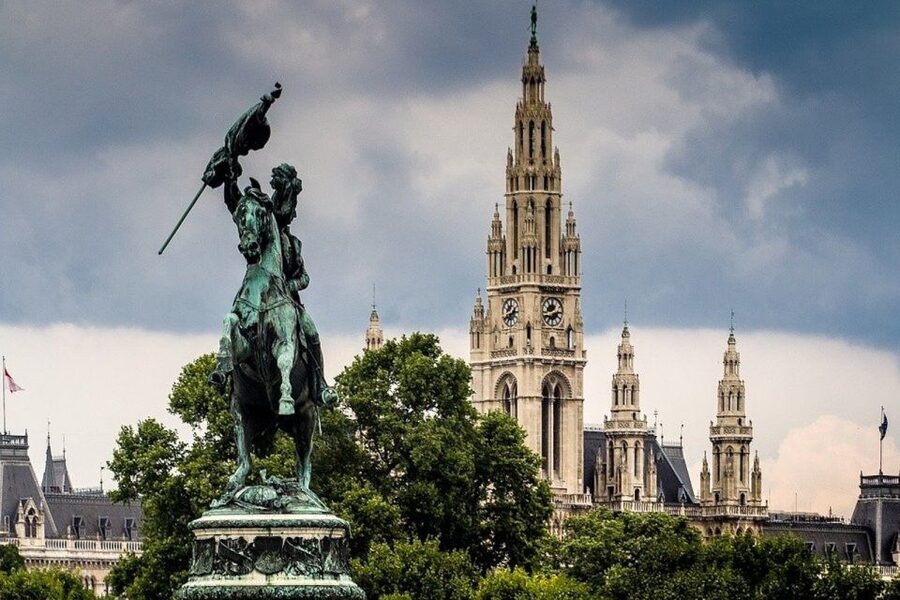
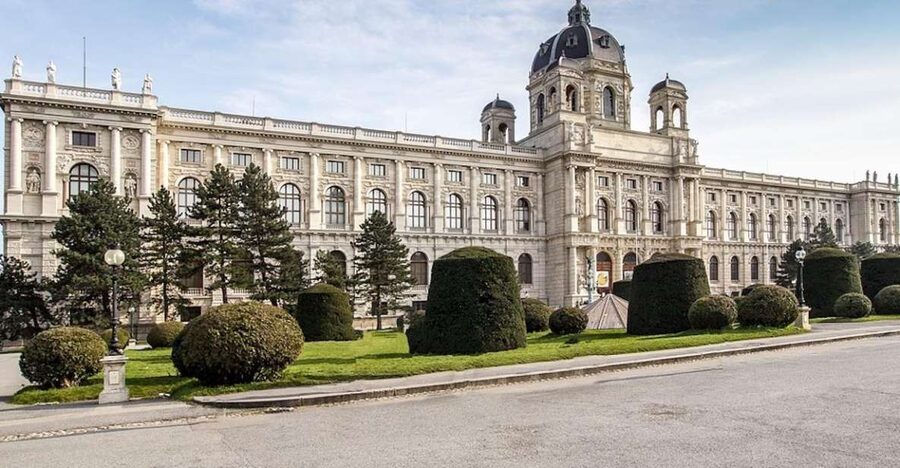
Heldenplatz, the museums, and Volksgarten add open space and room to pause amid the monumental buildings. The gardens are a practical pleasure on a two-hour walk: you can take a short break, look at the flower arrangements, and enjoy statues without needing to turn the tour into a separate museum visit.
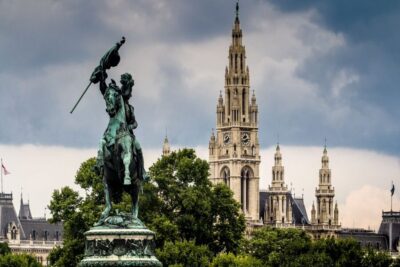
The route also includes a statue of Pallas Athene, one of the named sculptures you’ll encounter. These monuments are worth more than a quick glance if you enjoy public art. Ask who the figures represent and why they were placed in these particular settings; those answers can tie the statues back to the city’s civic identity.
The garden breaks help balance the scale of the Ring. The public buildings can feel overwhelming when taken one after another, while a pause among flowers and statues gives you time to absorb what you have seen. If you are visiting in rain, the walk still goes ahead as a walking experience, so bring clothing suitable for the weather. A guide has kept a tour engaging despite rain, but the gardens are naturally more pleasant in fair conditions.
Finishing near the Vienna Opera
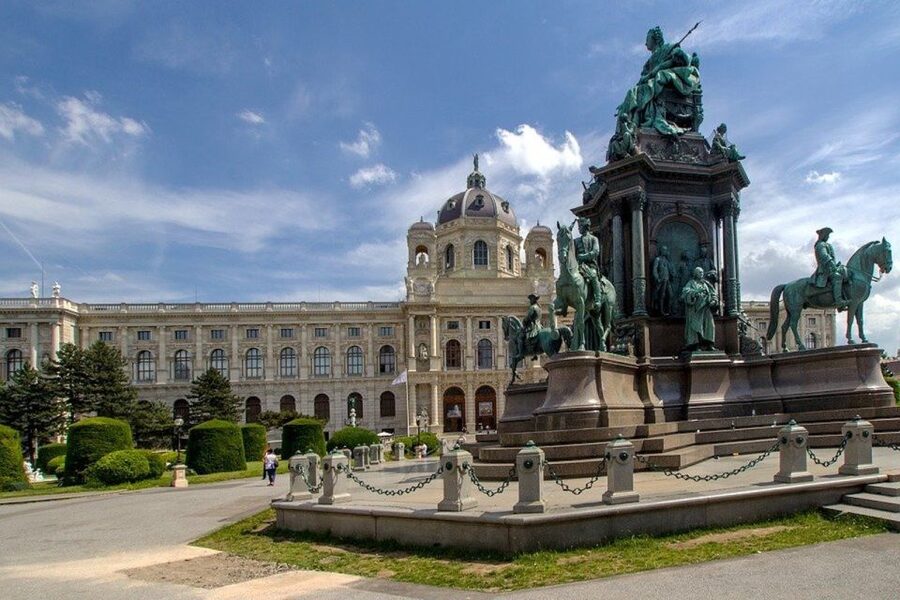
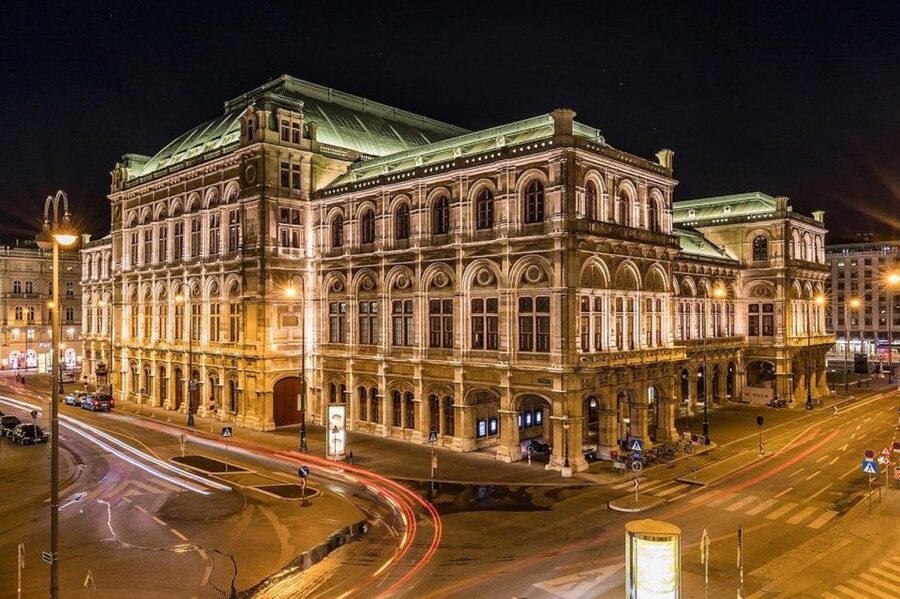
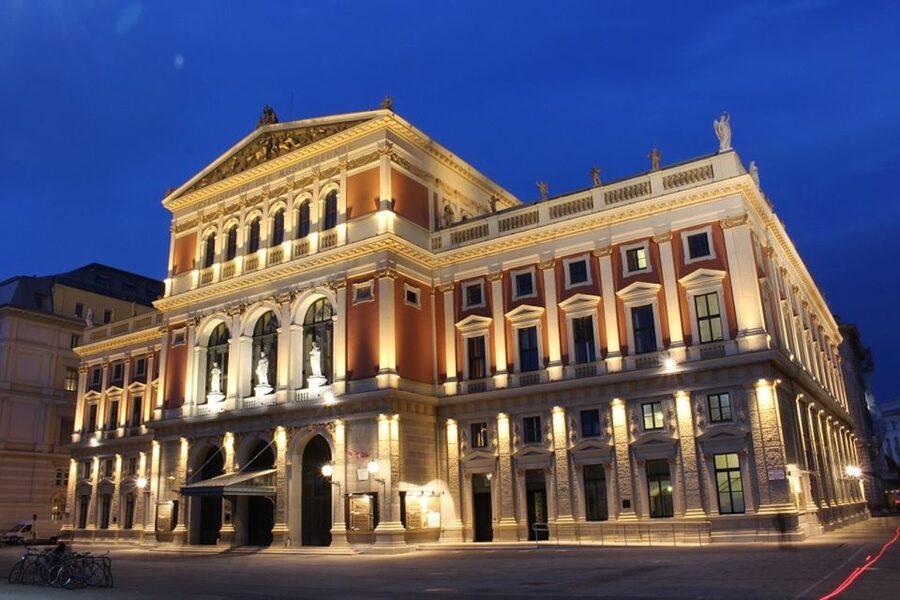
The walk ends next to the Opera House, a fitting final stop for a route shaped by Vienna’s cultural ambitions. The Opera was one of the public institutions the emperor’s plan aimed to accommodate, and finishing here brings the story back to the purpose of the Ring: a boulevard designed to gather major civic and cultural buildings in one place.
The finish also gives you a useful point from which to continue exploring, though the tour does not include hotel pickup or drop-off. The guided portion lasts two hours, so think of it as an introduction to the Ring rather than an exhaustive tour of every building or interior.
If you want more time at a particular stop, tell your guide what matters to you. The route covers a lot, and a private group can make it easier to steer the conversation toward architecture, family histories, public art, or the lives of workers who helped build the boulevard.
Is $353 good value for your group?
The price is $353 for a private group of up to eight. At the full group size, that works out to about $44 per person; with fewer people, the cost per person rises. You are paying for a private guide, not a ticketed attraction or transport, so the value is strongest when your group wants context and conversation rather than simply a route to follow.
For a couple, the total is a considerable spend for a two-hour walk. For a family or group of friends sharing the cost, it may be a more comfortable fit, particularly if you value the chance to ask questions and hear stories tailored to your interests. Compare the price with what you want from the tour: a clear introduction to the Ring and its people, or a deeper architectural study that may require more time.
The tour has a 4.7 rating from 10 reviews, a promising score but a small sample. The comments point to the qualities that matter most here: noticing details that could otherwise escape you, telling the stories of palace owners, and keeping the walk interesting through poor weather. There is also a short assessment that the content felt thin, a reminder to speak up if you want more context on a building or historical figure.
Who should book this Ringstrasse walk?
This tour suits you if you want to understand why the Ring looks the way it does, and how imperial planning, wealthy families, cultural institutions, and workers all shaped it. It is also a good fit if you prefer a private guide and the freedom to ask questions, rather than a large group with a fixed script.
You might choose another option if you want lengthy visits inside museums or buildings, since no interior access is specified. And if you are short on time, be realistic: two hours is enough for an informed overview and several memorable stories, but not for a detailed visit to every landmark along the route.
The walk is wheelchair accessible, and the live tour is available in Polish, German, or English. You can cancel up to 24 hours in advance for a full refund, and the reserve-now, pay-later option allows you to hold a place without paying immediately.
I would book it if your group wants a personal introduction to Vienna’s grand boulevard and its human stories. To get the most from the price, arrive with a few questions in mind, especially about Palais Ephrusi, the public buildings, or the workers behind the Ring. If you want only a quick look at the facades, a self-guided stroll may be enough.
FAQ
How long is the Ringstrasse walking tour?
The tour lasts two hours.
What is the meeting point?
Meet at Liebenberg-Denkmal, Mölker Bastei 8, 1010 Vienna. Arrive ten minutes before the activity starts.
What languages are available?
The live guide speaks Polish, German, or English.
How much does the tour cost?
The price is $353 per private group of up to eight people.
Is a tram ticket included?
No. A tram ticket is not included, and a public transport ticket is listed as something to bring.
Can I cancel the tour for a refund?
Yes. You can cancel up to 24 hours in advance for a full refund.
Newest tours in Vienna
- Vienna: Mozart Private Guided Tour★ 5.0 · 4 reviews
- Vienna: ‘Armenia In The Heart Of Austria’ Tour★ 5.0 · 6 reviews
- Vienna: Klimt Villa (Gustav Klimt Atelier & Museum) Ticket★ 4.7 · 50 reviews
- Vienna: Kunsthistorisches Museum Guided Tour incl. admission★ 4.9 · 32 reviews
- Vienna: Luxury Vintage Fashion Walking Tour★ 3.4 · 8 reviews
- Vienna: Johann Strauss – Immersive Audiovisual Experience Ticket★ 4.8 · 60 reviews
- Vienna: Kingdom of Railways Museum Entry Ticket★ 3.6 · 50 reviews
- Vienna: KuK Perfumery Filz – Viennese Perfume Tasting★ 4.3 · 23 reviews
Vienna Walking Tours, compared.
Guided Walking Tour of City Center Highlights
Read our review →
Guided Walking Tour of City Highlights & Hidden Gems
Read our review →
Vienna Historic Center Small Group Walking Tour
Read our review →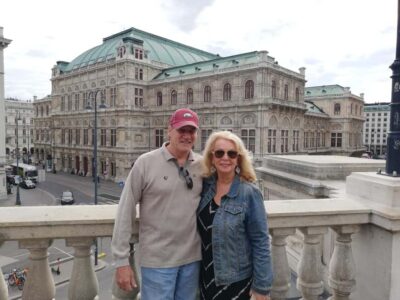
Browse the lists this tour appears in