
Reviewed · VIENNA WALKING TOURS
Vienna Highlight Tour – yue walk
Vienna’s historic center is a place where imperial palaces, churches, grand museums, and ordinary city streets sit close together. On this walk, Yue Mayr links those sights with stories about the Habsburgs, Vienna’s architecture, and the people behind the monuments. You cover a lot of ground in about two hours, ending near St. Stephen’s Cathedral.
I like the small group limit of six, which gives you a better chance to ask questions than on a large coach tour. I also like that the route mixes famous landmarks with details that are easy to miss, from the Sacher Hotel to the excavations at Michaelerplatz.
The main consideration is the pace: 14 stops in roughly two hours means brief visits, not long explorations. The price is $106.20 per person, and admission is not included at several sites, so think of this as an orientation walk rather than a substitute for visiting the museums or palace interiors.
- Start at the State Opera: Meet at Herbert-von-Karajan-Platz at 10:00 a.m.
- A compact route: See the Hofburg, Heldenplatz, Maria Theresien Square, Graben, and St. Stephen’s Cathedral.
- A small-group format: The maximum group size is six.
- Stories with a personal touch: Yue is known for answering questions, sharing food and sightseeing suggestions, and helping with photos.
- Plan for a walking overview: Most stops last five to ten minutes, with 15 minutes at Josefsplatz.
- Check entry costs: The tour includes a licensed guide, but admission to some attractions is not included.
Start with the Opera, not a lecture hall
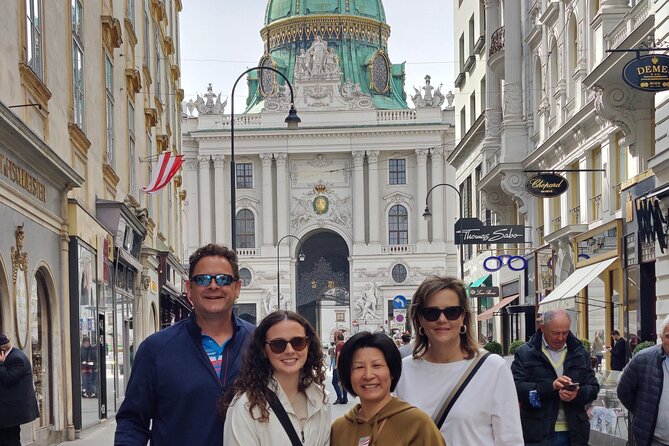
The meeting point is Herbert-von-Karajan-Platz, in front of the Vienna State Opera. This is a useful place to begin: the Opera is a landmark in its own right, and the surrounding streets quickly show how Vienna’s grand buildings share space with hotels, shops, and cafes.
The Opera House dates to 1869 and was built in the Neo-Renaissance style. In a short stop, you’ll also hear about nearby Palais Todesco, associated with Johann Strauss and his first wife, and the Hotel Sacher, famous for its Sacher Torte. These details give the first few blocks a human scale. You’re not only looking at a grand facade; you’re hearing about the people and businesses tied to it.
The group limit matters here. With no more than six participants, the guide can keep the group together on busy streets and respond to questions without addressing a crowd. Yue’s humor and friendly manner are frequently praised, and the format should suit you if you prefer a conversation to a scripted speech.
A memorial with a difficult message
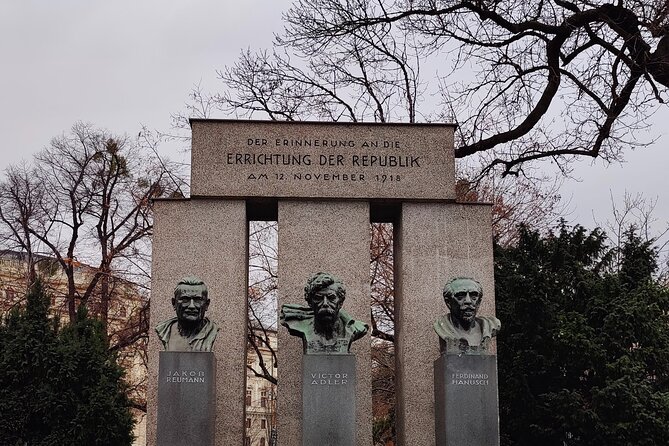
The next stop is the Memorial Against War and Fascism, a concise but serious change of tone. Its elements include a Jewish statue, the Gate of Hell, and a stone bearing the Independence Declaration. The stop is listed as five minutes, so expect an introduction rather than a long discussion.
I value this inclusion because a city-center walk can otherwise become a parade of imperial architecture. The memorial brings the effects of war and fascism into the route and asks you to look at a different part of Vienna’s past. If you want more time to read the memorial or reflect, you may want to return independently after the tour.
More walking tours in Vienna:
- Vienna: Guided Walking Tour of City Center Highlights
★ 4.7 · 4,989 reviews - Vienna: Vienna Central Cemetery Guided Walking Tour
★ 4.8 · 3,307 reviews - Vienna: Guided Walking Tour of City Highlights & Hidden Gems
★ 4.9 · 2,180 reviews
Lobkowitzplatz and Josefsplatz: palaces, church, and court life
At Lobkowitzplatz, the route gathers several architectural and cultural landmarks close together. You’ll see the Albertina Palace and Museum, the tower of Augustinian Church, Baroque Lobkowitz Palace, and an Art Deco building by Otto Wagner. This is the kind of stop where a guide’s explanations are especially useful: styles and periods can blur together when you’re simply walking past handsome facades.
Josefsplatz allows more time, about 15 minutes. The group visits Augustinian Church and sees the statue of Emperor Joseph II, the Court Library, Pallavicini Palace, and the Spanish Riding School. The mix helps explain how Vienna’s former court shaped both the city’s institutions and its public spaces.
The tour does not promise entry to every named building. The church is listed as a visit inside, while several other stops are exterior views; the Spanish Riding School and some additional sites do not include admission. If a particular interior matters to you, check the entry details before booking and allow separate time to visit.
Stallburg and the Court Music Chapel
The five-minute stop at Stallburg introduces the Lipizzaner horses, one of Vienna’s best-known symbols of court tradition. You’ll see the building associated with them, but admission is not included. Treat this as a quick orientation, not a stable visit or a performance.
Nearby, the route points out the Imperial Treasury Museum, the Court Music Chapel, and a Renaissance gate. Again, this is a brief look at the area and its landmarks, not a ticketed visit inside the museum or chapel. That distinction is important if you’re planning your day around a specific attraction.
These short stops make sense as part of a city overview. Yue can connect the sites to the larger story of the Habsburg court, while you note which places you might want to explore in more depth later.
The Hofburg and Heldenplatz: Vienna’s imperial scale
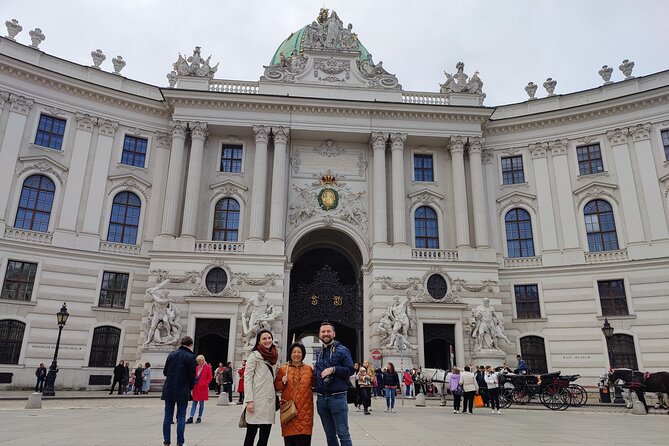
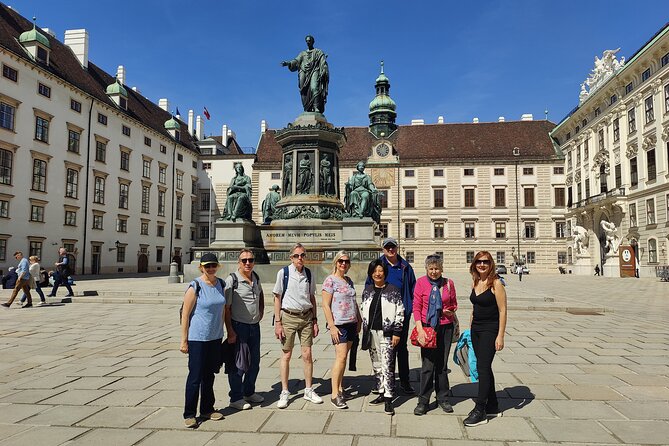
The Hofburg stop takes about ten minutes and focuses on its inner court. You’ll see the statue of Franz II/I and the Amalien, Leopoldinischer, and Reichskanzlei wings. The palace complex is large, and a guided walk helps you make sense of its different sections without trying to cover the whole site on foot.
This is also where the tour’s broad historical approach pays off. Yue’s stories range beyond individual buildings to Austria’s role in European history, according to the way the walk is described. If you’re new to Vienna, that context can help the palace feel less like an imposing collection of courtyards and more like the center of a former empire.
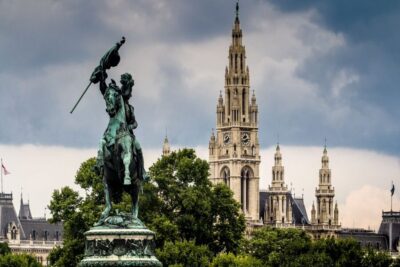
At Heldenplatz, the route takes in statues of Karl and Prince Eugen, the National Library, the OSCE, the Burgtor, City Hall, and Parliament. The 10-minute stop is a sweep across a large civic area, not a visit to each institution. You’ll get the lay of the land and a sense of how imperial and modern Vienna meet in the same part of town.
Same city, a different kind of day:
- Vienna: Vivaldi’s Four Seasons Concert in Karlskirche
★ 4.7 · 14,951 reviews - Vienna: Spanish Riding School Training
★ 3.9 · 9,281 reviews - Vienna: Skip-the-cashier-desk-line Giant Ferris Wheel Ride
★ 4.5 · 7,859 reviews - Vienna: Schönbrunn Palace & Gardens Skip-the-Line Tour
★ 4.7 · 7,739 reviews
Maria Theresien Square and the Sisi Museum
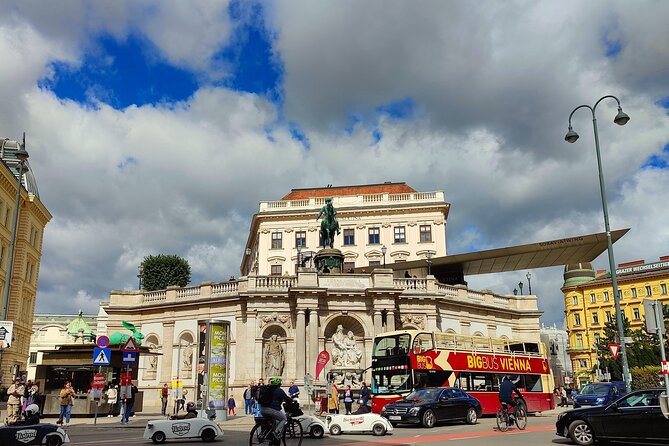
Maria Theresien Square is centered on a striking statue of Maria Theresa, the powerful Habsburg ruler whose reign changed the course of history. The surrounding buildings house museums of art and natural history. The tour gives you about ten minutes here, enough to take in the layout and hear why the empress matters, but not to visit either museum.
The next stop is the Sisi Museum, focused on Empress Elisabeth, often called Sisi. The tour introduces her story and the way her personality shaped her life and later public image. Admission is not included, and the stop lasts about ten minutes, so you should not expect to see the museum exhibits as part of the walk.
These two stops offer a useful contrast between Habsburg women remembered for very different reasons: Maria Theresa as a ruler, and Elisabeth as an icon whose story continued to capture public attention after her death. If either subject interests you, make room for a separate museum visit.
Michaelerplatz, Kohlmarkt, and the plague monument
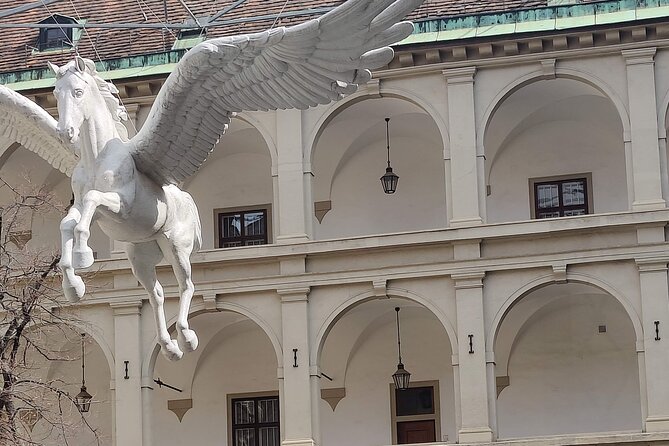
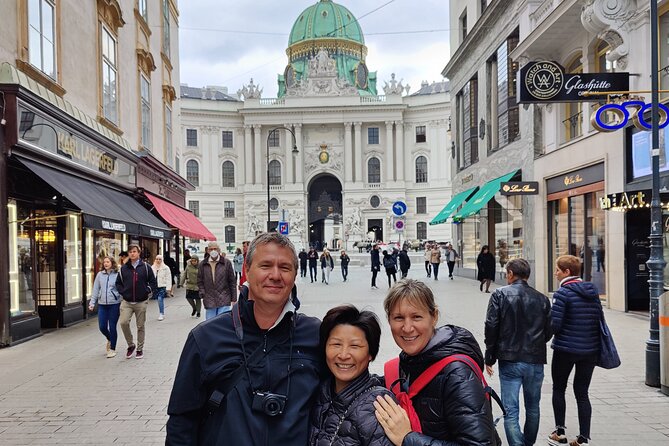
At Michaelerplatz, look for Michaelerkirche, the gate into the Hofburg, the Loos House, and the excavations. The stop takes about five minutes. The excavations add an archaeological layer to a square otherwise framed by major buildings, while the Loos House offers a very different architectural presence from the imperial surroundings.
Kohlmarkt brings a change of mood. This luxury shopping street is known for its splendid buildings, and the tour pauses by Cafe Demel. The five-minute stop is a chance to see the street and note the cafe, not a scheduled meal or tasting. If you want to try a pastry, plan to return on your own.
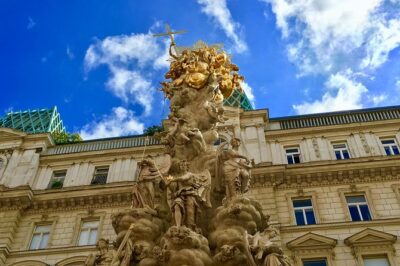
The route then reaches the Plague Monument, also called the Pestsäule, on the Graben. Nearby are Grabenhof and Ankerhaus. The five-minute stop introduces the monument and surrounding buildings, keeping the walk’s focus on the city’s layered streets rather than a single grand palace.
Finish at St. Stephen’s Cathedral
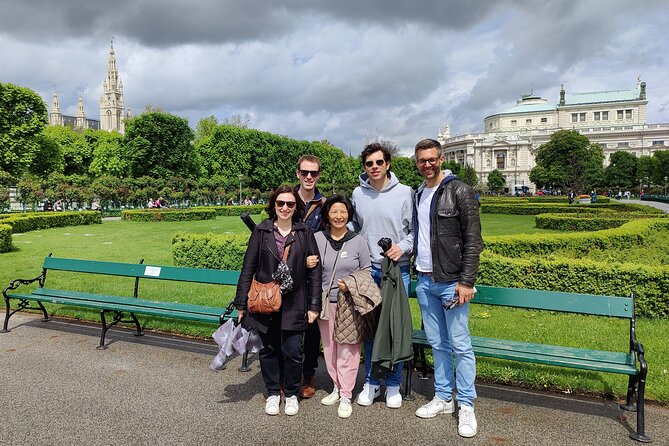
The final major stop is St. Stephen’s Cathedral, a landmark built over several centuries, from the 12th through the 16th. Its tower is the tallest in the city center. The stop is listed as five minutes, so use it to take in the exterior and understand its place in the old town, rather than expecting an extended cathedral visit.
The tour ends at Stephansplatz, by the U-Bahn station and the Wien Museum Virgilkapelle, with the meeting point described as looking toward the cathedral’s tallest southern tower. Starting at the Opera and finishing at Stephansplatz gives you a practical route through the center and a useful sense of where major sights sit in relation to one another.
That orientation is one of the walk’s strongest practical benefits. Yue also gives suggestions for food, shopping, and other sights, which can help you decide how to use the rest of your stay. If you want to see the city’s highlights before choosing which interiors deserve your time, this ending puts you in a good position to keep exploring.
Is $106.20 good value for two hours?
At $106.20 per person, this is not a bargain-priced stroll. You are paying for a licensed guide, a group capped at six, and a carefully packed route through a large number of central landmarks. That value is strongest if you want a personal introduction to Vienna and plan to use the guide’s context and recommendations to shape the rest of your visit.
It is weaker value if you mainly want entry to museums, long stops for photos, or a slow pace. Several attractions are exterior views, and admission is not included at the State Opera, Stallburg, the Court Music Chapel, and the Sisi Museum. The two-hour schedule is designed for breadth.
Yue’s most praised strengths are her sense of humor, clear enthusiasm, historical storytelling, and willingness to answer questions. She is also noted for taking photos and offering practical suggestions. One participant found the information hard to understand and disputed its accuracy, so no guide is right for everyone; if language clarity is a concern, confirm that English is the language you want before booking.
The tour runs in English, starts at 10:00 a.m., and has a maximum of six people. Most people can participate, service animals are allowed, and the meeting point is near public transportation. It requires good weather; if poor weather cancels it, you’ll be offered another date or a full refund. You can cancel for a full refund up to 24 hours before the start time.
Should you book the Vienna Highlight Tour?
Book this walk if you’re visiting Vienna for the first time, want to understand the historic center quickly, and value a small group with room for questions. It’s especially useful early in your stay, when a guide’s suggestions can help you choose what to revisit and where to eat.
Skip it if you want long indoor visits or a slow, highly focused tour of one subject. For a fast, personable overview of the Opera, Hofburg, central squares, and cathedral, Yue’s route offers a helpful start, provided you’re comfortable with brief stops and separate admission fees.
FAQ
How long is the Vienna Highlight Tour?
It lasts approximately two hours.
What time does the tour start?
The start time is 10:00 a.m.
Where does the tour begin?
It begins at Herbert-von-Karajan-Platz by the Vienna State Opera, at Staatsoper, 1010 Vienna.
Where does the tour end?
It ends at Stephansplatz U-Bahn station, by the Wien Museum Virgilkapelle, with a view toward the cathedral’s tallest southern tower.
What language is the tour offered in?
The tour is offered in English.
How many people can join?
The maximum group size is six travelers.
Is a guide included?
Yes. A licensed tour guide is included.
Are admission tickets included?
Admission is not included at some stops, including the Vienna State Opera, Stallburg, the Court Music Chapel, and Sisi Museum. The tour information lists several other stops as free admission.
What is the price?
The listed price is $106.20 per person.
What is the cancellation policy?
You can cancel for a full refund at least 24 hours before the start time. If poor weather cancels the tour, you’ll be offered a different date or a full refund.
Newest tours in Vienna
- Vienna: Mozart Private Guided Tour★ 5.0 · 4 reviews
- Vienna: ‘Armenia In The Heart Of Austria’ Tour★ 5.0 · 6 reviews
- Vienna: Klimt Villa (Gustav Klimt Atelier & Museum) Ticket★ 4.7 · 50 reviews
- Vienna: Kunsthistorisches Museum Guided Tour incl. admission★ 4.9 · 32 reviews
- Vienna: Luxury Vintage Fashion Walking Tour★ 3.4 · 8 reviews
- Vienna: Johann Strauss – Immersive Audiovisual Experience Ticket★ 4.8 · 60 reviews
- Vienna: Kingdom of Railways Museum Entry Ticket★ 3.6 · 50 reviews
- Vienna: KuK Perfumery Filz – Viennese Perfume Tasting★ 4.3 · 23 reviews
Vienna Walking Tours, compared.
Guided Walking Tour of City Center Highlights
Read our review →
Guided Walking Tour of City Highlights & Hidden Gems
Read our review →
Vienna Historic Center Small Group Walking Tour
Read our review →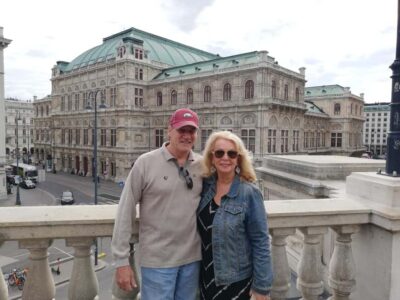
Browse the lists this tour appears in