
Reviewed · VIENNA CLASSICAL CONCERTS
Vienna: Classical Concert in St. Anne’s Church (Annakirche)
St. Anne’s Church turns a short concert into a double feature: you get Baroque interiors and live classical music in one intimate setting. I like that the musicians play period instruments, and I like that the program features complete works by composers such as Mozart, Haydn, Beethoven and Schubert rather than only familiar snippets.
There is one catch: seating is free, so your view depends on where you sit. Arrive 30 to 40 minutes before the 8:00 PM start if you hope to sit near the front. From farther back, you should still hear the music, but the musicians may be harder to see.
At a glance
- A central Vienna address: Annagasse 3b, about a three-minute walk from the State Opera.
- A period sound: The string ensemble plays on instruments from the era of Mozart and Schubert.
- A small-scale setting: The church gives the performance an intimate feel, with the musicians close to the audience.
- A compact evening plan: The concert lasts 70 minutes and begins at 8:00 PM.
- A practical price: At $38 per person, the ticket includes free seating and a concert program.
- A useful seat tip: Come early if you want a front-row view.
A classical concert inside St. Anne’s Church
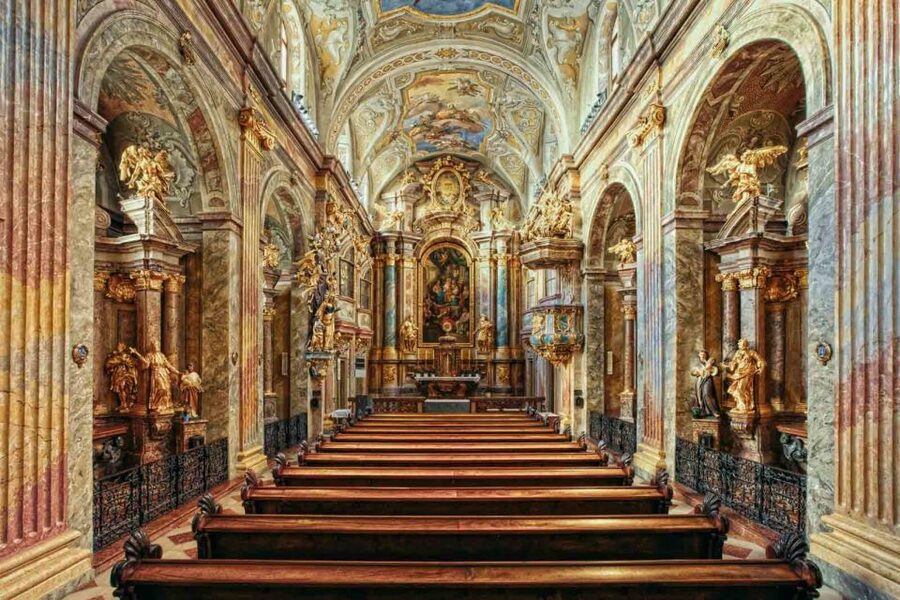
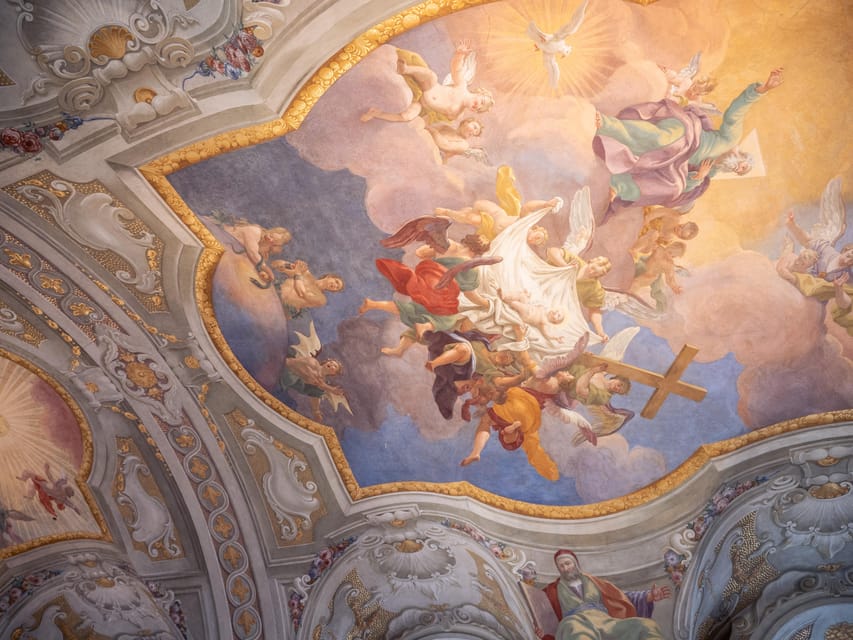
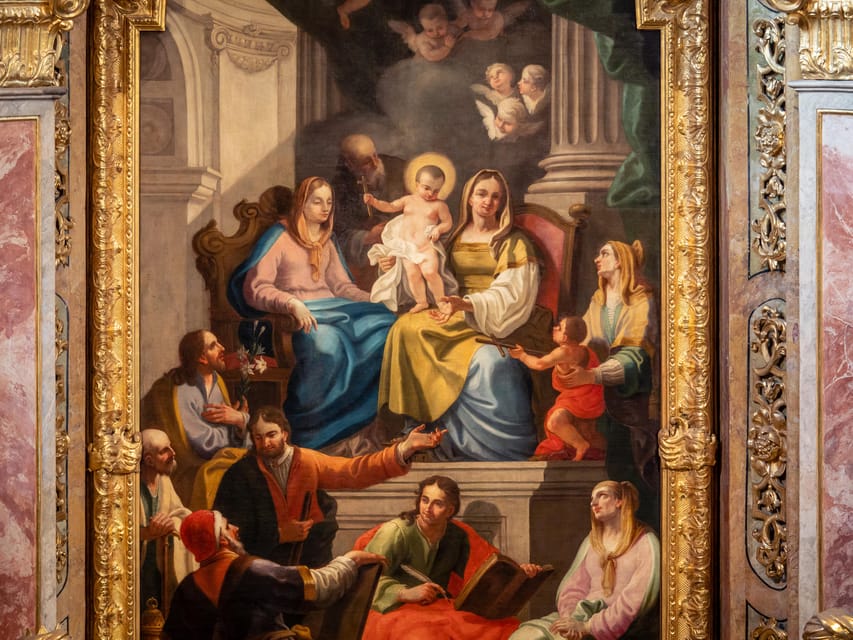
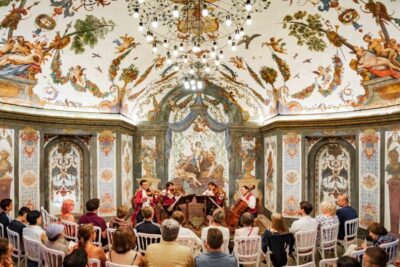
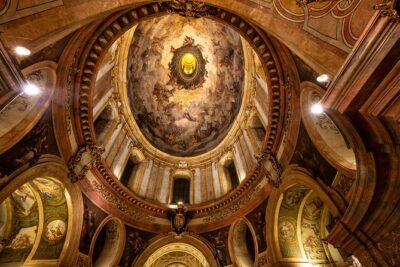
Vienna has no shortage of music, but this concert offers a more personal scale than a large hall. St. Anne’s Church, or Annakirche, is a Baroque church in the city center, and its decorative interior becomes part of the evening. You can take in its ornament and architecture while the musicians play just a short distance away.
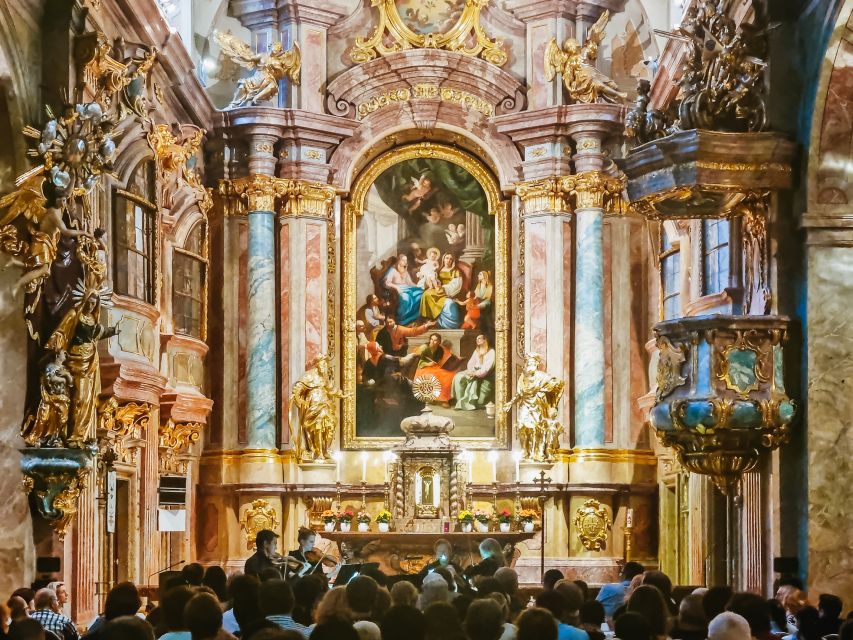
The concert features a string ensemble made up of musicians from renowned Viennese orchestras. It is described as a string quartet, and audiences have seen four musicians perform together. The program includes complete works by Mozart, Haydn, Beethoven or Schubert. Exact selections can vary, so treat the named composers as a guide to the repertoire, not a promise that every concert includes all four.
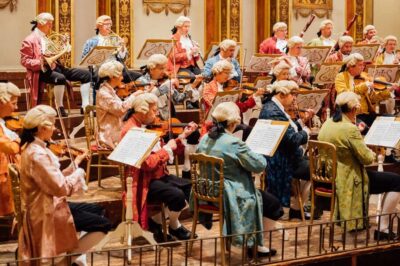
The period instruments are central to the idea. They offer a sound connected to the musical era being performed, rather than the brighter, more polished sound you may associate with a modern concert hall. You do not need to know the technical differences to appreciate the effect. The close setting makes it easy to watch the players work together, while the church’s acoustics carry the sound around the room.
More classical concerts in Vienna:
- Vienna: Vivaldi’s Four Seasons Concert in Karlskirche
★ 4.7 · 14,951 reviews - Vienna: Classical Concert in the World-Famous Musikverein
★ 4.6 · 6,673 reviews - Vienna: Classical Concert at St. Stephen’s Cathedral
★ 4.1 · 4,177 reviews
The church is part of the performance
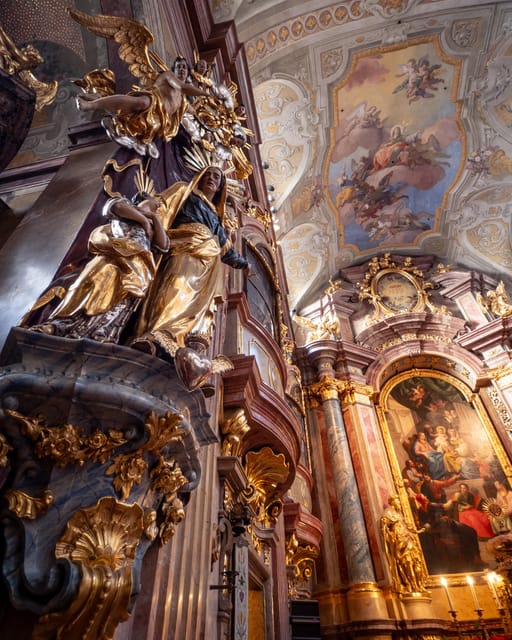
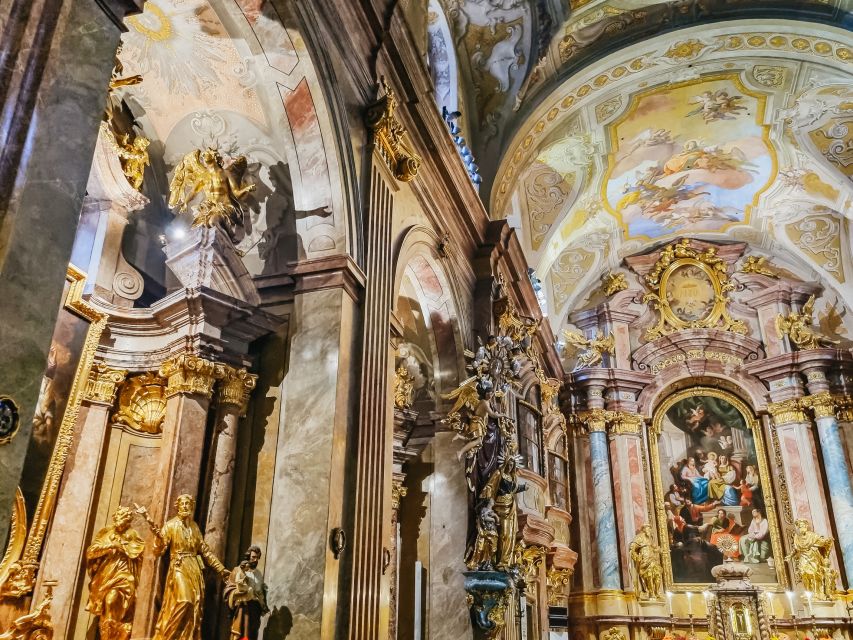
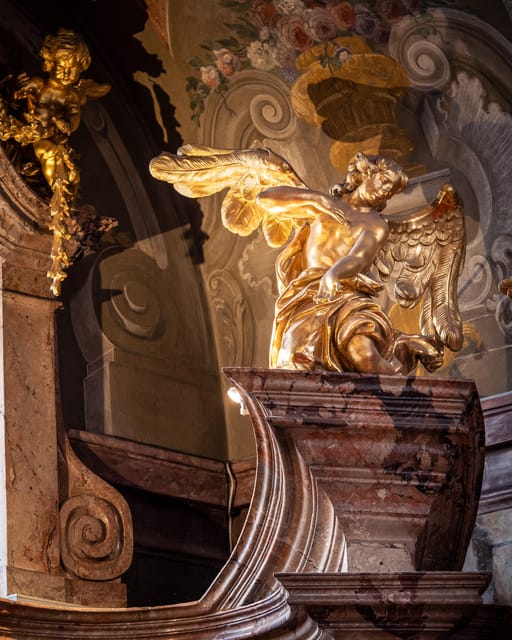
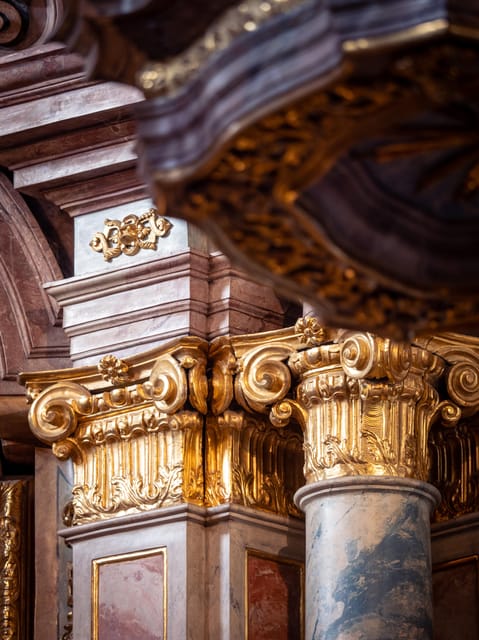
Annakirche is not simply a convenient room with chairs. Its Baroque atmosphere gives the concert a distinct sense of place. Inside, details such as the blue marble balconies and gold decoration catch the eye, especially when the church is lit for the evening. The building is often described as a jewel-box church, a useful comparison for a venue that feels ornate without being vast.
That intimacy has a practical benefit. You are close enough to see the musicians play, not just hear them from a distance. The sound also reflects around the church, giving the performance a spacious quality despite the small venue. The acoustics are one of the main reasons this works as a concert setting, though church acoustics can add resonance that differs from the clean, controlled sound of a modern hall.
The venue’s scale is also a limitation. Free seating means the view can vary, and the musicians are not necessarily raised high above the audience. If seeing the performers matters to you, arrive early and choose a place near the front. If you sit farther back, you can still enjoy the music and the church, but you may have less of a clear view of the players.
What the 70-minute evening is like
The experience is straightforward. You arrive at St. Anne’s Church, choose an available seat, and settle in for a 70-minute performance. The concert begins at 8:00 PM, making it a natural evening activity after a day of museums, walking or sightseeing.
There is no guide-led tour or series of stops. The focus stays on the music and the church. A free concert program is included, which helps you follow the works and composers without needing prior knowledge. If you are new to classical music, that is useful context, but you can also simply listen and enjoy the sound.
The program is built around complete works, not a string of short, familiar excerpts. That gives each piece time to develop, and it makes the performance feel more like a concert than a tourist sampler. You may hear music by Mozart, Haydn, Beethoven or Schubert. A program can also include other composers; one concert, for example, featured Mendelssohn alongside the classical repertoire. Check the current program if a particular composer is important to you.
A full work may ask more of your attention than a famous tune you recognize, but you do not need to arrive as a classical music expert. The setting, live playing and short running time make this an approachable first concert. If you already know the repertoire, hearing it played on period instruments in a church can offer a different perspective from recordings or larger venues.
Period instruments bring a different color
The ensemble’s instruments are chosen to reflect the era of the music. That historical approach is part of what distinguishes this concert from a standard chamber-music performance. One performance was noted for the use of 18th-century instruments, including gut strings, details that can shape the tone and texture of the music.
Do not expect a lecture on instrument construction or a formal demonstration. The point is the live sound. In the church, the instruments’ tone combines with the natural resonance of the room, giving the performance a character that suits works from Vienna’s classical tradition.
The musicianship matters as much as the instruments. The ensemble is made up of players from established Viennese orchestras, and the close quarters let you notice the coordination and energy of a quartet. You can watch the players respond to one another, rather than experiencing the music as sound alone.
Same city, a different kind of day:
- Vienna: Spanish Riding School Training
★ 3.9 · 9,281 reviews - Vienna: Skip-the-cashier-desk-line Giant Ferris Wheel Ride
★ 4.5 · 7,859 reviews - Vienna: Schönbrunn Palace & Gardens Skip-the-Line Tour
★ 4.7 · 7,739 reviews - Vienna: Light of Creation Votive Church Immersive Light Show
★ 4.8 · 6,779 reviews
Choosing a seat and timing your arrival
There is no assigned seating. That keeps the arrangement simple, but it makes arriving early worthwhile. If you want to sit in front and watch the musicians closely, aim to arrive 30 to 40 minutes before the concert. Some people have secured front-row seats by arriving about half an hour ahead.
You do not have to sit at the front to hear well. The church is known for its acoustics, and people seated farther back can still listen clearly. But there is a difference between hearing a quartet and seeing its expressions and playing. If your priority is the music, you can be more flexible; if you want a close-up view, plan around the free-seating system.
The event information says the church is heated during cold months, a welcome detail for a winter evening. In warmer weather, the interior can feel warm, so dress for comfort and bring water if needed. As in any concert, settle in before the music begins. Late arrivals can disturb the quiet, and conversation or phone use can distract from a performance in such a small room.
Getting to Annagasse 3b
St. Anne’s Church is at Annagasse 3b, in a pedestrian zone in central Vienna. It is about a three-minute walk from the Vienna State Opera and around five minutes on foot from the Karlsplatz and Stephansplatz underground stations. That location makes it easy to pair with a day in the center without arranging special transport.
The short walk from the Opera is especially handy if you are already exploring the historic center. The church is also close to the city’s central sights, so you can plan dinner or an evening stroll nearby. Keep in mind that the venue is in a pedestrian zone, so the final approach is on foot.
Because the concert begins at 8:00 PM and lasts 70 minutes, it fits neatly into an evening plan. Allow extra time to find the entrance and choose your seat, especially if you want to be near the front. The program is included, so there is no need to arrange reading material in advance.
Is $38 good value?
At $38 per person, this is a relatively affordable way to hear live classical music in central Vienna. The ticket includes the concert and a program, with no separate charge listed for seating. The value comes from the combination: a live ensemble, period instruments, a distinctive church interior and acoustics that are part of the experience.
It is not a substitute for a full evening at the opera or a large-scale orchestral concert. The performance is shorter, the ensemble is small, and the church setting creates a different kind of event. If you want a grand production, elaborate staging or a long program, this is not that. If you want an accessible concert with a strong sense of place, the price is easier to justify.
The 70-minute duration is a plus for a busy itinerary. You get a complete concert experience without giving up most of the evening, and the location makes it simple to continue with dinner or a walk afterward. For music lovers, it is a chance to hear classical works in a setting tied closely to Vienna’s musical identity. For newcomers, it is a manageable introduction.
Free cancellation up to 24 hours before the activity and a reserve-now, pay-later option can also make planning more flexible. Check the available start times when booking, though the stated concert start is 8:00 PM.
Who will enjoy this concert most?
I would recommend this for anyone who wants a quieter, more intimate evening in Vienna. Classical music fans will value the period instruments and complete works. People who are curious about classical music but do not know the repertoire can still enjoy the setting, the musicians’ proximity and the manageable 70-minute length.
It is also a good choice if you want something more focused than another sightseeing stop. The church gives you architecture to appreciate, but the music remains the main event. Couples, solo visitors and small groups can all fit comfortably into the format, though you may prefer to arrive early if sitting together or near the front is important.
This is less ideal if you need a guaranteed seat in a particular location, want a large-scale production or expect a long program. The event is simple by design: arrive, find a seat, listen. That simplicity is part of its appeal, as long as you know what you are booking.
Should you book it?
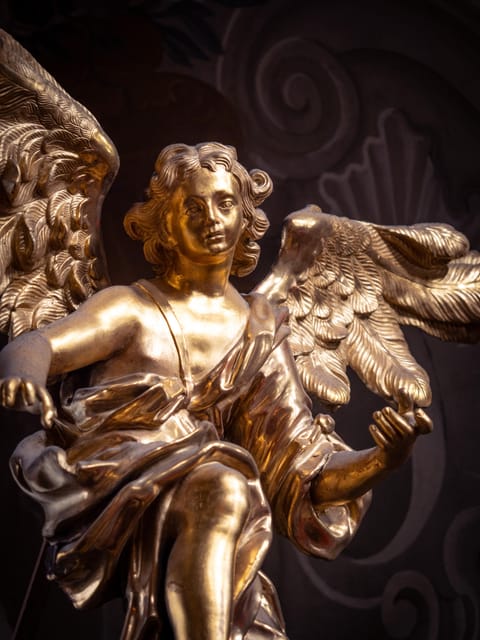
Book this concert if you want a reasonably priced, compact classical evening in a beautiful central venue. The strongest reasons to go are the intimate church setting, period instruments and close view of a live string ensemble. Arrive early for a better choice of seats, and come ready to listen rather than expecting a staged show.
Skip it if assigned seating or a grand concert-hall experience is essential to you. For most visitors looking to add a little music to a Vienna evening, though, St. Anne’s Church offers a memorable and practical option.
FAQ
How long is the concert?
The concert lasts 70 minutes.
What time does the concert begin?
Concerts begin at 8:00 PM.
Where is St. Anne’s Church?
The address is Annagasse 3b in central Vienna, in a pedestrian zone.
How far is the church from the Vienna State Opera?
St. Anne’s Church is about a three-minute walk from the Vienna State Opera.
Which underground stations are nearby?
Karlsplatz and Stephansplatz underground stations are each about five minutes away on foot.
Is seating assigned?
No. The ticket includes free seating, so seats are chosen at the venue.
What music is performed?
The program includes complete classical works by Mozart, Haydn, Beethoven or Schubert. Specific selections may vary.
What instruments do the musicians use?
The string ensemble plays period instruments from the time of composers such as Mozart and Schubert.
Is the church heated in winter?
Yes. St. Anne’s Church is heated during the cold months.
Newest tours in Vienna
- Vienna: ‘Armenia In The Heart Of Austria’ Tour★ 5.0 · 6 reviews
- Vienna: Mozart Private Guided Tour★ 5.0 · 4 reviews
- Vienna: Klimt Villa (Gustav Klimt Atelier & Museum) Ticket★ 4.7 · 50 reviews
- Vienna: Kunsthistorisches Museum Guided Tour incl. admission★ 4.9 · 32 reviews
- Vienna: Luxury Vintage Fashion Walking Tour★ 3.4 · 8 reviews
- Vienna: Johann Strauss – Immersive Audiovisual Experience Ticket★ 4.8 · 60 reviews
- Vienna: Kingdom of Railways Museum Entry Ticket★ 3.6 · 50 reviews
- Vienna: KuK Perfumery Filz – Viennese Perfume Tasting★ 4.3 · 23 reviews
Vienna Classical Concerts, compared.
Vivaldi’s Four Seasons Concert in Karlskirche
Read our review →
Classical Concert in the World-Famous Musikverein
Read our review →
Vienna Classical Concert at St. Peter’s Church
Read our review →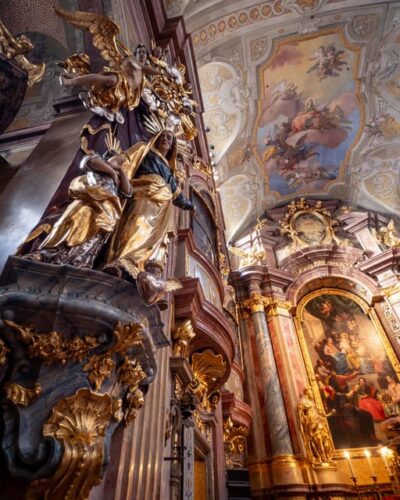
Classical Concert in St. Anne’s Church (Annakirche)
Read our review →Browse the lists this tour appears in