
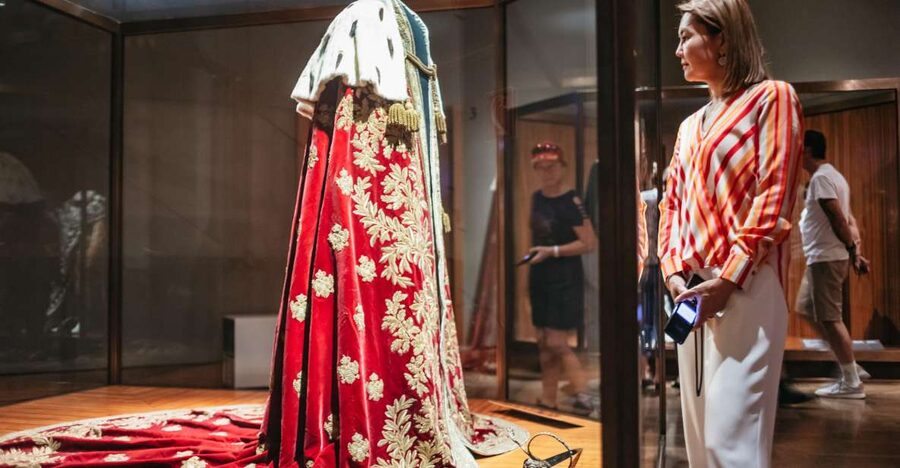
Reviewed · HOFBURG PALACE TOURS
Vienna: Imperial Treasury in the Hofburg Palace
The Imperial Treasury puts Vienna’s royal wealth in close view: crowns, jewels, religious relics and objects once tied to the authority of the Habsburgs and the Holy Roman Empire. Among its headline pieces are the Austrian Imperial Crown, a large emerald and a huge agate bowl traditionally known as the Holy Grail.
I like that the collection ranges beyond familiar crown jewels to include Burgundy treasures, the Order of the Golden Fleece and personal jewelry linked to Empress Elisabeth. I also like that you can see the displays at your own pace, with enough variety to make a one-hour visit worthwhile and plenty to hold your attention longer.
One point to plan around: this ticket is for admission only. A guided tour and audio guide are not included, and the printed-voucher requirement may mean exchanging a digital booking at the ticket counter rather than walking straight in.
- Find the Austrian Imperial Crown alongside regalia associated with the Holy Roman Empire.
- Look beyond the crowns for the Golden Fleece collection, Burgundy objects and the cradle of Napoleon II.
- Spot remarkable materials and scale, including an emerald described as one of the world’s largest and a vast agate bowl.
- Allow at least an hour for a brisk visit; reading and listening to every explanation can stretch the visit to several hours.
- Bring the required printed voucher and leave room for a possible ticket-counter stop.
- Remember that under-19s generally enter free, though school groups must arrange admission through the museum.
Inside the Hofburg’s Swiss Wing
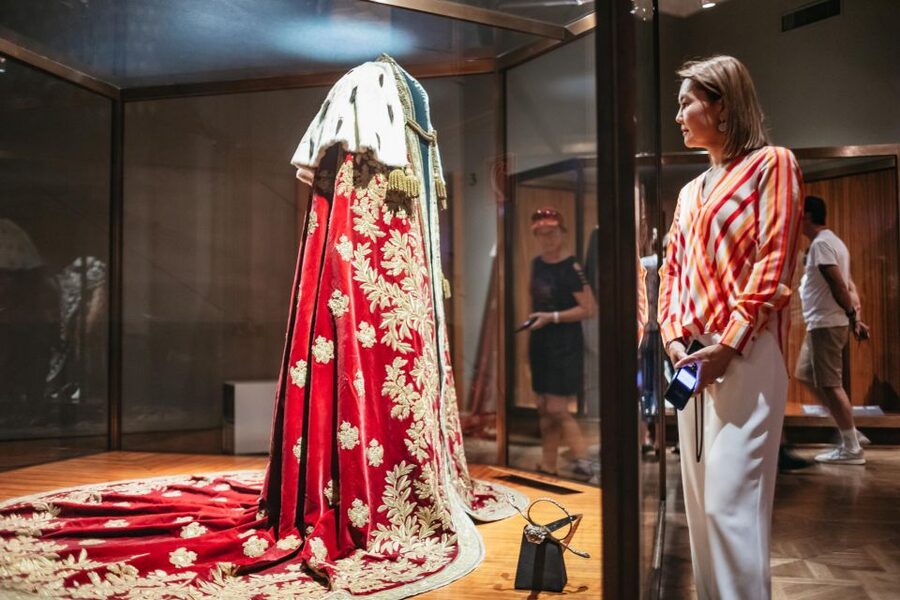
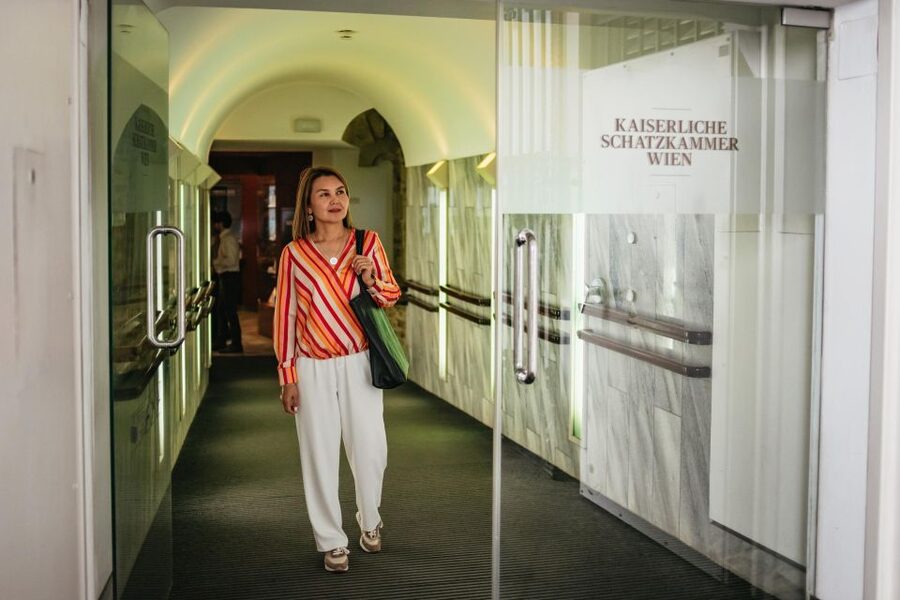
The Imperial Treasury occupies the Swiss Wing, the oldest part of the Hofburg Palace. That setting gives the visit a useful sense of place: these are not just beautiful objects gathered in a display case, but treasures connected to a court that once ruled across a vast territory.
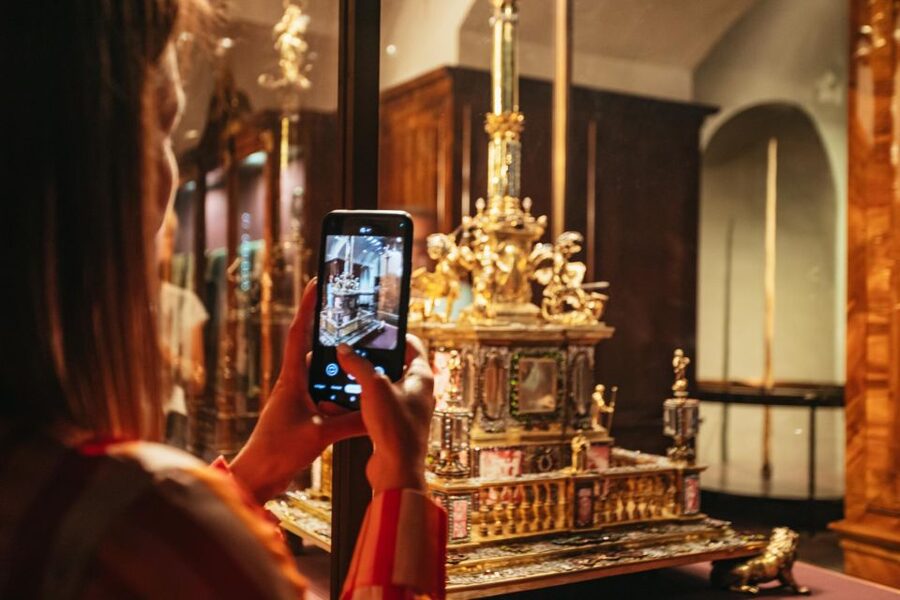
The collection is arranged around the Habsburgs’ political, religious and ceremonial power. You’ll encounter crowns and jewels, but also relics, formal garments and objects that helped make authority visible. The displays are clearly marked, and the rooms are manageable enough that you can see the collection without committing an entire day to it.
The experience is self-guided with this admission ticket. The activity is described as a small group, limited to 10 participants, but the ticket itself does not include a guide. If you want a guided explanation, you’ll need to arrange one separately or visit with your own guide.
That distinction matters. A guide can connect an object to the people and politics behind it; without one, the labels and any available audio material carry more of the storytelling. If you prefer to set your own pace, independent entry is a benefit. If you want the Habsburg family tree explained as you go, plan ahead.
The Austrian Crown and Holy Roman Regalia
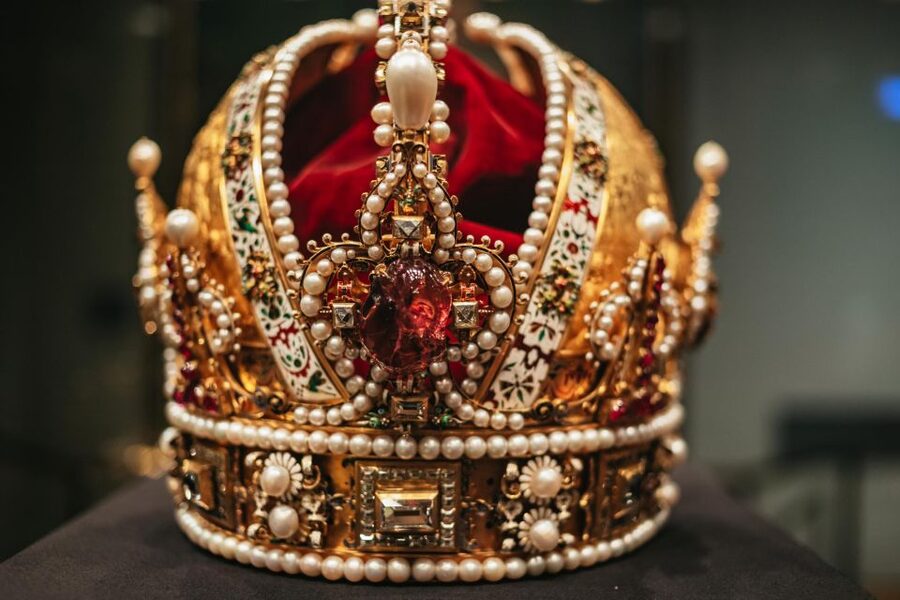
The crowns are the natural place to begin. The Austrian Imperial Crown is one of the collection’s major sights, and the Holy Roman Empire’s crown jewels add another layer: they speak to a political world in which ceremonial objects helped express the reach and legitimacy of rulers.
Give these pieces time. Their value is not only in the precious materials or elaborate workmanship. The regalia make more sense when you consider how crowns, robes and other symbols marked rank and public authority. Even a quick visit gives you striking objects to look at; a slower one lets you spend longer with the details and the stories attached to them.
The treasury also holds important jewelry and precious stones, including an emerald described as one of the largest in the world. The collection’s appeal is partly its sheer variety. You move from formal royal objects to religious treasures and personal adornments, rather than seeing room after room of similar crowns.
More Hofburg visits in Vienna:
- Vienna: Skip-the-Line Sisi Museum, Hofburg and Gardens Tour
★ 4.8 · 5,918 reviews - Vienna: Hofburg and Empress Sisi Museum Guided Tour
★ 4.7 · 1,460 reviews - Vienna: Skip-the-Line Hofburg and Empress Sisi Museum Tour
★ 4.8 · 801 reviews
The Emerald, Agate Bowl and Legendary Relics
Some of the most memorable objects come with stories that need a little distance. The collection includes a large agate bowl known as the Holy Grail and a horn traditionally described as a unicorn’s. These names reflect the legends attached to the objects, not proof that the bowl was the Grail or that the horn came from a mythical animal.
The Holy Lance, dated to the 8th century, is another object with a history shaped by belief and power. Its interest lies in both its physical age and its place in religious tradition. If you enjoy asking how objects acquire meaning, these displays offer plenty to think about.
The largest cut emerald in the world is also identified as a highlight. The experience information separately describes an emerald among the largest in the world, so keep the distinction in mind: the collection’s notable stones are worth seeing, but the wording around size can vary.
These unusual pieces help the treasury avoid becoming a parade of glitter. They give you a glimpse of how religion, legend and royal identity overlapped. I’d take time to read the labels here, especially if the stories behind an object interest you as much as its appearance.
Burgundy, the Golden Fleece and Court Life
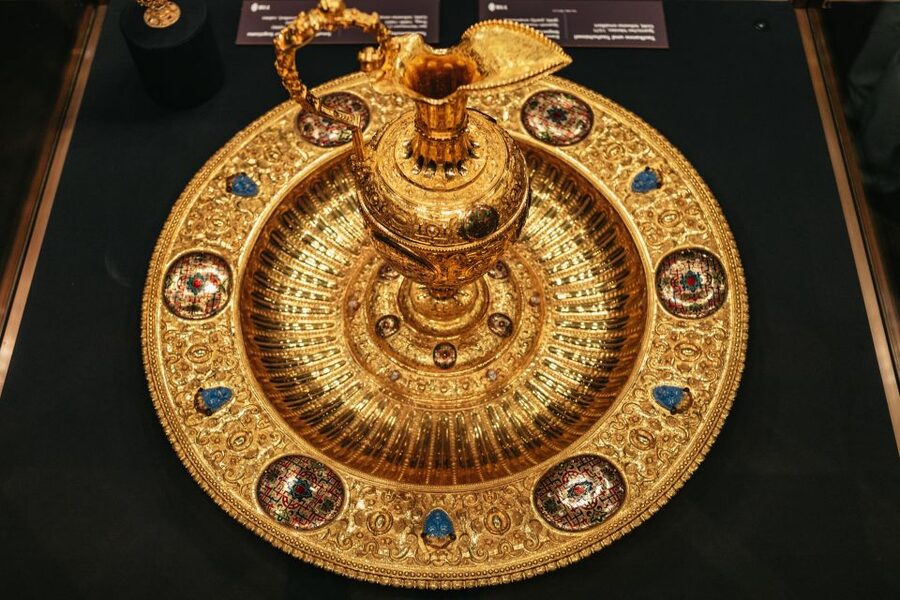
The collection reaches beyond imperial crowns. You’ll also see the treasure of the Order of the Golden Fleece and objects connected to 15th-century Burgundy. Those displays widen the story from one dynasty’s jewelry to the alliances, ceremony and prestige that shaped European courts.
The Golden Fleece material is a good reason not to rush directly from crown to crown. Objects such as ceremonial garments and chamberlains’ keys reveal the practical machinery of court life, as well as its grand pageantry. A richly decorated tabard may catch your eye first; a small key can prompt a more everyday question about who had access to the ruler and the rooms around them.
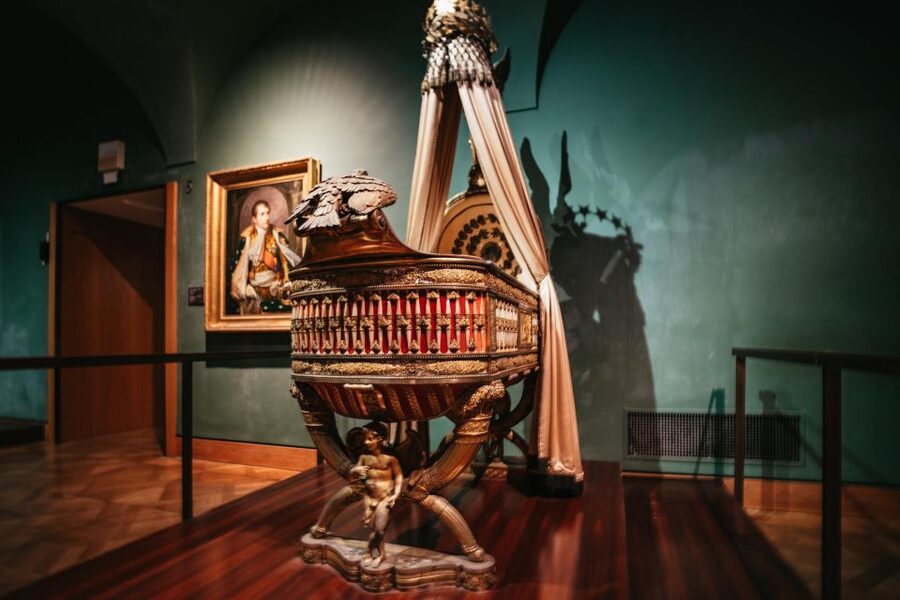
The cradle of the King of Rome, Napoleon II, is another distinctive object. It connects the treasury’s royal collections to a later chapter in European history and reminds you that the Hofburg’s story did not end with the Habsburgs’ most familiar rulers.
If your time is short, choose a few pieces that appeal to you rather than trying to give every object the same attention. The collection is broad, and your visit will be more rewarding if you pause at the items that help you picture court life, religious devotion or the public image of power.
Empress Elisabeth’s Jewelry and Personal Details
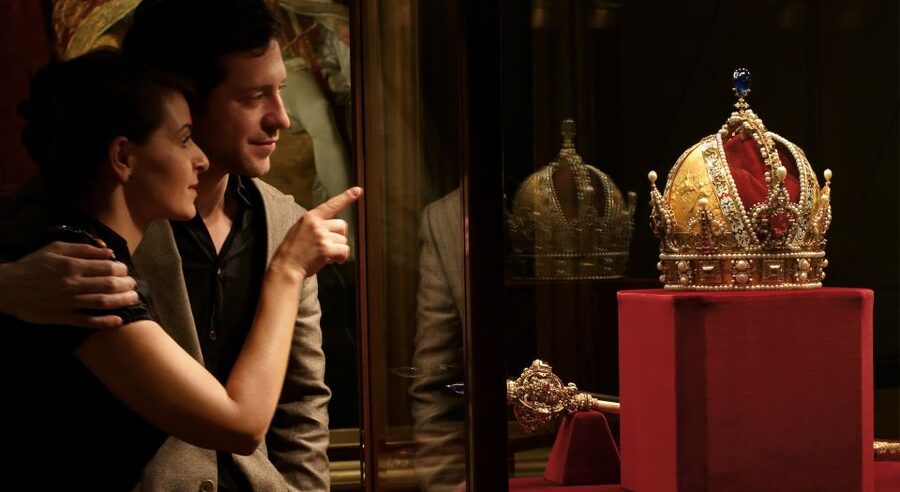
The treasury includes charming jewelry associated with Habsburg empresses and princesses, along with parts of Empress Elisabeth’s original jewelry. These pieces offer a more personal counterpoint to the formal regalia.
Elisabeth, often called Sisi, is one of Vienna’s best-known historical figures. Her jewelry can make the collection feel less abstract: instead of thinking only about dynasties and empire, you can picture adornments worn by an individual within that world. The objects are a small part of the treasury, but they add welcome human scale.
If you’re especially interested in Elisabeth or Emperor Franz Joseph, a guide can provide context beyond what you may gather from a quick look at the display. Guides Petee and Alex have led visits here, with visitors appreciating explanations about the Habsburgs and the chance to ask questions. Those names are not a guarantee for your visit, and guided tours are not part of this admission ticket, so check separately if a named guide or a guided experience is important to you.
Same city, a different kind of day:
- Vienna: Vivaldi’s Four Seasons Concert in Karlskirche
★ 4.7 · 14,951 reviews - Vienna: Spanish Riding School Training
★ 3.9 · 9,281 reviews - Vienna: Skip-the-cashier-desk-line Giant Ferris Wheel Ride
★ 4.5 · 7,859 reviews - Vienna: Schönbrunn Palace & Gardens Skip-the-Line Tour
★ 4.7 · 7,739 reviews
How Long to Stay, and How to Use an Audio Guide
For a brisk look through the main rooms, allow about an hour. An hour and a half gives you a more comfortable pace for reading labels and spending time with the objects. If you listen to detailed audio commentary and stop at most displays, you could spend several hours.
The ticket does not include an audio guide. Audio guides have been available to visitors, and some have found the commentary helpful, but reports about access and cost differ. Check the current arrangement at the museum before you go rather than assuming it comes with your admission.
Without an audio guide, you can still enjoy the visual impact and the clear exhibit labels. The trade-off is that some objects make a stronger impression once you understand their place in the Habsburg story. If you’re an independent museum visitor, the labels may be enough. If you want more context, consider a separate guide or audio option.
The layout is generally manageable, though it may not feel perfectly intuitive at first. Take a moment to orient yourself as you enter. If you need a break, visitors have been able to leave and return, but confirm the procedure with staff before stepping out.
Ticket, Price and Practical Planning
At $18 per person, this is a reasonable use of a Vienna sightseeing budget if you enjoy royal history, jewelry or religious art. You’re paying for access to a large and varied collection in the Hofburg, not simply a single crown display. The visit can fit into a day of palace sightseeing without taking over your schedule.
The value depends partly on how you like to visit museums. If you’re content to look closely at the objects and read selected labels, an hour or so may be enough. If you want detailed explanations for many of the pieces, factor in extra time and the possible cost of an audio guide or separate guided visit.
The ticket is valid for one day, and the activity states that you need a printed voucher. A digital QR code may not be enough on its own: some visitors have had to exchange their voucher at the ticket counter, which can reduce the advantage of booking ahead. Print it before you arrive and follow the latest instructions on your confirmation.
The treasury is wheelchair accessible. Children and young people under 19 generally receive free admission. School groups under 19 must be registered through the museum’s booking department, and adult groups have specific rules for free guide admission. If you’re visiting with a larger group or as a guide, check those requirements before booking.
The activity offers free cancellation up to 24 hours in advance and a reserve-now, pay-later option. These terms can be useful if your Vienna plans are still shifting, but check the booking details for the conditions that apply to your selected date.
Who Will Get the Most from This Visit
I’d recommend the treasury to anyone who wants a concentrated look at the Habsburg court and its symbols of power. It works especially well for people who enjoy decorative arts, royal history, religious relics or the craftsmanship behind jewelry and regalia.
It’s also a smart early stop if you’ll visit other Hofburg or Habsburg-related sights. The crowns, family names and ceremonial objects give you context that can make later references around Vienna easier to follow. You don’t need to be an expert, but curiosity about how objects were used and what they represented will make the visit more rewarding.
Families can benefit from the free admission policy for visitors under 19, though children who are not interested in displays may find the rooms less engaging. For a child who likes crowns, jewels or unusual legends, the unicorn horn and Holy Grail story may be a good hook.
If you’re short on time, the treasury still works as a compact visit. Just don’t treat the one-day ticket validity as a one-day itinerary: most people can see the highlights in roughly an hour, while anyone who wants to read and listen closely should set aside longer.
Should You Book the Imperial Treasury?
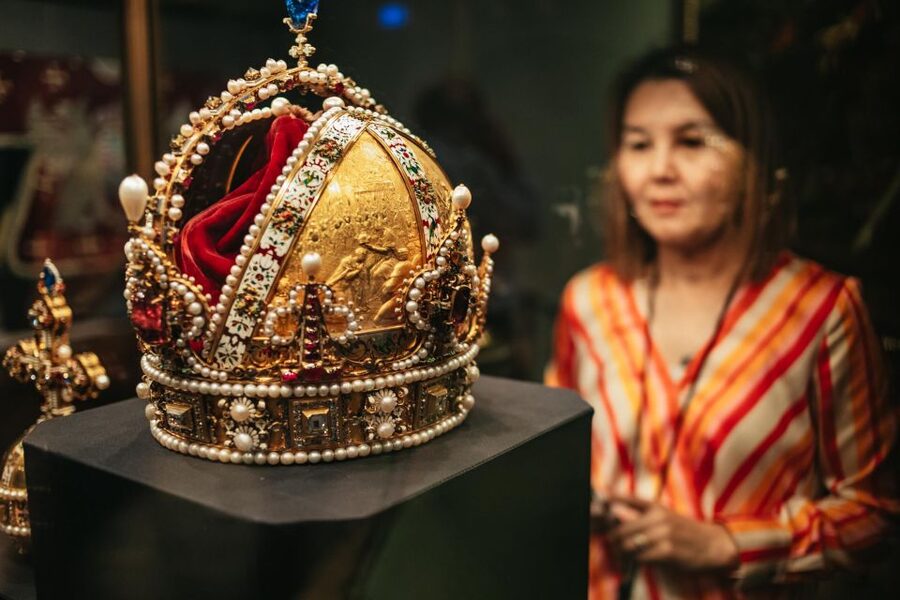
Book this visit if you want to see the Austrian Imperial Crown, Holy Roman regalia, Elisabeth’s jewelry and a set of objects that range from court treasures to legendary relics. The variety and manageable visit length make it a strong addition to a Hofburg day, especially at $18.
Think twice if you expect a guided tour or an included audio guide, because neither is part of this ticket. And print your voucher in advance to avoid a ticket-counter surprise. If those details suit your plans, the Imperial Treasury is a practical, memorable way to put Vienna’s royal past in front of you.
FAQ
How much does admission cost?
The listed price is $18 per person. Check availability for the date you want to visit.
How long should I allow for the visit?
Allow about an hour for a relatively quick visit, or around an hour and a half for a slower look. Using an audio guide and listening to everything can take several hours.
What does the ticket include?
The ticket includes entrance to the Imperial Treasury. It does not include a guided tour or an audio guide.
Is a guide included?
No. You can arrange a separate guided tour or visit with your own guide. Guides Petee and Alex have led visits, but a particular guide is not guaranteed.
Do I need to print my voucher?
Yes. A printed voucher is required. A digital QR code may need to be exchanged at the ticket counter.
Do children pay admission?
Children and young people under 19 generally receive free admission. School groups under 19 must be registered through the museum’s booking department.
Is the Imperial Treasury wheelchair accessible?
Yes, the activity is listed as wheelchair accessible.
What are some of the main objects on display?
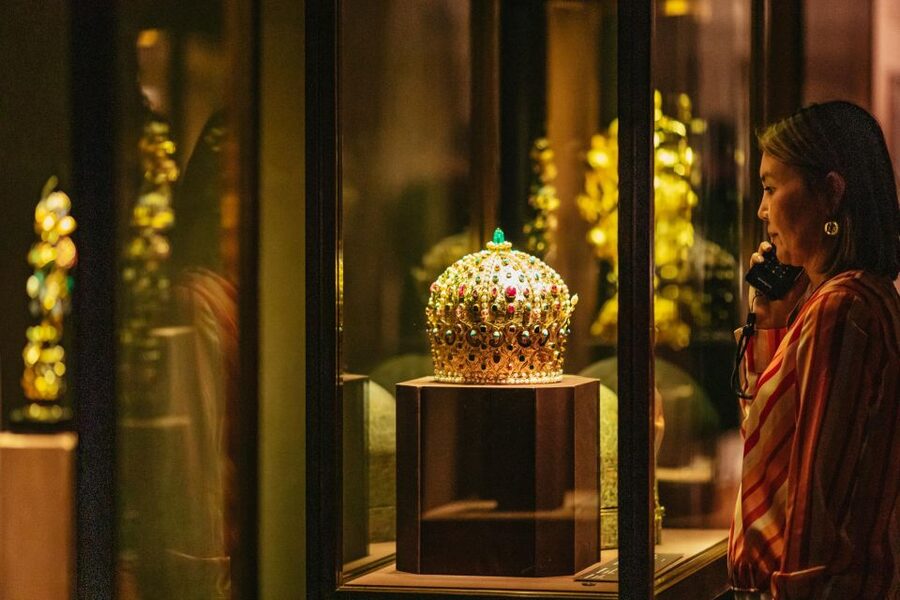
Highlights include the Austrian Imperial Crown, the Holy Roman Empire’s crown jewels, parts of Empress Elisabeth’s original jewelry, the Holy Lance, a large agate bowl known as the Holy Grail and a horn traditionally called a unicorn’s horn.
Can I cancel my booking?
The activity allows cancellation up to 24 hours in advance for a full refund. Check the terms for your chosen booking before you confirm.
Newest tours in Vienna
- Vienna: ‘Armenia In The Heart Of Austria’ Tour★ 5.0 · 6 reviews
- Vienna: Mozart Private Guided Tour★ 5.0 · 4 reviews
- Vienna: Klimt Villa (Gustav Klimt Atelier & Museum) Ticket★ 4.7 · 50 reviews
- Vienna: Kunsthistorisches Museum Guided Tour incl. admission★ 4.9 · 32 reviews
- Vienna: Luxury Vintage Fashion Walking Tour★ 3.4 · 8 reviews
- Vienna: Johann Strauss – Immersive Audiovisual Experience Ticket★ 4.8 · 60 reviews
- Vienna: Kingdom of Railways Museum Entry Ticket★ 3.6 · 50 reviews
- Vienna: KuK Perfumery Filz – Viennese Perfume Tasting★ 4.3 · 23 reviews
Hofburg Palace Tours, compared.

Skip-the-Line Sisi Museum, Hofburg and Gardens Tour
Read our review →
“Sisi’s Amazing Journey” Virtual Reality Experience
Read our review →
Imperial Treasury & New Hofburg Palace Combo Ticket
Read our review →
New Hofburg Palace Audio-Guided Tour & Entry Ticket
Read our review →
Browse the lists this tour appears in