
Reviewed · VIENNA TOURS
Vienna: Tickets for Mozarthaus Vienna with Audio Guide
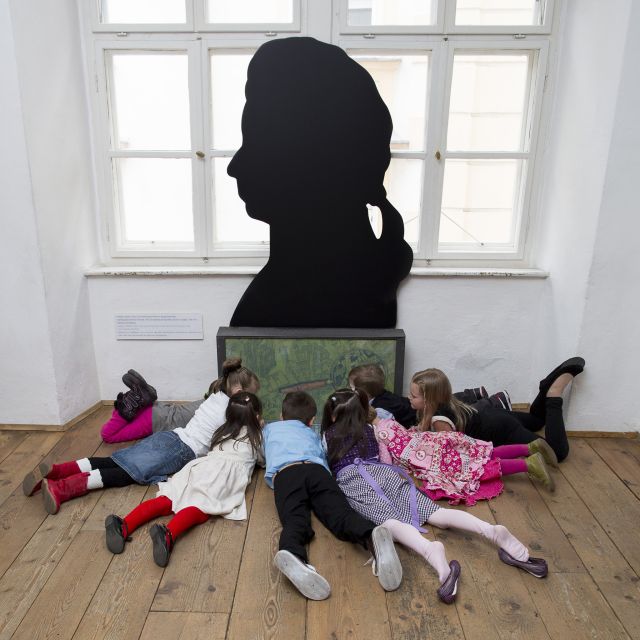
Mozart’s preserved Vienna apartment is the heart of this visit: the composer lived here from 1784 to 1787, and the museum connects those rooms to the music he made during his peak creative years. I like that the visit is self-guided, so you can linger over a panel or move on when you have heard enough.
I also like the audio guide in 13 adult languages, with a separate children’s guide in eight languages. The main trade-off is that this is an interpretive museum, not a furnished period home: expect displays, text and images, with relatively few objects directly linked to Mozart.
What to know before you go
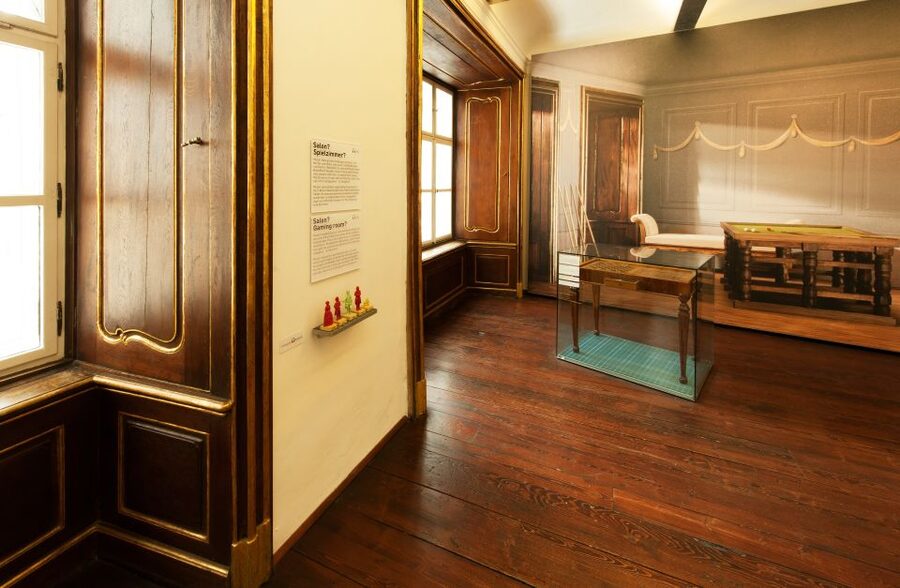
- Mozart’s only preserved Vienna apartment is the visit’s central draw, though the rooms do not recreate a fully furnished home.
- The exhibition spans three levels and focuses on Mozart’s Vienna years, his work and the world around him.
- The audio guide sets the pace. You can choose how much detail to hear, but some stops involve standing to listen.
- Photography and video are not allowed inside. Plan to keep your camera put away.
- The Haus der Musik combo is a separate option. It adds a four-floor, interactive sound museum in Vienna’s historic centre.
- At about $18 per person, the standalone ticket is a focused museum visit. Its value depends most on your interest in Mozart and how closely you use the audio guide.
At Mozart’s Vienna address
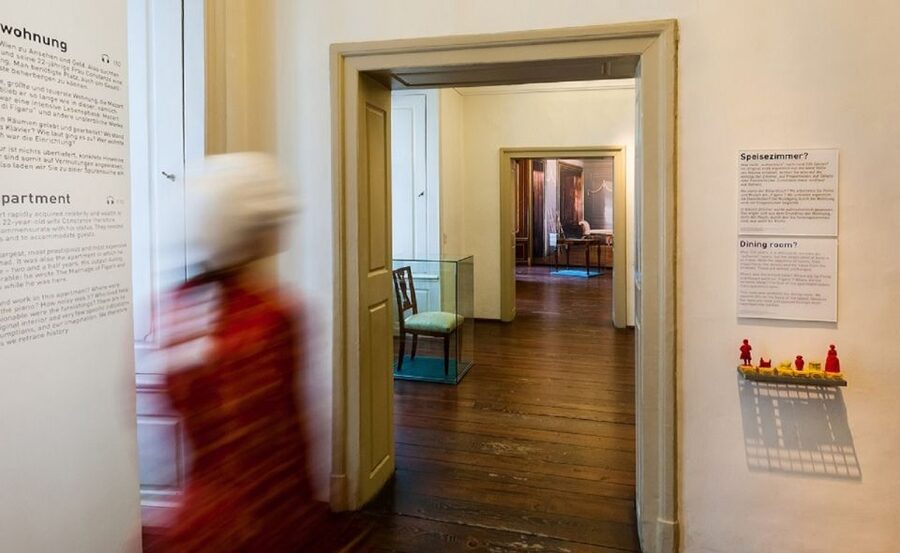
Mozarthaus Vienna preserves the only apartment Mozart lived in in Vienna. He rented it from 1784 to 1787, a productive stretch of his life, and the museum uses the address as a way into the city, the composer’s work and the period around him.
That distinction matters when you set expectations. You are not stepping into a complete reconstruction of Mozart’s daily life, with every room dressed as it might have been. The apartment is part of a museum, and the exhibition builds a story around it through displays, images and interpretation.
For some people, simply being in the same building where Mozart lived will carry the visit. For others, the appeal is more intellectual: learning what his Vienna years involved and how his work fit into the time. The museum is strongest when you treat the rooms as the setting for that story, rather than expecting a house filled with original belongings.
The apartment is also associated with The Marriage of Figaro, one of Mozart’s best-known works. He composed more music here than at any other Vienna residence, so the building gives a tangible address to a period that can otherwise feel like a list of dates and titles.
More self-guided options in Vienna:
- Vienna: New Hofburg Palace Audio-Guided Tour & Entry Ticket
★ 4.1 · 566 reviews - Vienna: Schlumberger Wine Cellar Guided or Self-Guided Tour
★ 4.8 · 285 reviews - Vienna: Scavenger Hunt Self-Guided Tour
★ 4.7 · 83 reviews
Three floors, one concentrated chapter
The permanent exhibition runs across three levels. Its focus is Mozart’s years in Vienna, which the museum presents as the high point of his creative achievement. Rather than covering every stage of his life in equal detail, it gives the Vienna period the leading role.
That focus makes this a useful stop if you already know the basic outline of Mozart’s life and want to understand his time in the city. If you are new to his biography, you will still find context about the period and his work, but you may wish the story began earlier and followed him more fully before he arrived in Vienna.
Expect a mix of interpretive material, images and text, rather than a room-by-room display of personal possessions. Original objects are limited, and some items on view may be reproductions or presented through other formats. One example raised by a change in the display is a note from Mozart to a pupil, once shown as an actual document and later projected on a wall. Displays can change, so do not count on seeing a particular object.
The rooms themselves can feel sparse. That is not a flaw in the visit so much as an important point to understand before you book: the historical value lies in the address and the story, not in an abundance of furnishings from Mozart’s household. If you want a densely object-filled museum, this may feel modest. If you value place and context, the apartment offers a more personal link to the composer.
Let the audio guide shape your visit
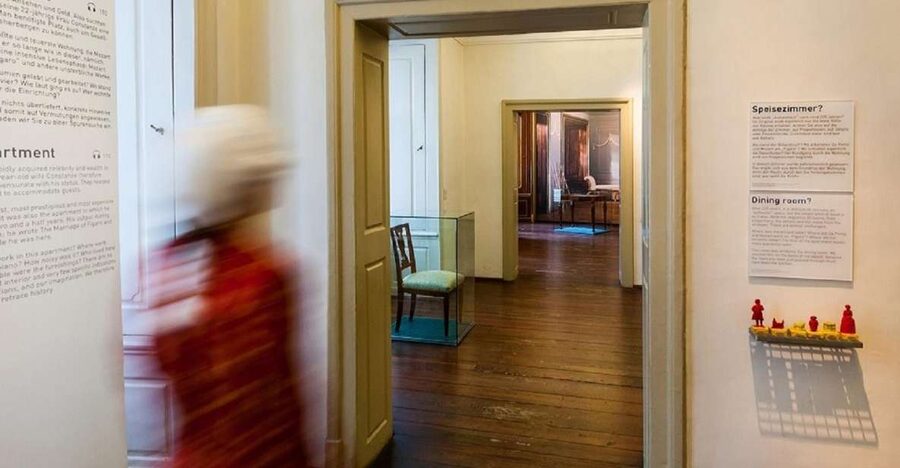
The audio guide is included, and it is the best way to make sense of the exhibition. Adults can choose from 13 languages: English, German, Slovak, Spanish, French, Hungarian, Italian, Polish, Russian, Chinese, Czech, Japanese and Korean. A children’s audio guide is available in eight languages.
The self-guided format is a practical advantage. You can stop where a subject interests you, skip material that feels too detailed, and move at your own speed. That freedom is especially useful in a museum where some panels contain a lot to read and listen to.
There is a trade-off: audio stops can take time. You may find yourself standing in one place while a track plays, then waiting to move on if you want to hear all of it. Seating is limited in some areas, so take a pause when you find a place to sit rather than assuming there will be a chair at every stop.
Check how the audio will be delivered for your chosen ticket. Some visitors have used a museum device, while others have needed their own phone. If your visit relies on a phone-based guide, bring headphones so you can listen hands-free; also make sure you know how to access the audio before you start the route. The exact setup may depend on the ticket or current arrangements.
What the rooms explain, and what they cannot
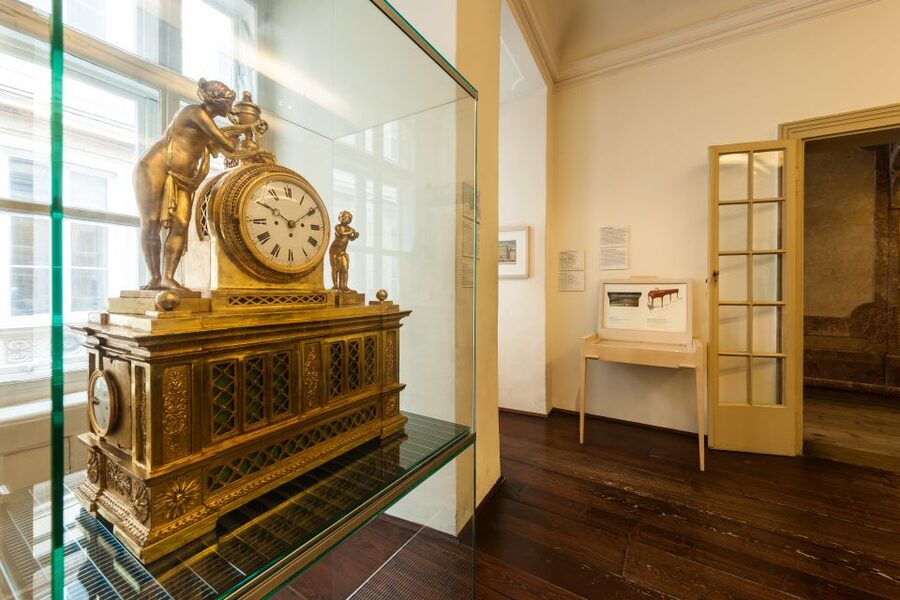
The exhibition’s real strength is the way it places Mozart’s Vienna work in context. It gives you more than a chance to say you have seen his apartment: the displays connect the composer’s life and music to the period in which he lived and worked.
Still, this is not a highly interactive museum. Much of the experience is listening, reading and looking at images or display material. If you want to make music, handle instruments or encounter a series of hands-on exhibits, the apartment itself is unlikely to meet that expectation.
Some visitors will find the audio rich in detail; others may find the spoken sections long. My advice is to use the guide selectively. Listen closely to the parts that help you understand the apartment, Mozart’s Vienna years and the works that matter most to you. You do not need to treat every stop as a required lecture.
This is also a place where quiet concentration helps. Other groups may pass through, and a guide speaking to a group can make it harder to hear your own recording. If that happens, pause the audio and resume when the room is quieter. A little patience can make the self-guided format more pleasant.
More audio-guided walks in Vienna:
- Vienna: Self-Guided Audio Walking Tour on Your Phone
★ 3.8 · 33 reviews - The Heart of Vienna: A Self-Guided Audio Tour
★ 4.0 · 29 reviews - Vienna Scavenger Hunt and Highlights Self Guided Audio Tour
★ 4.5 · 13 reviews - Palais Lobkowitz Audio Guide Tour
★ 4.0 · 3 reviews
Should you add Haus der Musik?
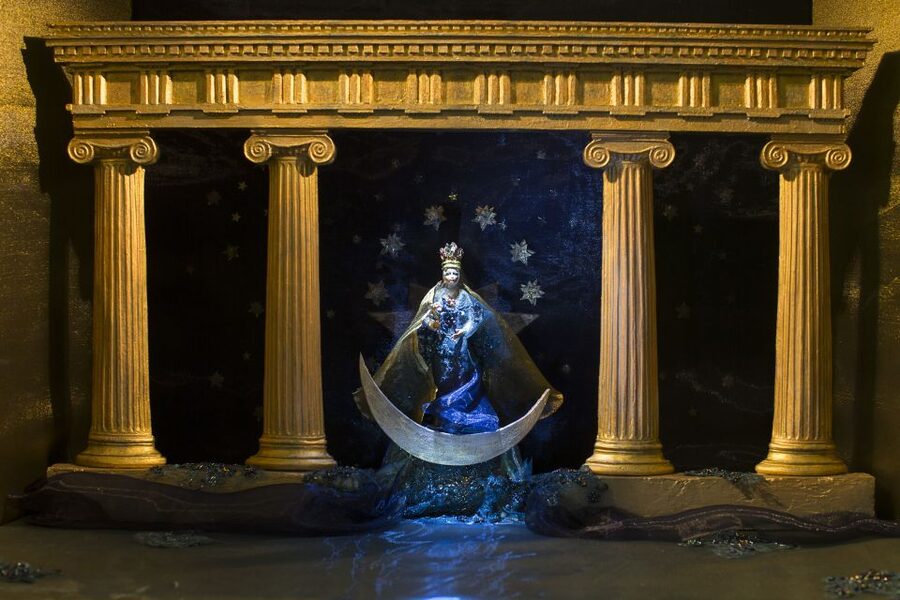
If you choose the Mozart & More combo, your ticket also includes admission to Haus der Musik. This is a separate, modern sound museum in a historic palace in central Vienna, with four floors where you can try making music yourself.
The contrast is the point. Mozarthaus looks back at Mozart’s life and Vienna work through an apartment and exhibition; Haus der Musik puts more emphasis on sound and participation. If you are travelling with children, or if you want a more hands-on counterpoint to the text and audio at Mozarthaus, the combination may make for a more varied music day.
The combo is not automatically the better buy for everyone. If your main aim is to see Mozart’s address and learn about his Vienna years, the standalone ticket is more focused. Choose both if you have a broad interest in music and expect to enjoy an interactive museum as well as a historical one.
How much time and value should you expect?
The ticket is valid for one day, but no fixed visit duration is specified. Your time inside will depend on how much of the audio you listen to and how long you spend with the displays. The museum is not described as a large, full-day attraction, so it can work as a compact stop in a wider Vienna itinerary.
At around $18 per person, the ticket offers fair value if you care about Mozart, classical music or the history of his Vienna years. The audio guide and special exhibition, which changes each year and is included in admission, add substance beyond simply walking through the apartment.
Value is less clear if you want to see a large collection of original possessions or prefer highly interactive displays. The apartment is meaningful, but it is not packed with objects, and the exhibition relies heavily on interpretation. Decide based on whether the place and the story matter to you, not on the expectation of a house museum full of Mozart’s personal effects.
The booking terms offer some flexibility: you can reserve now and pay later, and cancel up to 24 hours in advance for a full refund. The activity is listed as wheelchair accessible, and the advertised group size is limited to 10 participants, though the museum experience itself is self-guided rather than led by a live guide. Meeting arrangements may vary depending on the option you book.
Bring a student card if you plan to use it, along with a passport or ID card. Photography and video recording are not allowed inside, so leave the camera tucked away and enjoy the rooms without trying to document every display.
Who will enjoy Mozarthaus most?
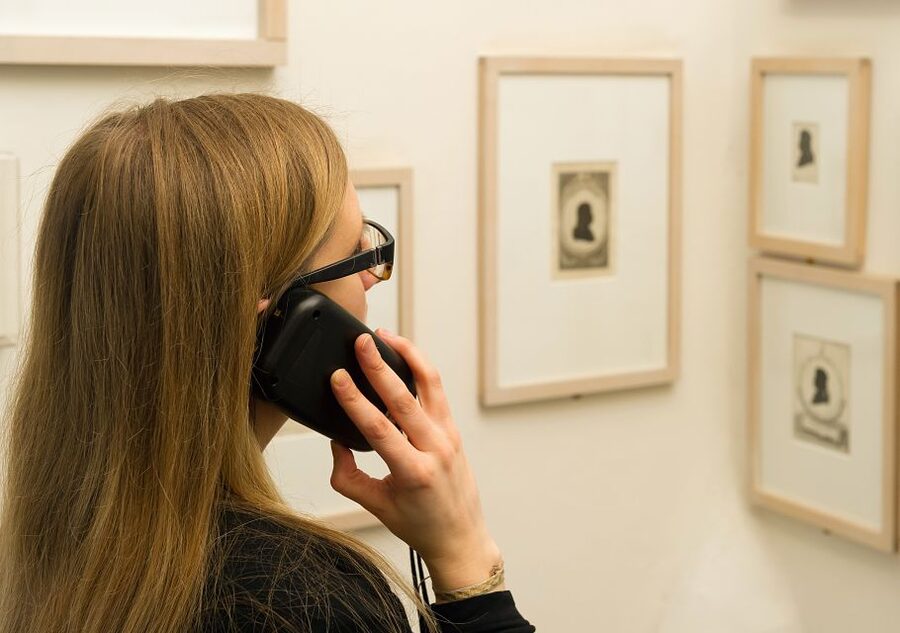
I would put this high on the list for a Mozart fan, a classical music listener or anyone curious about the composer’s life in Vienna. The address gives the visit a sense of connection that a biography on a page cannot quite match, and the audio adds useful context to rooms that might otherwise feel bare.
It can also work for families, thanks to the children’s audio guide. Just keep in mind that the exhibition has a lot of listening and reading, and the format may not hold every child’s attention equally well. Haus der Musik can be a useful addition if you want a more interactive music stop alongside the historical one.
For a casual visitor with limited time, I would weigh this against your other museum choices. If you are interested in Mozart, the apartment is a memorable, focused visit. If you mainly want visual spectacle, hands-on activities or a substantial collection of original artefacts, you may find it quieter and more text-led than expected.
Should you book it?
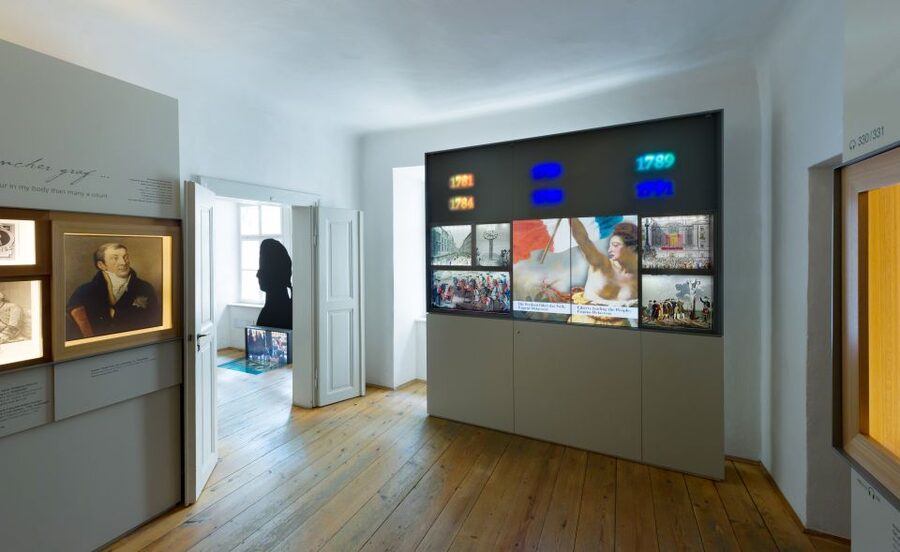
Book Mozarthaus if Mozart’s Vienna years interest you and you value seeing the place where he lived and composed. The audio guide and three-level exhibition give the apartment context, while the self-guided format lets you manage the detail.
Skip it, or choose the combo only after checking your priorities, if you expect a furnished home or a highly interactive experience. For a focused Mozart visit, the standalone ticket is the sensible choice; for a broader music outing, add Haus der Musik.
FAQ
What is included with the Mozarthaus ticket?
Admission to Mozarthaus Vienna, an adult audio guide and a children’s audio guide are included. Cloakroom access is also included. Admission to Haus der Musik is included only if you select that ticket option.
How many languages are available for the audio guide?
The adult audio guide is available in English, German, Slovak, Spanish, French, Hungarian, Italian, Polish, Russian, Chinese, Czech, Japanese and Korean. A children’s audio guide is available in eight languages.
Is Haus der Musik included in the standard ticket?
No. Haus der Musik admission is included if you select the Mozart & More combo option. The standalone Mozarthaus ticket does not include it.
Can I take photographs or videos inside?
No. Photography and video recording are not allowed inside Mozarthaus Vienna.
Is the museum wheelchair accessible?
Yes. The activity information describes Mozarthaus Vienna as wheelchair accessible.
How long is the ticket valid?
The ticket is valid for one day. The visit itself is self-guided, and the time you spend depends on how much of the exhibition and audio guide you choose to follow.
Can I cancel my booking?
Yes. You can cancel up to 24 hours in advance for a full refund. A reserve-now, pay-later option is also available.
What should I bring?
Bring a student card if relevant, and a passport or ID card. Headphones are useful if your audio guide is provided through your own phone.
Newest tours in Vienna
- Vienna: ‘Armenia In The Heart Of Austria’ Tour★ 5.0 · 6 reviews
- Vienna: Mozart Private Guided Tour★ 5.0 · 4 reviews
- Vienna: Klimt Villa (Gustav Klimt Atelier & Museum) Ticket★ 4.7 · 50 reviews
- Vienna: Kunsthistorisches Museum Guided Tour incl. admission★ 4.9 · 32 reviews
- Vienna: Luxury Vintage Fashion Walking Tour★ 3.4 · 8 reviews
- Vienna: Johann Strauss – Immersive Audiovisual Experience Ticket★ 4.8 · 60 reviews
- Vienna: Kingdom of Railways Museum Entry Ticket★ 3.6 · 50 reviews
- Vienna: KuK Perfumery Filz – Viennese Perfume Tasting★ 4.3 · 23 reviews
Vienna Tours, compared.
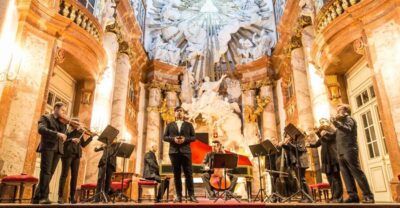
Vivaldi’s Four Seasons Concert in Karlskirche
Read our review →
Skip-the-cashier-desk-line Giant Ferris Wheel Ride
Read our review →
Schönbrunn Palace & Gardens Skip-the-Line Tour
Read our review →
Light of Creation Votive Church Immersive Light Show
Read our review →

Classical Concert in the World-Famous Musikverein
Read our review →
Skip-the-Line Sisi Museum, Hofburg and Gardens Tour
Read our review →Browse the lists this tour appears in