
Reviewed · VIENNA TOURS
Vienna: The Great Plague Exploration Game
Vienna’s Great Plague game turns a walk through the old center into a trail of questions, clues and overlooked details. You begin at St. Rupert’s Church and finish at the Hofburg, with stops that range from a centuries-old tree trunk studded with nails to the grand roof of St. Stephen’s Cathedral.
I like two things in particular: the route nudges you into side streets you might miss on a standard sightseeing walk, and the phone-based format lets you pause for a coffee or follow your curiosity. The story also connects Vienna’s past with the song of Dear Augustin, giving the puzzle a thread beyond simply finding the next landmark.
The trade-off is that this is a game, not a guided history tour. You get audio stories and clues, but if you want a guide to explain every site in depth, or prefer not to manage an app while walking, this may not be your best fit.
The route at a glance
- Start at St. Rupert’s Church: Look for details inside Vienna’s oldest church before solving the first clue.
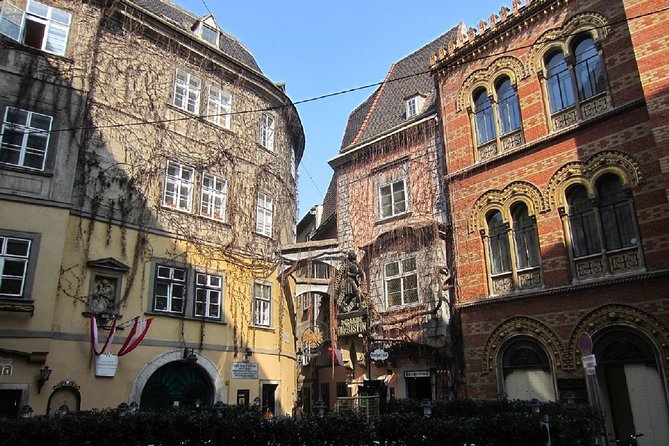
- Find the old city’s oddities: The route takes in Griechenbeisl, a playful medieval mural and the Stock im Eisen nail tree.
- Use your phone as the guide: Follow clues and audio stories at your own pace, with no physical guide.
- Finish at the Hofburg: The walk ends near the former Habsburg seat of power, leaving you free to continue exploring.
- Allow more than 90 minutes if you like to linger: The listed duration is approximate, and breaks are welcome.
- Expect a modest extra-cost factor: The game costs $7.23 per person, but entry to St. Stephen’s Cathedral and the Albertina is not included.
A puzzle walk through Vienna’s old center
This is a private activity for your own party, designed to be played on a smartphone. Instead of following a guide with a flag, you solve a clue at each stop to reveal the next location and hear a story connected to it. The route covers central Vienna, mixing major sights with smaller details tucked into old streets and courtyards.
The Great Plague theme gives the walk a narrative shape. One strand touches on the story of Dear Augustin, a familiar Viennese song whose meaning becomes clearer as you move through the game. The format is less about a full lecture on every building and more about using puzzles to get you looking closely at the city.
That distinction matters when you decide what to book. You can expect prompts, audio and historical context, but not a guide who can answer questions in person or adjust the commentary to your interests. If you enjoy learning by spotting details and solving a small challenge, the game has a clear appeal. If you want a more thorough account of Vienna’s plague years, imperial politics or architecture, pair it with a museum visit or a guided tour.
The walk is listed at about an hour and a half, but the self-paced setup makes that a flexible estimate. You can stop for a drink, spend longer at a church, or take a break and return to the clues later. The activity can be played at any time after booking, within the stated daily operating hours of 7 a.m. to 10 p.m.
More self-guided options in Vienna:
- Vienna: Tickets for Mozarthaus Vienna with Audio Guide
★ 4.2 · 2,344 reviews - Vienna: New Hofburg Palace Audio-Guided Tour & Entry Ticket
★ 4.1 · 566 reviews - Vienna: Schlumberger Wine Cellar Guided or Self-Guided Tour
★ 4.8 · 285 reviews
From St. Rupert’s Church to Griechenbeisl
Begin at Ruprechtskirche, or St. Rupert’s Church, a compact place with a long past. It is described as 13 centuries old and built with stone taken from an ancient Roman settlement. The church is dedicated to St. Rupert of Salzburg, patron saint of the Danube’s salt merchants, a reminder that Vienna’s history is tied to trade as well as rulers and wars.
Look for the church’s oldest stained-glass window, in the vaulted apse. It dates to the 13th century and shows Christ on the cross, with the Madonna and Child below. St. Rupert’s also has Vienna’s oldest bells, and it hosts ancient-music concerts in summer, including evening performances in July. The game asks you to search around for an answer before moving on, so take a moment to notice the interior rather than treating the church as a quick waypoint.
Next comes Griechenbeisl, one of Vienna’s oldest taverns. Its name means Greek Inn, a nod to the Greek traders and Levant travelers who settled in the area. The restaurant is also linked with Mozart, Beethoven and Schubert, who are said to have dined there. If you visit the Mark Twain room, you can see framed signatures of famous patrons, including Luciano Pavarotti and Johnny Cash.
The puzzle gives you a reason to look around this corner of the old city and take in its layered character. But the game does not include a meal, and the stop is not a restaurant booking. If you want to eat here, make that a separate plan and allow extra time.
Bäckerstrasse’s mural and the nail-studded tree
Bäckerstrasse is one of the walk’s more rewarding stretches for anyone who likes to look above street level. At No. 2, the so-called Hare House has an unusual mural on its façade: a wolf and a cow wearing spectacles appear to play backgammon. The image may have belonged to a broader scene of medieval life, or it may carry a religious meaning tied to conflict between Protestants and Catholics. The exact interpretation is uncertain, which is part of the fun.
The street also has handsome 17th- and 18th-century façades. No. 2 is topped by a 17th-century tower, No. 8 was the Palace of Count Seilern, built in 1722, and No. 7 has a Renaissance courtyard with arcades and galleries. These details make the street a good example of what the game does well: it gives you a reason to notice places that can disappear into the background when you are hurrying between major sights.
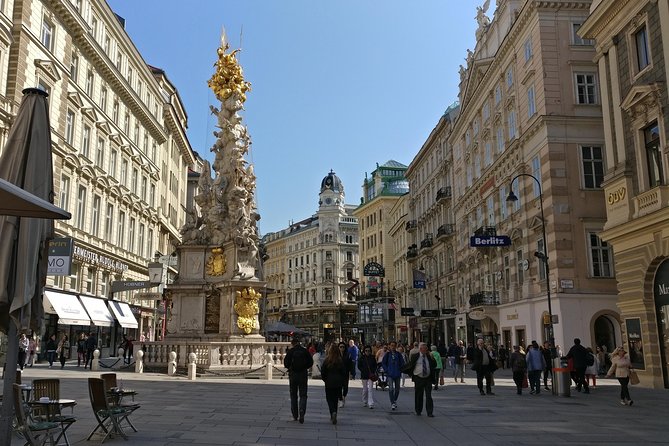
The route then leads toward Stephansplatz and the Stock im Eisen. Follow the clue to the square, where the game provides the next instructions and background. Nearby, the Stock im Eisen is a section of medieval tree trunk set on a pedestal. Generations of people hammered nails into it for good luck, and the unusual object was once thought to be the work of Satan. An iron ring with a dummy lock surrounds it.
This is a brief stop, but a memorable one. The tree is easy to pass without knowing what you are looking at, so the puzzle adds a useful bit of context. You can linger as long as you like before starting the next clue.
St. Stephen’s Cathedral and a coffeehouse pause
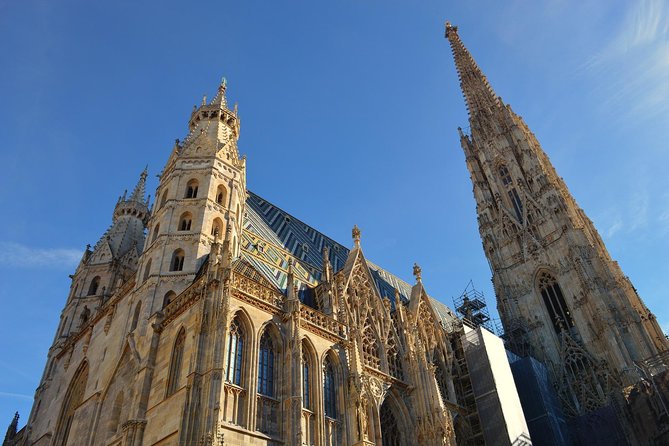
St. Stephen’s Cathedral, or Stephansdom, is the grand visual center of the walk. The church has stood since the 12th century and is among Austria’s most important Gothic buildings. Its roof is a highlight: 230,000 glazed tiles form colorful patterns, including the double-headed eagle associated with the Habsburg Empire, along with coats of arms representing Vienna and Austria.
The tower room has 13 bells and a view over the city, but access and admission are not part of the game. The cathedral stop itself is also listed as not including an admission ticket. You can solve the clue from the area and continue, or decide separately whether to pay for an interior visit or tower access. Do not assume the game fee covers either.
A suggested pause nearby is Café Frauenhuber on Rauhensteingasse. Dating to 1746, it is described as Vienna’s oldest coffeehouse. Mozart and Beethoven are said to have played table music for diners there several times between 1782 and 1791. The café still has a traditional, unpretentious feel, making it a natural place to break the game and enjoy a coffee.
That pause is optional, not a required part of the game. The ability to stop and restart is one of the format’s practical strengths: you do not need to choose between following the clues and having a relaxed coffeehouse visit.
Same city, a different kind of day:
- Vienna: Vivaldi’s Four Seasons Concert in Karlskirche
★ 4.7 · 14,951 reviews - Vienna: Spanish Riding School Training
★ 3.9 · 9,281 reviews - Vienna: Skip-the-cashier-desk-line Giant Ferris Wheel Ride
★ 4.5 · 7,859 reviews - Vienna: Schönbrunn Palace & Gardens Skip-the-Line Tour
★ 4.7 · 7,739 reviews
From the Albertina to the Hofburg
The next major stop is the Albertina, housed in the largest Habsburg residential palace within the Hofburg complex. The museum’s collections cover modern art, graphic art, architecture and photography. Its holdings include more than 50,000 drawings and over one million master prints, shown on a rotating basis. Works associated with Impressionism, Fauvism, German Expressionism and the Russian avant-garde are among its attractions.
The game uses the Albertina as a clue stop, not as a museum ticket. Admission is not included, and 10 minutes is only enough to look around outside or solve the prompt. If the art appeals to you, plan a separate visit and give it considerably more time than the game’s stop allows.
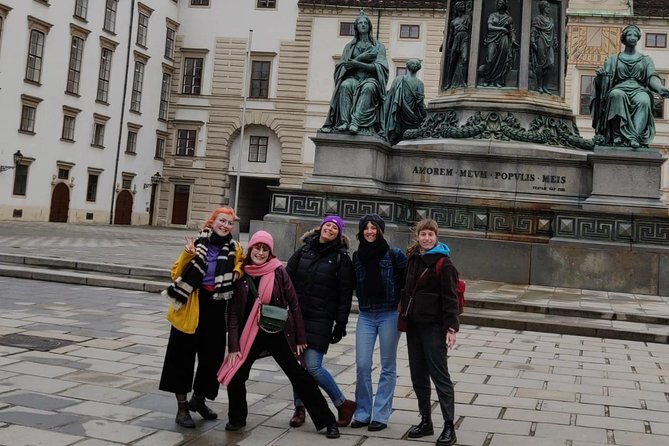
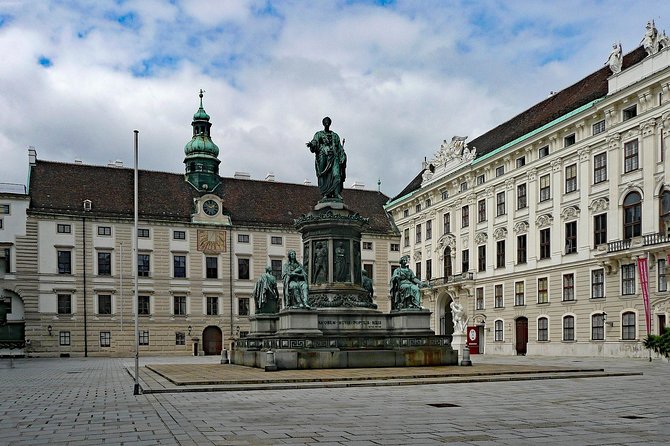
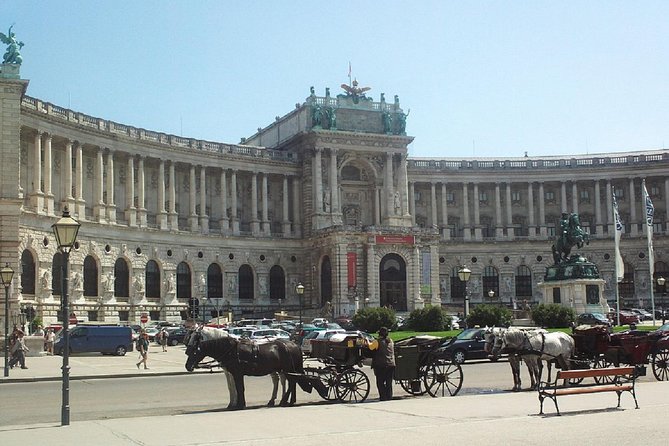
The route ends at the Hofburg, the former residence and seat of government of the Habsburg emperors until 1918. It has been a center of power since the 13th century and is now the workplace and home of Austria’s president. The complex includes the Imperial Apartments, the Sisi Museum, the silver collections and the National Library. The Hall of Ceremonies is still used for Viennese balls.
As with the Albertina, the game does not include entry to the Hofburg’s interiors. The finish is a convenient place to decide what you want to see next, rather than a guided tour through the palace rooms. You can continue exploring at your own pace after completing the final puzzle.
What the price buys, and what it does not
At $7.23 per person, the game is inexpensive compared with a live guided walk. You are paying for a self-guided route, clues and audio stories, not for admission, transport or a human guide. If your ideal afternoon is a low-cost way to cover several central sights while getting nudged toward smaller details, the price is reasonable.
The private format means only your group takes part. It suits couples, friends and families who would rather work together than join a larger group. Children play free, and the puzzle format can help keep easily distracted kids engaged, though the adult still needs to manage the phone and keep everyone moving safely through the city.
Groups larger than 15 should make multiple bookings. Group discounts are available, though the exact discount is not specified. The experience is offered in English, and service animals are allowed. Most people can participate, and the starting point is near public transportation.
One practical caution: the game depends on entering answers into an app. Some players have found the setup or activation confusing, and answer entry can be fussy. Capitalization or a missing word such as and may prevent a correct answer from being accepted. Read the prompts carefully, check spelling and punctuation, and allow a little patience if the app does not recognize an answer immediately. If you run into trouble, support has resolved problems for some players, but one person had difficulty getting assistance, so do not rely on instant help.
The free-cancellation window is 24 hours before the start time. Within 24 hours, the payment is not refundable, and changes are not accepted. Since you can play at any time after booking, there is little need to lock yourself into a precise start time unless it suits your plans.
Who should take this Vienna game?
I would choose this for a casual afternoon when you want a bit of structure without committing to a guide’s schedule. It works especially well if you enjoy scavenger hunts, are curious about medieval details, or want to let a family group set its own pace. The route has enough famous sights to make it useful for a first visit, while the mural, tavern history and nail tree give it a more local, observant feel.
It is less suited to anyone seeking a detailed historical lecture or a fully guided interior visit. The puzzles are described as fairly straightforward by some players, which may be a plus with children or a mixed-age group but could feel light for seasoned puzzle fans. And because the phone is central to the experience, people who dislike app-based activities may prefer a conventional walking tour.
Should you book it?
Book the Great Plague game if you want an affordable, flexible walk that mixes major Vienna sights with small details you could otherwise miss. Go in expecting a self-guided puzzle with audio context, not a deep history seminar. Keep the app handy, leave room for coffee or museum stops, and treat the listed 90 minutes as a starting point rather than a deadline. If those terms suit you, it is a pleasant way to make the old center feel more like a trail of discoveries than a checklist.
FAQ
How long does the game take?
The approximate duration is 1 hour and 30 minutes. You can take breaks and continue at your own pace, so extra stops will extend the walk.
Is there a physical tour guide?
No. You use your own smartphone to follow clues and listen to audio stories.
Where does the game start and finish?
It starts at St. Rupert’s Church, at Ruprechtsplatz 1, and ends at the Hofburg in central Vienna.
What language is offered?
The experience is offered in English.
Are admission tickets included?
No. Admission to St. Stephen’s Cathedral and the Albertina is not included. The game fee does not cover the Hofburg’s interiors.
Can I pause the game for a coffee?
Yes. You can take a break, have a coffee and continue later.
Is the game suitable for children?
Children can play for free. The puzzle format is presented as a good option for families with easily distracted children.
What is the cancellation policy?
You can cancel for a full refund up to 24 hours before the experience’s start time. Cancellations or changes made within 24 hours are not accepted for a refund.
Newest tours in Vienna
- Vienna: ‘Armenia In The Heart Of Austria’ Tour★ 5.0 · 6 reviews
- Vienna: Mozart Private Guided Tour★ 5.0 · 4 reviews
- Vienna: Klimt Villa (Gustav Klimt Atelier & Museum) Ticket★ 4.7 · 50 reviews
- Vienna: Kunsthistorisches Museum Guided Tour incl. admission★ 4.9 · 32 reviews
- Vienna: Luxury Vintage Fashion Walking Tour★ 3.4 · 8 reviews
- Vienna: KuK Perfumery Filz – Viennese Perfume Tasting★ 4.3 · 23 reviews
- Vienna: Johann Strauss – Immersive Audiovisual Experience Ticket★ 4.8 · 60 reviews
- Vienna: Kingdom of Railways Museum Entry Ticket★ 3.6 · 50 reviews
Vienna Tours, compared.
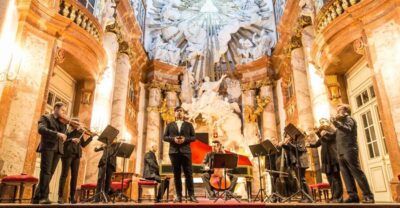
Vivaldi’s Four Seasons Concert in Karlskirche
Read our review →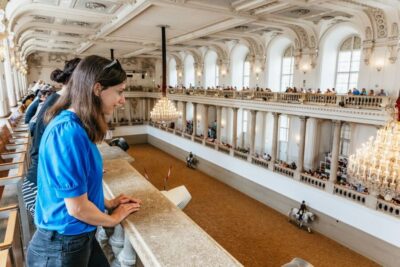
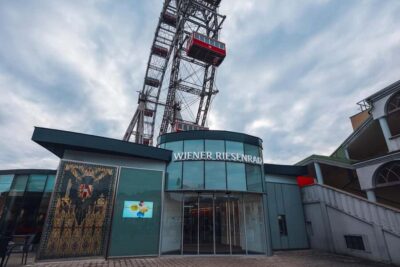
Skip-the-cashier-desk-line Giant Ferris Wheel Ride
Read our review →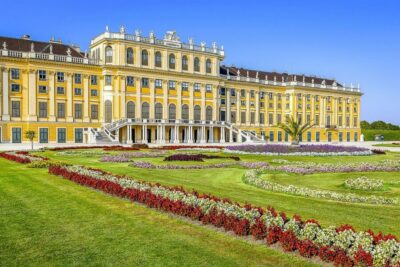
Schönbrunn Palace & Gardens Skip-the-Line Tour
Read our review →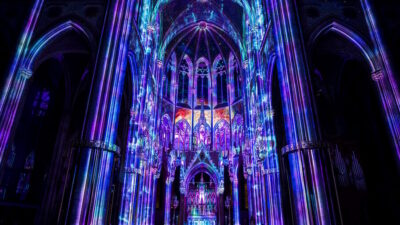
Light of Creation Votive Church Immersive Light Show
Read our review →

Classical Concert in the World-Famous Musikverein
Read our review →
Skip-the-Line Sisi Museum, Hofburg and Gardens Tour
Read our review →Browse the lists this tour appears in