Reviewed · VIENNA TOURS
Forchtenstein Castle Entrance Ticket
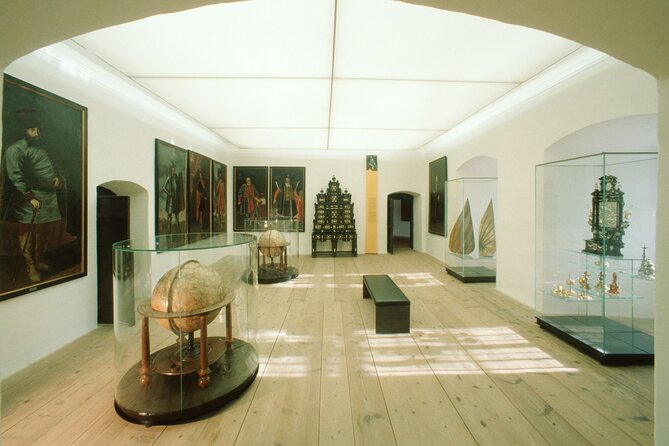
Forchtenstein Castle’s portrait gallery puts the Esterházy princes alongside figures such as Attila the Hun, Charlemagne, and Vlad the Impaler. The castle’s walls also hold a large private armoury, centuries of military history, and enormous secco murals in the inner courtyard.
I like two things here: you can explore the galleries at your own pace, and the collections are unusually varied, from weapons and saddles to portraits and religious art. The views from the castle’s hilltop setting are another reason to make the trip.
One consideration: the castle is outside Vienna, and the indoor displays may feel repetitive if you have little interest in portraits or military objects. The overall rating is 3.5 out of 5 from eight ratings, so this is a better fit for curious history fans than for anyone expecting a tightly guided, high-energy tour.
- Look up in the courtyard: The castle’s secco murals are described as the largest north of the Alps.
- Meet the Esterházys: Portraits trace the family’s history, with famous historical figures included in the gallery.
- See a major private armoury: Weapons and other military objects explain the castle’s long defensive role.
- Set your own pace: Admission is included, and there is no fixed itinerary for exploring the galleries.
- Allow one to two hours: That gives you time for the main rooms without turning the visit into a full-day commitment.
- Check the calendar before you go: Opening days vary by season, and the castle is in Forchtenstein, not central Vienna.
The portraits that make Forchtenstein unusual
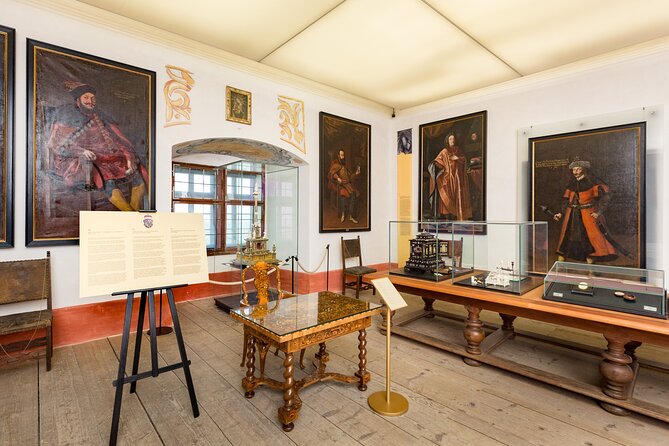
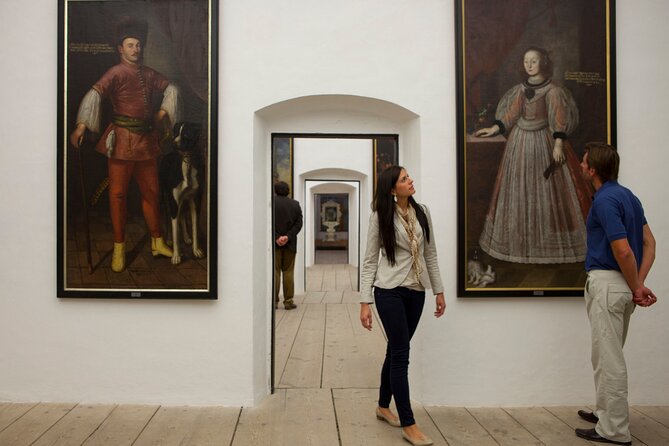
Forchtenstein Castle is not simply a grand old building with a few rooms of furniture. Its collections tell the story of the Esterházy family through portraits, weapons, religious spaces, and objects gathered over generations. The most striking visual conceit is the 17th-century gallery, where full-size images of Esterházy princes share the walls with figures such as Attila the Hun, Charlemagne, and Vlad the Impaler.
That mix makes the portrait display more than a family album. It presents the family in the company of legendary rulers and military leaders, offering a glimpse of how the Esterházys wanted to frame their place in history. The portrait of Vlad, often associated with the Dracula legend, is likely to catch the eye even if you have come mainly for the castle.
I would not expect every room to deliver a dramatic revelation. One visitor found the many similar portraits and objects monotonous, while another described the exhibition as highly instructive. Both reactions make sense: the collection rewards people who enjoy looking closely and comparing objects, but it can feel like a lot of the same if you move quickly from frame to frame.
The best approach is to give the gallery time, but not to treat every portrait as equally important. Look for the figures and family connections that help you understand the Esterházy story. The scale of the collection is part of the point, and the repetition itself can tell you something about aristocratic status and public image.
Start with the courtyard murals
The first surprise comes before you get deep into the exhibitions. Step into the inner courtyard and look up at the secco murals, described as the largest of their kind north of the Alps. They set the tone for the visit: this is a castle built to impress as well as defend.
Secco painting is applied to dry plaster, unlike the better-known fresco method, which is painted onto wet plaster. The murals give the courtyard a strong sense of place, and they are worth taking a moment to examine before heading into the rooms. If you are short on time, this is an easy highlight to appreciate without needing an audio guide or a long explanation.
The castle’s position is another part of the experience. The elevated setting brings broad views over the surrounding area, and the location may be as memorable as the displays inside. A visitor described the views as far-reaching, and another felt the setting was the strongest part of the visit. I would build in a few minutes to enjoy the outlook rather than treating the castle as a sequence of indoor rooms alone.
More tickets and passes in Vienna:
- Vienna: Classic Ensemble Vienna in St. Peter’s Church Ticket
★ 4.7 · 4,819 reviews - Vienna Kunsthistorisches Museum Day Admission Ticket
★ 4.6 · 3,690 reviews - Vienna: Tickets for Mozarthaus Vienna with Audio Guide
★ 4.2 · 2,344 reviews
The chapel, oratory, and layers of military history
The visit moves into the first-floor oratory and chapel, where the castle’s religious life comes into view. These spaces offer a change of pace from the large-scale portraits and arms. They also help you see the castle as a lived-in stronghold, not only a display space for the family’s collections.
Forchtenstein is tied to more than four centuries of military history. That long span gives the armoury its context: weapons here are not merely decorative objects, but part of a tradition of defence and power. The private collection is among Europe’s largest, and the range includes weapons and saddles.
If military history is your interest, this is likely to be one of the most rewarding sections. Look for differences in form and purpose rather than assuming every weapon has the same story. The collection can also be a useful stop for families with older children who enjoy seeing tangible objects from the past, though the available information does not specify child-focused activities.
The scale has a trade-off. A large armoury can be impressive, but it also asks you to bring your own curiosity. The written explanations help, though one visitor found the audio guide too basic. If you prefer a guide who can adapt the explanation to your questions, check what guided options are available before your visit; two different guided tours have been noted, but the ticket described here is for admission and does not promise a guided tour.
Upstairs with the Esterházy collections
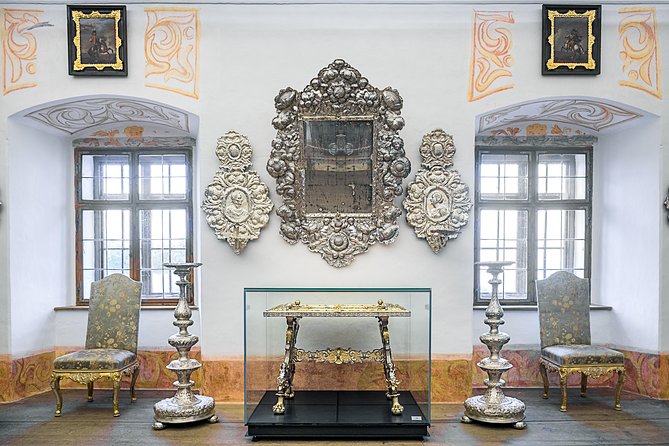
On the second floor, the focus shifts to the wider collections and family history. Portraits make up a large part of what you see, but the castle’s holdings also include works of art and objects that show the variety of the Esterházy collection. The rooms offer a look at how a powerful family accumulated and presented its possessions.
This is the part of the visit where pacing matters most. With no fixed itinerary, you can spend more time on the objects that interest you and move on when a room stops holding your attention. That freedom is a real advantage over a tour that keeps everyone moving at the same speed.
I would avoid trying to inspect every object with equal care. Instead, choose a few anchors: the portrait gallery, a section of the armoury, the religious rooms, and any piece that catches your eye. That gives the visit a shape while leaving room for discovery. The collections are extensive enough that a brief look at every display could blur together.
The explanations can help make sense of what you are seeing, but do not expect the text to replace a specialist guide. One visitor found the explanations good, while another was disappointed by the audio guide. The safest expectation is a self-guided visit with explanatory material, not a personal lecture tailored to your interests.
How much time to allow
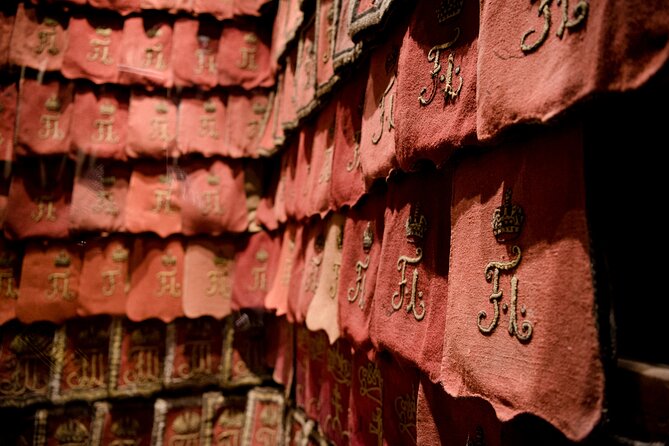
The visit is estimated at one to two hours. At the shorter end, you can see the courtyard, chapel, key military displays, and portrait rooms without lingering over every object. At the longer end, you have more room to read the explanations, compare the collections, and enjoy the views.
The castle is roughly an hour from Vienna according to one account, so the visit takes more planning than a museum stop in the city centre. The admission ticket does not include transport. Check your route and the castle’s current hours before setting out, especially if you are making the trip as a day outing.
The published 2025 schedule lists opening hours from 10 a.m. to 5 p.m. From April through May, and again from September through October, it is open Tuesday to Sunday. In June, July, and August, it is listed as open daily. Because hours can change, confirm the schedule for your intended date rather than relying on an old calendar.
Parking may need a little thought if you are driving. One visitor found parking spaces limited. That does not mean you will necessarily have trouble, but it is sensible not to arrive at the last minute, particularly during a busy period.
Same city, a different kind of day:
- Vienna: Vivaldi’s Four Seasons Concert in Karlskirche
★ 4.7 · 14,951 reviews - Vienna: Spanish Riding School Training
★ 3.9 · 9,281 reviews - Vienna: Skip-the-cashier-desk-line Giant Ferris Wheel Ride
★ 4.5 · 7,859 reviews - Vienna: Schönbrunn Palace & Gardens Skip-the-Line Tour
★ 4.7 · 7,739 reviews
Is $22.11 good value?
At $22.11 per person, the ticket offers access to a large castle collection that can fill one to two hours. The value is strongest if you are interested in aristocratic history, portraiture, arms, or historic buildings. You are paying for a broad collection and the chance to explore at your own pace, not for a long guided program.
The price may feel less compelling if you mainly want a dramatic castle interior or a short list of famous masterpieces. The indoor displays are substantial, but their appeal depends on your taste. Some visitors found the castle well preserved and the explanations useful; others felt the exhibits repeated similar themes. The views and courtyard murals add variety, but they do not make the indoor collection universally appealing.
Booking ahead can secure your admission, and the ticket lets you select a date and time that works for your schedule. The experience is booked, on average, 95 days in advance, which suggests that planning early may be useful. Free cancellation is available up to 24 hours before the start time; within 24 hours, the payment is not refunded.
Who will enjoy the castle most?
I would recommend Forchtenstein to visitors who want a substantial historical collection outside Vienna and enjoy exploring without a fixed route. The portraits are a good draw for anyone curious about dynastic image-making, while the armoury offers a clear focus for people interested in military history. The courtyard murals and elevated setting make the visit more varied than a sequence of gallery rooms.
It is less suited to anyone who wants a guide included, a highly interactive exhibition, or a quick stop in central Vienna. The length of the trip matters, and the castle’s collections reward patient looking more than speed. If you have limited time in Austria, compare the drive or transit time with the hours you want to spend on a single historic site.
The overall rating of 3.5 out of 5 reflects a mixed experience rather than a clear warning. The strong points are the castle’s setting, preservation, views, and the breadth of its collections. The weak points are the possibility of repetitive displays, a basic audio guide, limited parking, and occasional waiting at the ticket desk. Those are useful caveats, not reasons to skip the castle if its subject matter appeals to you.
Should you book this ticket?
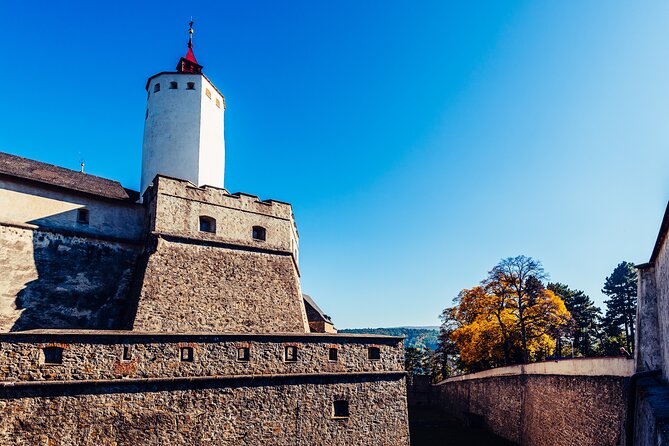
Book it if you like portraits, military collections, and castles that reveal their history through objects as well as architecture. The freedom to explore at your own pace is a plus, and the courtyard murals, chapel, armoury, and Esterházy gallery give the visit several distinct parts.
Skip it if you are looking for a guided experience or have little patience for collections with many similar portraits and objects. For the right visitor, though, Forchtenstein makes a worthwhile half-day outing from Vienna: a serious look at aristocratic and military history, capped by broad views from a striking hilltop castle.
FAQ
How much does the Forchtenstein Castle ticket cost?
The listed price is $22.11 per person.
How long does a visit take?
Plan on approximately one to two hours inside the castle.
Where is Forchtenstein Castle?
The ticket redemption point is Burggasse, 7212 Forchtenstein, Austria. The castle is described as about an hour from Vienna.
Is the visit guided?
The admission ticket allows you to explore at your own pace and does not specify a guide. Two different guided tours are also available at the castle, but they are not stated as part of this ticket.
What can I see inside the castle?
The visit includes an oratory and chapel, military history displays, a large private armoury, Esterházy portraits, and other collections. The inner courtyard has extensive secco murals.
When is the castle open?
The published 2025 schedule lists 10 a.m. to 5 p.m. hours. It is open Tuesday to Sunday in April, May, September, and October, and daily from June through August. Check the current schedule before visiting.
Can I cancel the ticket?
Yes. You can cancel for a full refund up to 24 hours before the experience’s start time. Cancellations made less than 24 hours beforehand are not refunded.
Is parking available?
Parking is available in the area, but spaces may be limited. Allow some extra time if you are driving.
Newest tours in Vienna
- Vienna: ‘Armenia In The Heart Of Austria’ Tour★ 5.0 · 6 reviews
- Vienna: Mozart Private Guided Tour★ 5.0 · 4 reviews
- Vienna: Klimt Villa (Gustav Klimt Atelier & Museum) Ticket★ 4.7 · 50 reviews
- Vienna: Kunsthistorisches Museum Guided Tour incl. admission★ 4.9 · 32 reviews
- Vienna: Luxury Vintage Fashion Walking Tour★ 3.4 · 8 reviews
- Vienna: Johann Strauss – Immersive Audiovisual Experience Ticket★ 4.8 · 60 reviews
- Vienna: Kingdom of Railways Museum Entry Ticket★ 3.6 · 50 reviews
- Vienna: KuK Perfumery Filz – Viennese Perfume Tasting★ 4.3 · 23 reviews
Vienna Tours, compared.
Vivaldi’s Four Seasons Concert in Karlskirche
Read our review →
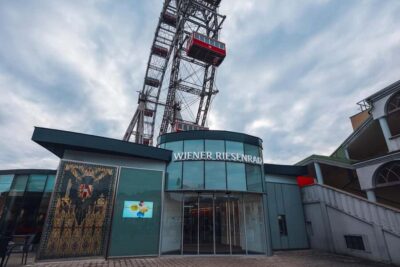
Skip-the-cashier-desk-line Giant Ferris Wheel Ride
Read our review →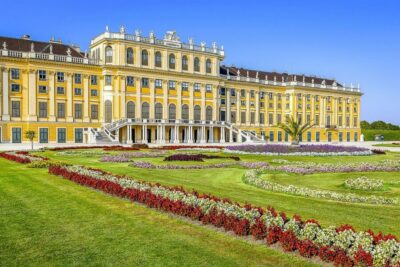
Schönbrunn Palace & Gardens Skip-the-Line Tour
Read our review →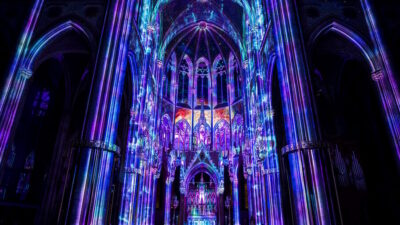
Light of Creation Votive Church Immersive Light Show
Read our review →

Classical Concert in the World-Famous Musikverein
Read our review →