
Reviewed · VIENNA WALKING TOURS
Vienna Art Nouveau Walking Tour
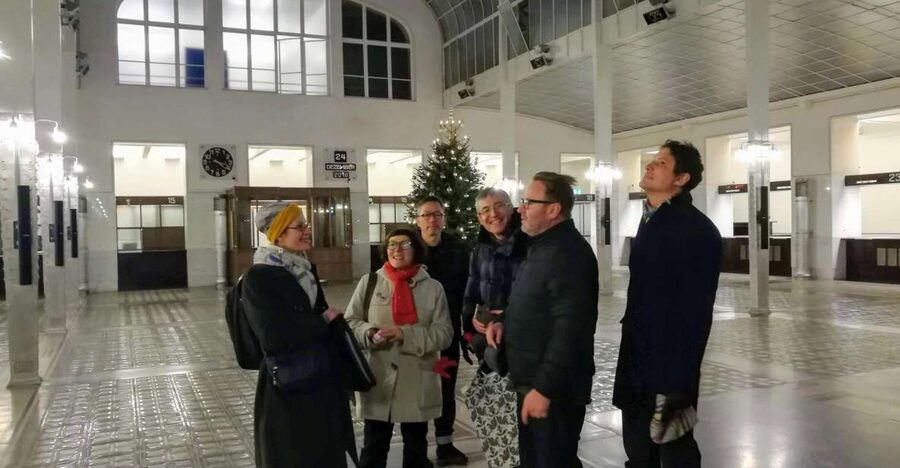
Vienna’s metro was more than a way to get across town: in the late 19th century, Otto Wagner used its stations to give a growing city a modern public face. This three-hour walking tour follows that idea from the graceful Karlsplatz pavilion to the imperial station near Schönbrunn.
I like two things especially: you get to see Art Nouveau in working metro stations, not just behind museum glass, and a historian connects the buildings’ decoration to the city’s changing ambitions. The main consideration is cost: at $176 per person, admission to the Secession and Wagner pavilion is extra, and the value depends on how much you want expert context.
- Otto Wagner’s metro designs: See how architecture helped make a new transport system recognizable and modern.
- Karlsplatz pavilion: Begin around a signature station building and its small Wagner Museum.
- Secession House: On tours Tuesday to Sunday, you can visit the building and Klimt’s Beethoven Frieze for an added fee.
- The imperial station: At Hietzing, consider how Wagner adapted Art Nouveau for the emperor.
- A historian as guide: Past guides have included Wolfgang, Peter and Guissepina, with tours in English.
- A small-group feel is possible: Private and small-group options are available, though the exact group size depends on the option you book.
Why Vienna Put Art Nouveau on the Metro
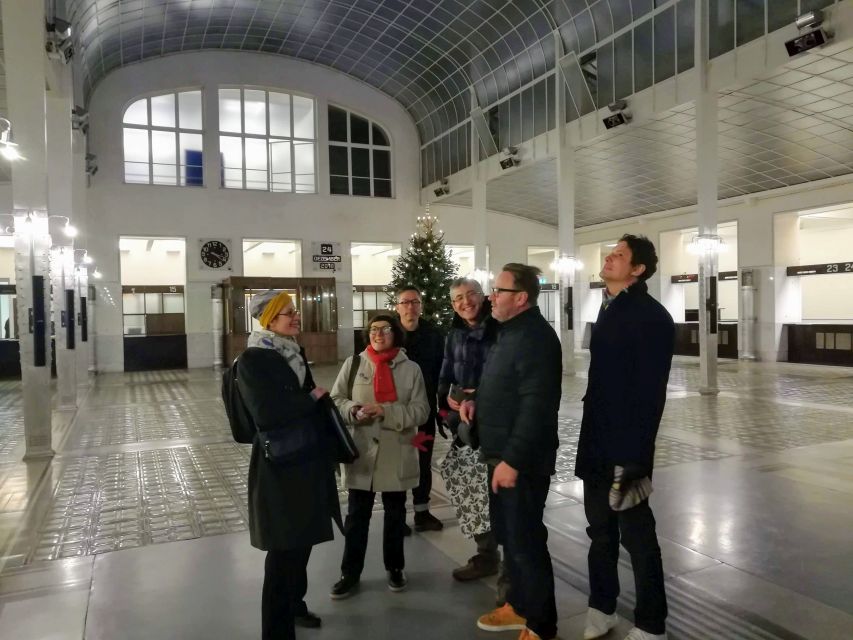
In the late 19th century, Vienna’s population grew quickly, and the city needed public transport to connect its expanding suburbs with the center and the Ringstrasse. Otto Wagner was chosen to design the metro system. His goal was not simply to make stations useful. He wanted them to be easy to recognize and to express Vienna’s cosmopolitan outlook.
That makes this tour more than an architecture walk. The stations show how a practical public service could carry an artistic and civic message. Wagner worked in the international Art Nouveau style, known in Vienna as Jugendstil, and applied it to buildings people would encounter as part of daily life.
I like that the tour uses the metro itself as a thread through the city. You see design in context, then compare its more restrained public face with the ornate Secession building and an imperial station. The contrast helps explain that Art Nouveau was not one fixed look. Wagner could adapt its forms and materials to different purposes and patrons.
The tour is described as three hours, while its detailed route description refers to a 2.5-hour guided tour. Treat three hours as the advertised duration, but confirm the timing and route when you book. The listed stops include several landmarks, and the precise sequence may depend on the selected option.
Starting at Café Museum and Karlsplatz
The meeting point is Café Museum at Operngasse 7, in Vienna’s first district. The starting or pickup location can depend on the option selected, so check your booking details rather than assuming every version begins at the café.
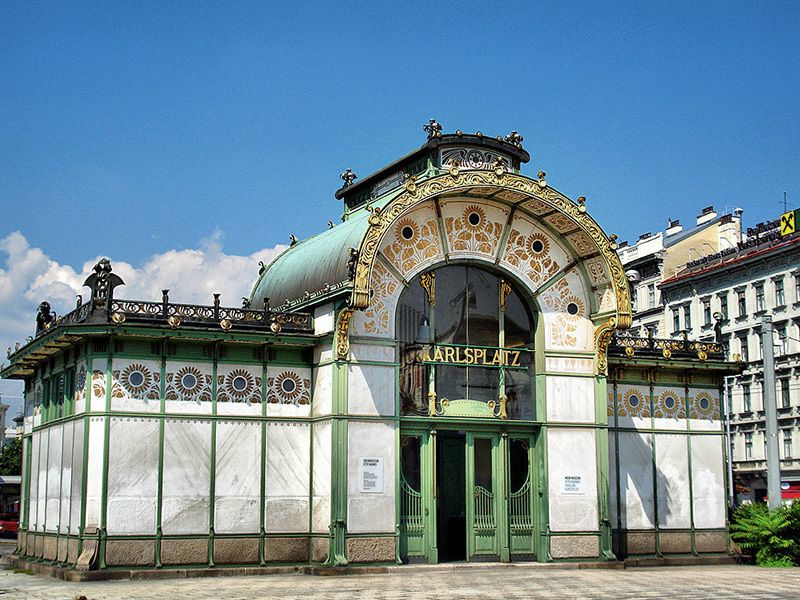
From there, the tour heads to the Otto Wagner pavilion at Karlsplatz. This elegant station building is a fitting introduction to the architect’s work: it belongs to a transport system, yet its design makes it a landmark in its own right. The tour also includes the small Wagner Museum, where you can begin to connect his public projects with his ideas about modern design.
Admission to the pavilion is not included. The description does not give an entrance price, so ask the guide or check current details before you go if you want to budget precisely. Even if you do not enter, the pavilion’s exterior and setting provide a useful starting point for looking at Wagner’s approach to station architecture.
The tour’s focus is not simply on spotting decorative details. Your guide is there to explain why Wagner chose particular forms, symbols and materials, and how the metro’s design helped make the new system legible to the city. That context is useful if you tend to look at a station as a place to catch a train and move on.
More walking tours in Vienna:
- Vienna: Guided Walking Tour of City Center Highlights
★ 4.7 · 4,989 reviews - Vienna: Vienna Central Cemetery Guided Walking Tour
★ 4.8 · 3,307 reviews - Vienna: Guided Walking Tour of City Highlights & Hidden Gems
★ 4.9 · 2,180 reviews
Seeing Art Nouveau at Work in Stadtpark
The route described for the metro portion includes Stadtpark, identified as the best-preserved of the original stations still in use. That working setting matters. Instead of encountering a station as a preserved relic, you can see how an historic design sits within the city’s everyday transport network.
The tour uses this and other stations to introduce Viennese Art Nouveau and its ideas. You’ll be looking at architecture built for public use, rather than a private home or a gallery. That gives Wagner’s designs a distinct character: the stations needed to be practical, recognizable and expressive at once.
The guide also helps you notice details you might otherwise pass without a second glance. The supplied tour description points to the materials and symbols favored by Art Nouveau designers, and to the challenge of making the style work across very different buildings. You do not need an architecture background to follow the discussion, but curiosity about design will make the stops more rewarding.
From Kettenbrücke to the Secession House
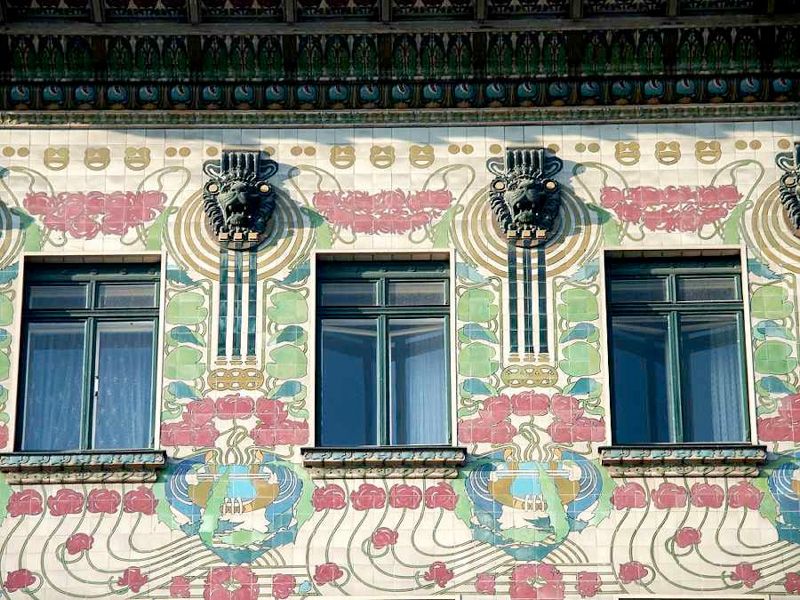
Kettenbrücke is another of the metro stops named in the route description. The walk between stations also takes in the Secession House, one of the defining landmarks of Viennese Jugendstil, and two apartment houses designed by Wagner. This combination gives you a broader view of the movement: a public transport structure, a purpose-built art building and residential architecture.
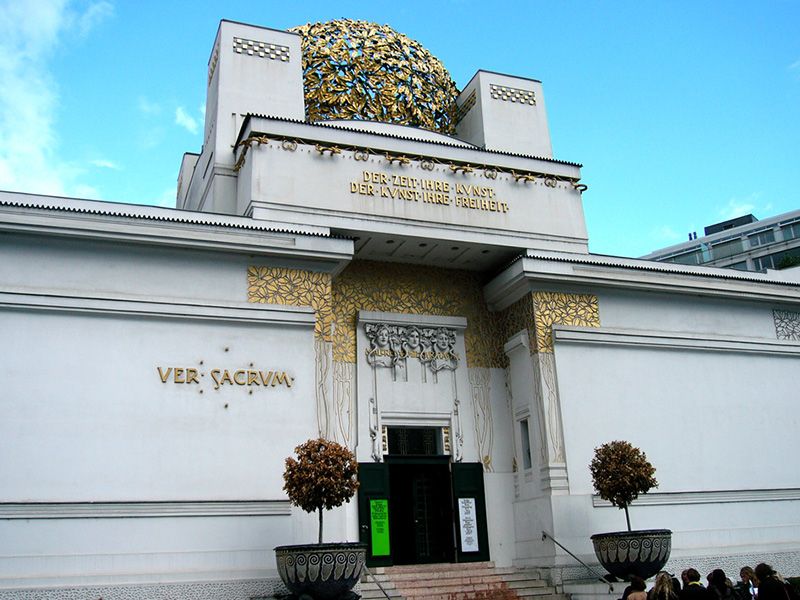
The Secession is more than a striking exterior. On tours Tuesday to Sunday, the visit includes the chance to see Gustav Klimt’s Beethoven Frieze inside. Admission is extra: €9.50 for adults and €6 for students and seniors. The guide can help with payment, but the fee is not part of the $176 tour price.
This is one of the tour’s most useful contrasts. Wagner’s stations were designed for public movement, while the Secession House became an emblem of artistic independence. The walk lets your guide place both within the wider Art Nouveau conversation, rather than leaving you with a handful of pretty façades and no sense of why they mattered.
If seeing the Beethoven Frieze is important to you, choose a Tuesday-to-Sunday departure and confirm that the Secession visit is included in your selected option. The information provided does not specify what happens to this portion on Mondays. Also remember that the extra admission adds to the overall cost.
The Imperial Station at Hietzing
The described route ends with a metro ride to the imperial station near Schönbrunn, also called the Hofpavillon Hietzing. It was built solely for the emperor’s use, making it an unusual stop on a tour centered on a public transport network.
The station also carried a message. Critics of the metro could see the emperor’s support in a building created for his own use. Wagner had to translate the generally bourgeois character of Art Nouveau into something with imperial grandeur. That shift gives you a clear example of how architecture can be tailored to its audience without abandoning a broader design language.
For me, this is the route’s strongest idea: the same architect and artistic movement could serve commuters, apartment residents, an art association and the emperor. The station’s purpose changes, and so does the way the style is expressed. It is a satisfying final comparison after the more public-facing metro stops.
The tour involves both walking and a metro ride. The description does not say whether a transit ticket is included, so check that detail before setting out. It also does not provide a precise walking distance, though one participant described the outing as involving a lot of walking. Wear comfortable shoes and be ready to spend much of the tour on your feet.
Same city, a different kind of day:
- Vienna: Vivaldi’s Four Seasons Concert in Karlskirche
★ 4.7 · 14,951 reviews - Vienna: Spanish Riding School Training
★ 3.9 · 9,281 reviews - Vienna: Skip-the-cashier-desk-line Giant Ferris Wheel Ride
★ 4.5 · 7,859 reviews - Vienna: Schönbrunn Palace & Gardens Skip-the-Line Tour
★ 4.7 · 7,739 reviews
Postsparkasse and the Route You Should Confirm
The itinerary also names the Österreichische Postsparkasse, or Postal Savings Bank, as a guided stop. It is another notable Wagner building, but the detailed route description does not explain where it falls in the sequence or how it fits alongside the metro stations and Hietzing.
Because the listed stops and the narrative route do not line up perfectly, it is sensible to confirm which landmarks are included in your chosen departure. The starting point can vary by option, too. This is not a reason to dismiss the tour, but it is worth resolving if you have a particular building at the top of your list.
A historian guide is a real part of the value here. Past tours have been led by Wolfgang, Peter and Guissepina. The experiences described show guides answering questions about Austrian history and adapting the walk to guests’ interests, including architecture and less obvious sites such as hidden houses of worship. Names and guide assignments can change, of course, but the format is well suited to questions and discussion.
Is $176 Worth Three Hours?
At $176 per person, this is a substantial spend for a three-hour tour, especially since entrance to the Secession House and Wagner pavilion is extra. The price makes more sense if you want a private or small-group experience with a historian who can connect the design to Vienna’s urban development, politics and cultural life.
The value is less compelling if you mainly want a quick look at attractive buildings or prefer to explore at your own pace. You can see some architecture from the outside without a guide, but the tour’s point is to explain how the metro changed the city and why Wagner treated stations as part of Vienna’s public identity. You are paying for interpretation as much as for the route.
The tour has a 4.4 rating from 33 reviews. The most frequently praised qualities in the supplied comments are the guides’ command of the subject, their willingness to answer questions and their ability to tailor the experience, especially when the group is small. One couple enjoyed the tour as a private outing, while another small group found it engaging for questions about Austrian history. Those details support the idea that this is a conversation-led walk, not a scripted march from building to building.
The main trade-offs are the price, extra admission fees, possible variation in route and the amount of walking. If you are keen on Art Nouveau, public architecture or Otto Wagner, those are manageable costs for a focused introduction. If your priority is a general overview of Vienna, this tour’s narrow architectural lens may not be the best fit.
Who Should Book This Tour?
Book it if you want to understand how Vienna’s transport network and its architecture developed together. It is particularly well suited to visitors who already appreciate Art Nouveau, or who want a guide to teach them what to look for in stations, façades and materials.
It can also suit curious travelers who enjoy asking questions. The guide’s role is central, and the small-group or private options may give you room to shape the discussion. If you are traveling with someone who is less interested in architecture, consider whether three hours of close attention to buildings and design history will hold both of you.
Before choosing, check the departure option, confirm the exact route and ask whether the Secession visit is included on your date. Budget separately for the listed entrance fees, and plan for substantial walking. If those details work for you, this is a thoughtful way to see Vienna’s Art Nouveau not as decoration alone, but as part of the city’s effort to become modern.
FAQ
How long is the Vienna Art Nouveau Walking Tour?
It is advertised as a three-hour tour. The detailed description also refers to a 2.5-hour guided tour, so confirm the expected duration for your selected option.
Where does the tour meet?
The stated meeting point is Café Museum, Operngasse 7, A-1010 Vienna. The starting or pickup location may depend on the option you select.
What language is the tour in?
The live guide speaks English.
Is admission to the Secession House included?
No. Admission is listed as €9.50 for adults and €6 for students and seniors.
Can I see Klimt’s Beethoven Frieze?
The tour includes a visit to the Secession House to see the Beethoven Frieze on Tuesday to Sunday departures. The entrance fee is extra.
Is admission to the Otto Wagner pavilion included?
No. Admission to the Otto Wagner pavilion is not included, and no entrance price is specified in the tour information.
What landmarks are included?
Named stops include Café Museum, the Karlsplatz pavilion, the Secession Building, the Hofpavillon Hietzing and the Österreichische Postsparkasse. The route description also mentions Stadtpark and Kettenbrücke stations, along with two Wagner apartment houses.
Are private or small-group tours available?
Yes. Private and small-group options are available. The exact group size depends on the option you choose.
Newest tours in Vienna
- Vienna: ‘Armenia In The Heart Of Austria’ Tour★ 5.0 · 6 reviews
- Vienna: Mozart Private Guided Tour★ 5.0 · 4 reviews
- Vienna: Klimt Villa (Gustav Klimt Atelier & Museum) Ticket★ 4.7 · 50 reviews
- Vienna: Kunsthistorisches Museum Guided Tour incl. admission★ 4.9 · 32 reviews
- Vienna: Luxury Vintage Fashion Walking Tour★ 3.4 · 8 reviews
- Vienna: Johann Strauss – Immersive Audiovisual Experience Ticket★ 4.8 · 60 reviews
- Vienna: Kingdom of Railways Museum Entry Ticket★ 3.6 · 50 reviews
- Vienna: KuK Perfumery Filz – Viennese Perfume Tasting★ 4.3 · 23 reviews
Vienna Walking Tours, compared.
Guided Walking Tour of City Center Highlights
Read our review →
Guided Walking Tour of City Highlights & Hidden Gems
Read our review →
Vienna Historic Center Small Group Walking Tour
Read our review →
Browse the lists this tour appears in