
Reviewed · VIENNA WALKING TOURS
Vienna Art Nouveau Walking Tour
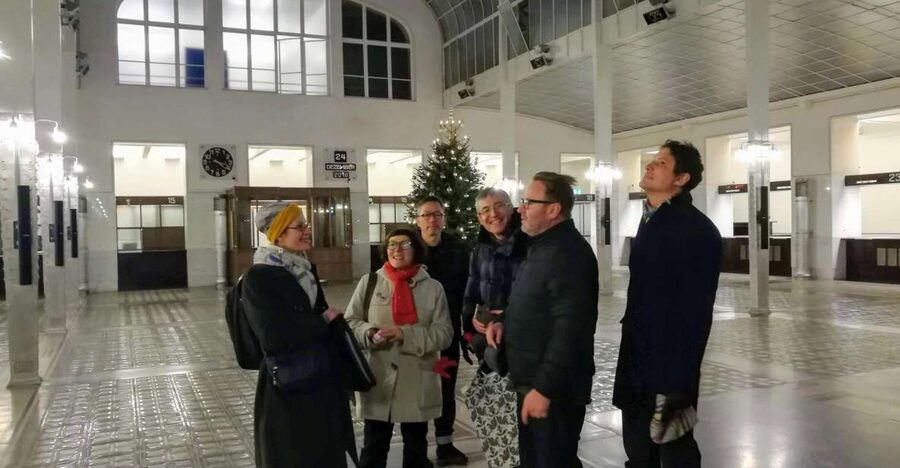
Vienna’s Art Nouveau is more than decorative facades. On this walk, you see how Otto Wagner brought the style into everyday city life, then gave it imperial polish at a station built for the emperor. The route links art, architecture and public transport in a way that makes the city’s turn-of-the-century ambitions easier to read.
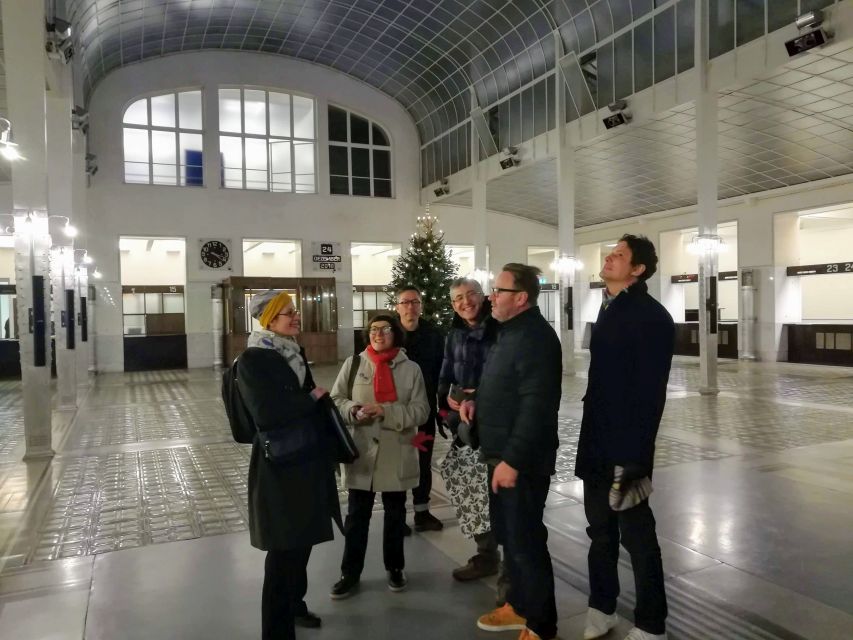
I like two things in particular: the small group, capped at eight, gives you room to ask questions, and the route pairs Wagner’s metro stations with major buildings such as the Secession. Guides including Jan, Suzanne, Stephan, Ilse and Angelina have led tours, though you can’t choose a particular guide when booking.
The main consideration is the price: $180.04 per person is a significant cost for a walk of about two and a half hours, especially because some admissions are extra. The tour is best value if you want a focused explanation of Vienna’s art and architecture, not just a quick city stroll.
What makes this Vienna walk worthwhile
- Otto Wagner’s Karlsplatz Pavilion gives you a first look at the architect’s metro designs and, when the museum is open, a small exhibition inside.
- Stadtpark station is the best-preserved original metro station still in use, with design details and a story about rerouting the Vienna River.
- The Secession building introduces the Jugendstil movement and, on eligible days, Klimt’s Beethoven Frieze.
- Wagner’s apartment houses add domestic examples to the public buildings and stations along the route.
- The imperial station near Schönbrunn shows how Wagner adapted Art Nouveau for the emperor.
- Groups of no more than eight make it easier to follow the guide’s explanations and ask questions along the way.
Starting with Wagner at Karlsplatz
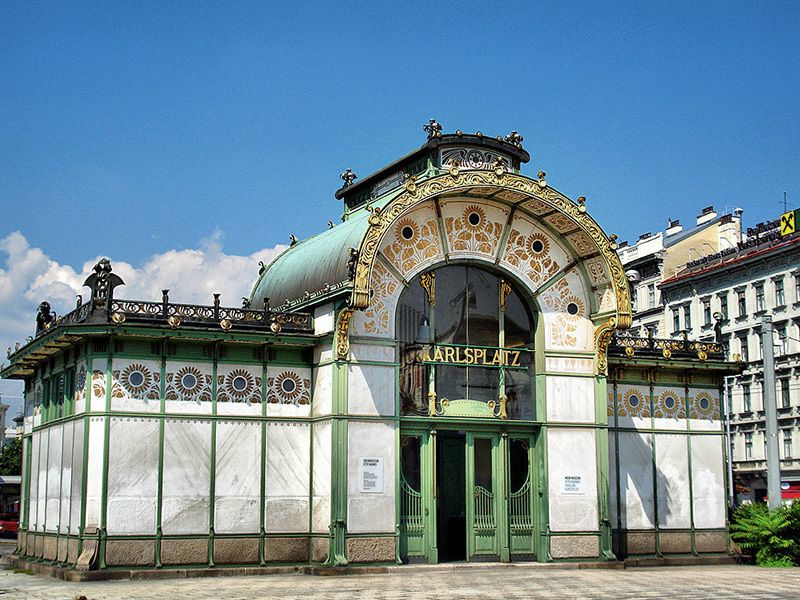
The walk begins at Operngasse 7 in central Vienna. The first listed stop is the Otto Wagner Pavilion at Karlsplatz, a graceful, compact structure that once served the city railway and now helps set the stage for the tour. Your guide uses its design to introduce Wagner and Vienna’s late nineteenth-century embrace of modern architecture.
The pavilion matters because the tour is not simply a parade of pretty buildings. It asks you to notice how Art Nouveau, known in Austria as Jugendstil, shaped public spaces and daily movement through the city. Wagner’s stations were functional, but they also made a strong visual statement. That blend of use and beauty is the thread you’ll follow.
From April to October, when the pavilion museum is open, the tour incorporates a visit inside. Admission is not included: the listed price is €5 for general admission and €4 for seniors, students, Vienna Card holders and people with disabilities. Since the museum visit depends on the season and opening schedule, check the details for your date if seeing the interior is important to you.
More walking tours in Vienna:
- Vienna: Guided Walking Tour of City Center Highlights
★ 4.7 · 4,989 reviews - Vienna: Vienna Central Cemetery Guided Walking Tour
★ 4.8 · 3,307 reviews - Vienna: Guided Walking Tour of City Highlights & Hidden Gems
★ 4.9 · 2,180 reviews
Reading the details at Stadtpark station
From Karlsplatz, the route continues to Stadtpark station, described as the best-preserved of the original stations still in use. This is where the guide begins to unpack the design: look beyond the overall shape and notice how the station fits into the city around it.
One unusual part of the story concerns the Vienna River. Building the city railway meant the river had to be rerouted, and the station’s setting had to account for the new course. The nearby artificial riverbed was built to accommodate that change. It’s a useful reminder that urban design is not only about ornament; it also involves the practical work of fitting transport, water and public space together.
This stop is likely to appeal even if you’re not an architecture specialist. A good guide can turn a station you might otherwise pass through into a lesson in how Vienna planned for modern life. Past guides have also helped people get more comfortable using the city’s public transport, so you may leave with a better sense of how the metro fits into the city beyond the tour route.
Secession, apartments and the language of Jugendstil
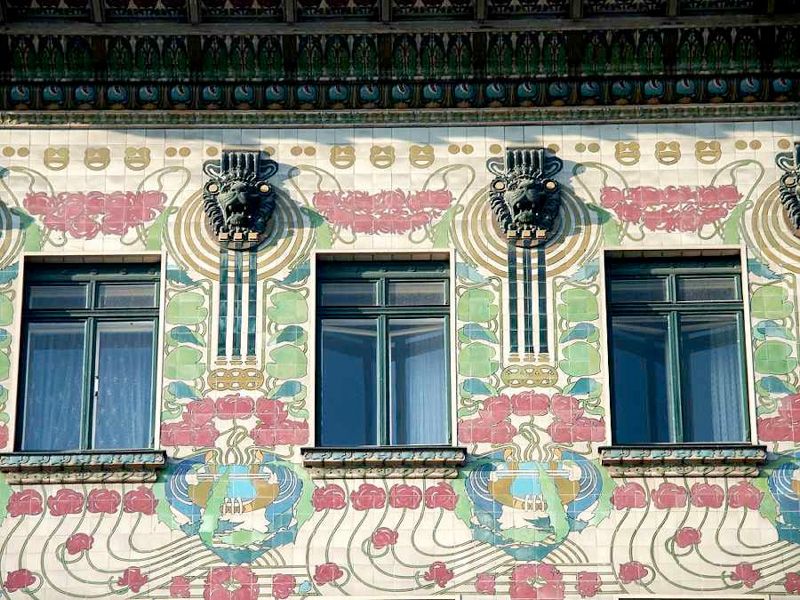
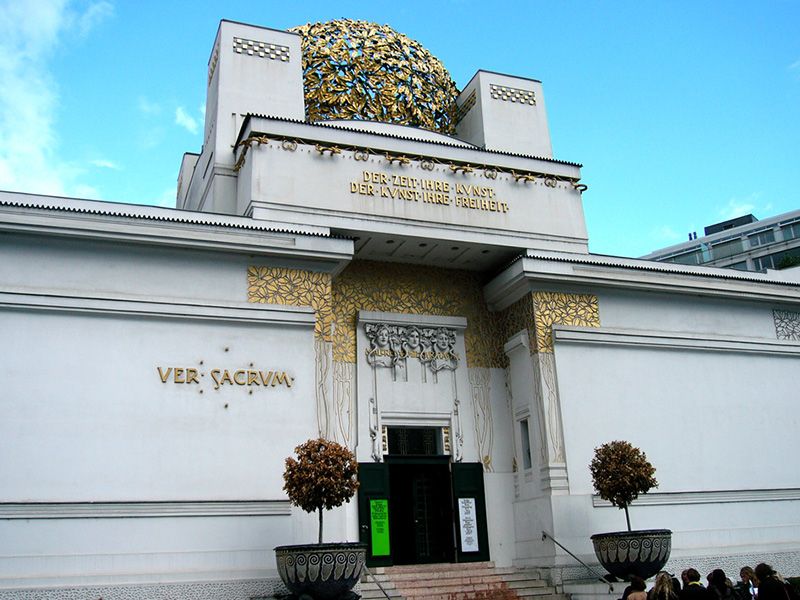
Next comes the Kettenbrücke area, with a visit to the Secession building and two apartment houses by Wagner. The Secession is a key landmark of Viennese Jugendstil, and its place in the tour gives your guide a chance to explain the movement’s ideas, symbols and preferred materials.
This context helps you see the buildings as more than a collection of decorative flourishes. Jugendstil offered artists and architects a fresh visual language, and Vienna’s version carried its own local character. The guide connects that language to the city’s changing identity around 1900, while the apartment houses show how the style appeared in residential architecture as well as in showpiece public buildings.
If you visit Tuesday through Sunday, the Secession can also mean a chance to see Gustav Klimt’s famous Beethoven Frieze. Admission is extra: the listed price is €9.50 for adults and €6 for students and seniors. Your guide can help you pay. The frieze is a major draw, but it is not included in the tour price, so account for the additional cost when deciding whether this experience fits your budget.
The Secession visit was a particular highlight for people who value art as much as architecture. It gives you a chance to connect a building’s design with the art inside it, rather than treating the structure as a photo stop. If the frieze is high on your list, confirm that your tour date and timing allow for the visit.
Taking the metro to the emperor’s station
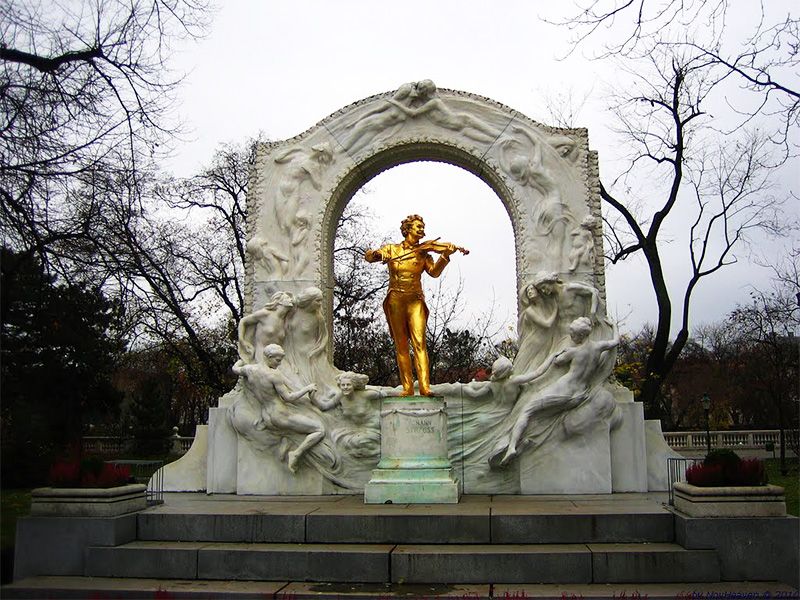
From Kettenbrücke, the group takes the metro to the final stop: the imperial station outside Schönbrunn Palace. Wagner designed this small but striking building for the emperor’s use. It also carried a public message: the emperor’s support for the new metro helped answer critics who questioned the project.
Here, the tour brings together ideas introduced earlier. You can compare the station’s materials and design with the other Wagner stops, then see how the architect shifted a broadly bourgeois Art Nouveau style toward imperial grandeur. That contrast is one of the most compelling parts of the route. It makes clear that Jugendstil was not a single fixed look; Wagner could adjust it to suit the purpose and audience of a building.
The station’s location also gives the route a satisfying arc. You start with a city railway pavilion, study public transport and urban design, then end with a building that links modern infrastructure to the imperial court. The final stop is not just another example of Wagner’s work. It helps explain why the metro mattered to Vienna’s public image.
The stated endpoint is Vienna, Austria, rather than a precise street address. If you have a tight schedule afterward, ask the operator where the group finishes and how much time you should allow to continue to your next stop.
Same city, a different kind of day:
- Vienna: Vivaldi’s Four Seasons Concert in Karlskirche
★ 4.7 · 14,951 reviews - Vienna: Spanish Riding School Training
★ 3.9 · 9,281 reviews - Vienna: Skip-the-cashier-desk-line Giant Ferris Wheel Ride
★ 4.5 · 7,859 reviews - Vienna: Schönbrunn Palace & Gardens Skip-the-Line Tour
★ 4.7 · 7,739 reviews
How the group size and guiding shape the experience
The tour is offered in English and has a maximum of eight people per booking, with no more than eight travelers on the activity. That small cap is a real advantage for a walk that depends on conversation and close attention to architectural details. You can ask a question without needing to speak up in a crowd, and the guide can adapt the discussion to the group.
Guides who have led this tour include Jan, Suzanne, Stephan, Ilse, Angelina and Wolfgang Augsten. Their experience and approach can vary, and a particular guide is not guaranteed. The guiding style is a central part of the experience: visitors have valued the guides’ command of art and history, their flexibility, and their willingness to tailor the walk to the group’s interests.
That flexibility can make the route useful for repeat visitors, too. Even if you already know Vienna’s most famous Jugendstil buildings, a guide may point out places you haven’t noticed and add stories that change how you understand them. If you’re new to the city, the route can also serve as an orientation, particularly if you’re interested in how the transport system and city architecture developed together.
Time, weather and the real cost
The tour is listed as approximately two hours and thirty minutes, though its highlights also describe it as a three-hour walk. Treat the duration as an estimate and leave a little flexibility in your plans. It includes walking between stops and a metro ride from Kettenbrücke to the imperial station.
The price is $180.04 per person, with group discounts noted. That is a premium for a short tour, but the value depends on what you want from it. You’re paying for an expert guide and a tightly focused route through buildings and stations that make more sense when someone explains their purpose and design. If you’re happy to admire facades on your own, it may feel expensive. If you want to understand Wagner’s role in Vienna and the ideas behind Jugendstil, the guided format is the point.
Some costs sit outside that price. The pavilion museum charges admission when open, and the Secession charges separately for entry to see the Beethoven Frieze. Food, drinks and hotel pickup or drop-off are not included. The tour provider is Insight Cities, and the experience is booked an average of 36 days ahead, so don’t assume a last-minute place will be available.
Weather can affect the mood of any walking tour. One account of the experience describes a cold, rainy afternoon when the guide offered to take the group by car to avoid getting soaked. That is a helpful example of a guide adapting to conditions, but it is not a service you should count on as standard. Dress for the forecast and ask the operator about arrangements if bad weather is expected.
Who should book this tour
I’d choose this walk if you care about architecture, art or Vienna around 1900, and want a guide to connect the buildings instead of seeing them as isolated sights. It works especially well for people who enjoy learning the story behind ordinary urban details, such as a metro entrance or a rerouted river.
It can also suit repeat visitors. The route goes beyond the best-known monuments, and the guide may adjust the discussion to your questions. Newcomers can benefit from the public transport orientation, but this is not a general highlights tour: the focus is specifically Art Nouveau, Wagner and the city’s architectural history.
If you’re weighing the price against your plans, add the possible museum and Secession fees before booking. The tour’s strongest value lies in the guide’s ability to bring the route to life, so it is a better fit for curious listeners than for anyone looking only for a quick set of photo stops.
Should you book the Vienna Art Nouveau Walking Tour?
Book it if you want a compact, guided introduction to Wagner and Viennese Jugendstil, especially if seeing the Secession and the imperial metro station is high on your list. The small group and the route’s mix of stations, residences and landmark buildings make it more informative than a simple architecture stroll.
Skip it if the cost feels steep for a two-and-a-half-hour walk, or if you prefer to explore at your own pace. Before you commit, check the pavilion museum’s seasonal opening and the Secession’s admission schedule, then leave a little room in your itinerary for the tour’s approximate timing.
FAQ
How long does the tour last?
It is listed as approximately two hours and thirty minutes. The tour highlights also describe it as three hours, so allow some flexibility.
What language is the tour offered in?
The tour is offered in English.
Where does the tour start?
The listed meeting point is Operngasse 7, 1010 Vienna, Austria.
Where does the tour end?
The endpoint is listed as Vienna, Austria, without a specific street address.
How many people can join?
The maximum group size is eight people.
Is the Otto Wagner Pavilion visit included?
From April to October, when the museum is open, the tour incorporates a visit. Admission costs extra: €5 for general admission or €4 for eligible reduced-admission categories.
Can I see Klimt’s Beethoven Frieze?
The tour visits the Secession building. From Tuesday to Sunday, admission to see the Beethoven Frieze is listed at €9.50 for adults and €6 for students and seniors. The guide can help you pay.
What is included in the price?
The price includes a 2.5-hour guided tour of Vienna Art Nouveau metro stations and iconic buildings, plus a professional guide.
Are food, drinks or hotel transfers included?
No. Food and drinks are not included unless specified, and hotel pickup and drop-off are not included.
Can I cancel for a refund?
Yes. You can cancel at least 24 hours before the experience starts for a full refund. Cancellations or changes made less than 24 hours before the start time are not accepted for a refund or change.
Newest tours in Vienna
- Vienna: ‘Armenia In The Heart Of Austria’ Tour★ 5.0 · 6 reviews
- Vienna: Mozart Private Guided Tour★ 5.0 · 4 reviews
- Vienna: Klimt Villa (Gustav Klimt Atelier & Museum) Ticket★ 4.7 · 50 reviews
- Vienna: Kunsthistorisches Museum Guided Tour incl. admission★ 4.9 · 32 reviews
- Vienna: Luxury Vintage Fashion Walking Tour★ 3.4 · 8 reviews
- Vienna: KuK Perfumery Filz – Viennese Perfume Tasting★ 4.3 · 23 reviews
- Vienna: Johann Strauss – Immersive Audiovisual Experience Ticket★ 4.8 · 60 reviews
- Vienna: Kingdom of Railways Museum Entry Ticket★ 3.6 · 50 reviews
Vienna Walking Tours, compared.
Guided Walking Tour of City Center Highlights
Read our review →
Guided Walking Tour of City Highlights & Hidden Gems
Read our review →
Vienna Historic Center Small Group Walking Tour
Read our review →
Browse the lists this tour appears in