
Reviewed · VIENNA CLASSICAL CONCERTS
Vienna: Mythos Mozart Experience
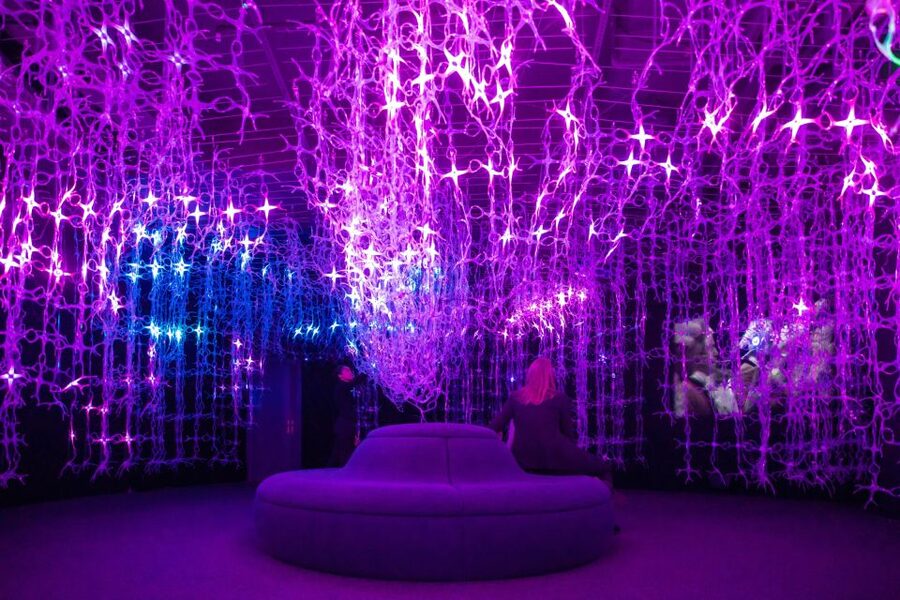
The most striking way into Mozart’s final year may be a room filled with 1,500 candles, where light, music, and the theme of the Requiem set the mood. Mythos Mozart occupies the building where he lived during his last year and composed The Magic Flute and The Requiem, so the setting gives the multimedia show a real connection to the city.
I like two things in particular: the exhibition makes Mozart’s music accessible even if you’re not a classical-music buff, and it gives you more to do than simply watch a screen, including a room where you can try instruments from around the world. One consideration: this is an hour-long multimedia experience, not a detailed biography, so come for the sound, images, and atmosphere rather than a full account of Mozart’s life.
What to know before you go
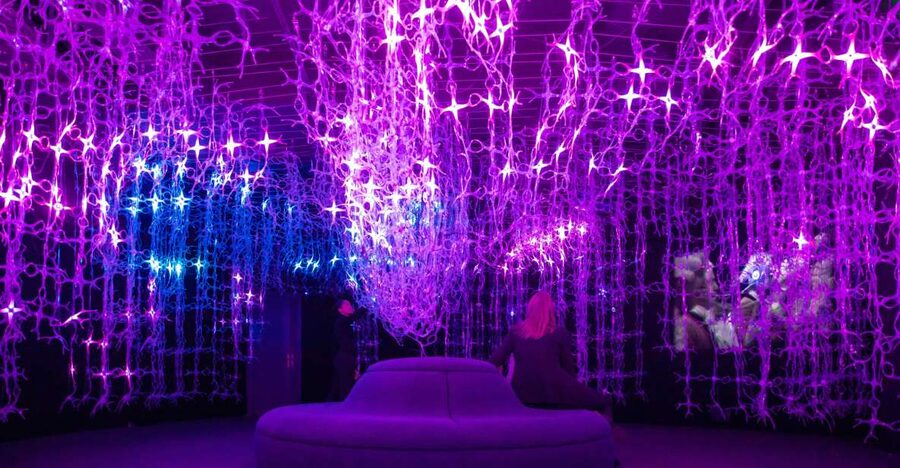
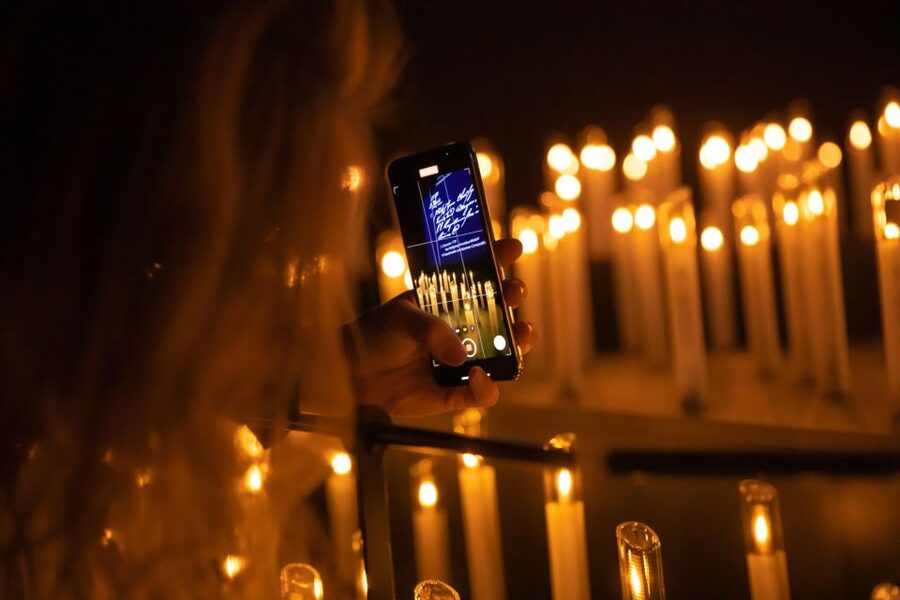
- The opening room is a candlelit Requiem setting: About 1,500 candles create a dramatic first impression.
- You see Vienna through a 360-degree view: The Vienna 1791 room evokes the city Mozart knew, with historical views and animated scenes.
- The Little Night Music room is hands-on: You can try instruments from different parts of the world.
- The setting is part of the story: Mozart spent the last year of his life in this building.
- Plan on about one hour: The visit is compact, though you can take time to absorb the rooms.
- The rooftop adds a city-view bonus: The Sky & Roofgarden looks over the First District, Karlskirche, the Ferris wheel, and St. Stephen’s Cathedral.
A Mozart experience built around sound and light
Mythos Mozart takes a different route from a traditional house museum. Instead of asking you to spend an hour reading labels and looking at objects, it uses rooms, projections, music, and interactive elements to set a mood and bring Mozart’s Vienna closer. Think of it as a short, staged encounter with his world, rather than a deep lesson in his biography.
That distinction matters when you’re choosing how to spend your time. If you want to understand Mozart’s family, career, and place in musical history in detail, this may not be enough on its own. If you’re curious about his music and want an atmospheric introduction that doesn’t assume any musical training, the format makes a good case for itself.
The exhibition is in the building where Mozart spent the last year of his life. He composed The Magic Flute and The Requiem there, giving the experience a useful anchor: you’re not just seeing a digital evocation of 18th-century Vienna, but visiting a place connected to the composer’s final months.
The entrance is at the Mythos Mozart Welcome Desk, where you exchange your ticket. A time slot is recommended, and you should arrive up to 15 minutes before it begins. An English-speaking host or greeter is listed, but don’t assume you’re signing up for a guided tour with a guide leading you from room to room. The attraction is designed to be experienced through its installations.
More classical concerts in Vienna:
- Vienna: Vivaldi’s Four Seasons Concert in Karlskirche
★ 4.7 · 14,951 reviews - Vienna: Classical Concert in the World-Famous Musikverein
★ 4.6 · 6,673 reviews - Vienna: Classical Concert at St. Stephen’s Cathedral
★ 4.1 · 4,177 reviews
Starting with Mozart’s final Requiem
The first stop is the REQUIEM – MOZART’S DEATH room. Its 1,500 candles, designed as part of the installation by British-German lighting designer Moritz Waldemeyer, give the space a solemn, almost otherworldly feel. The candle count is not just a visual flourish: it makes the room feel markedly different from a standard exhibit and sets a reflective tone before the experience turns toward Mozart’s city and music.
This opening can be a powerful choice if you’re willing to slow down and let the atmosphere do some of the work. Mozart’s death in 1791 is the subject, and the room’s lighting and music aim for emotional impact more than a chronological explanation. Some people may find the mood intense, especially right at the start. If you prefer to begin with dates and context, this sequence may feel unexpected.
The room is also a good example of what Mythos Mozart does best. It combines a familiar piece of cultural history with a setting that is easy to remember. You don’t need to know the Requiem or its background to respond to the room, though a little familiarity may add another layer.
Seeing Vienna as Mozart knew it
Next, VIENNA 1791 – MOZART’S CITY shifts the focus from the composer’s death to the city around him. The room uses 360-degree panoramic views and animated scenes to suggest the sights of 18th-century Vienna. You can stroll through streets, look over rooftops from a balloon, and find yourself facing the house where Mozart died.
The panoramic approach is useful because it gives you a sense of place without asking you to decode a map or read a long wall of text. Vienna becomes part of the story, rather than just a backdrop. The projections are designed to draw your eye around the room, so it’s worth taking a moment to look in more than one direction instead of heading straight for the next space.
This is an imaginative reconstruction, not a preserved street scene. Keep that in mind if you’re hoping for documentary detail. The room’s strength is visual atmosphere and a broad sense of Mozart’s city, not a precise walk through historical architecture.
Playing along in the Little Night Music room
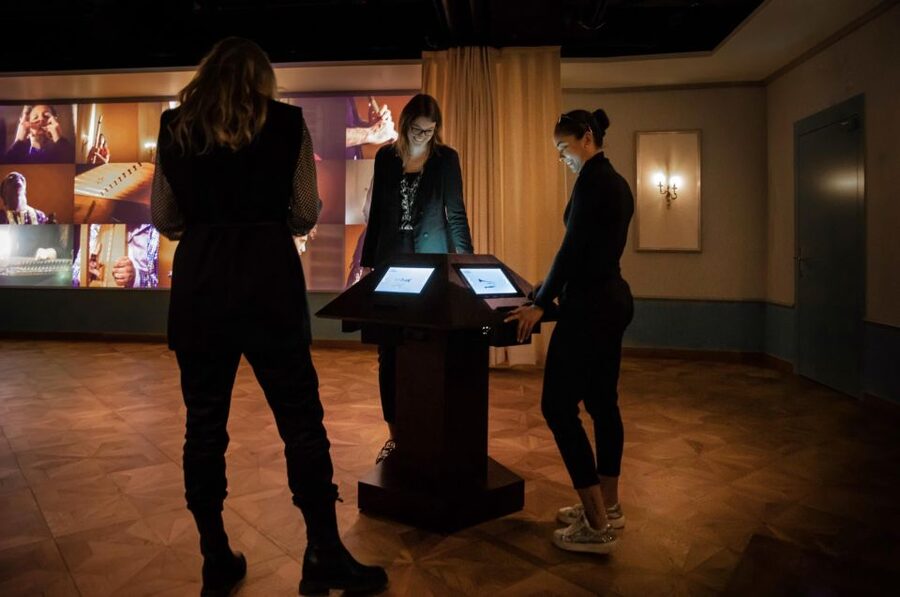
The Little Night Music room brings you back from the grand historical scenes to something more playful. Here, you can interact with instruments from around the world. That hands-on element gives the exhibition a welcome change of pace: after listening and watching, you get to participate.
You don’t need to be a musician to enjoy this room. The point is not to demonstrate virtuosity, but to make music feel physical and immediate. For families, it can be a useful way to keep younger visitors engaged, especially if they’re less interested in standing still for projections. The experience is also a reminder that music is something people make, not just something performed on a stage.
The room’s connection to Mozart is broad rather than biographical. You’re not following a specific lesson about an instrument he played; you’re exploring sound and participation within an exhibition about his music. That makes it fun, but it’s worth setting expectations if you’re looking for a close study of Mozart’s instruments or composing process.
Same city, a different kind of day:
- Vienna: Spanish Riding School Training
★ 3.9 · 9,281 reviews - Vienna: Skip-the-cashier-desk-line Giant Ferris Wheel Ride
★ 4.5 · 7,859 reviews - Vienna: Schönbrunn Palace & Gardens Skip-the-Line Tour
★ 4.7 · 7,739 reviews - Vienna: Light of Creation Votive Church Immersive Light Show
★ 4.8 · 6,779 reviews
Taking in the final audiovisual scenes
The exhibition’s rooms combine Mozart’s music with visual effects and contemporary multimedia. The sequence is designed to move you between different moods, from the solemn opening to the livelier musical interaction and the grander city views. Visitors have also described a final room using AI-generated material, which brings modern technology into the encounter with a composer whose work still feels fresh.
That modern element may be the most divisive part of the experience. If you enjoy seeing how digital tools can reinterpret classical music, it can be an intriguing way to close. If you prefer a more historically grounded presentation, the use of AI may feel like a detour. Either way, it’s a reminder that Mythos Mozart is as much a contemporary art installation as a museum exhibit.
The sound and imagery are central, so this is a good choice if you’re open to being guided by music rather than a spoken narrative. Some visitors want more explanation or subtitles, and that’s a fair point. The exhibition can leave you with a strong impression of Mozart’s music without giving you much detail about the events of his life. If context is important to you, consider reading a little about Mozart before your visit or pairing this with a more traditional museum.
A rooftop view after the exhibition
The Sky & Roofgarden is a welcome extra after the indoor rooms. From the rooftop, you can look out over Vienna’s First District, with views that include Karlskirche, the Ferris wheel, and St. Stephen’s Cathedral. It gives you a chance to switch from Mozart’s historic city to the city you’re standing in now.
The roof terrace also helps the visit feel less like a closed sequence of screens. You can pause, look around, and place the exhibition within the wider city. Food and drinks are available at the Sky Café & Restaurant, though they are not included in the ticket. If the weather is poor, the indoor experience still makes sense as a rainy-day activity; the rooftop is a bonus, not the main reason to book.
What an hour and $27 get you
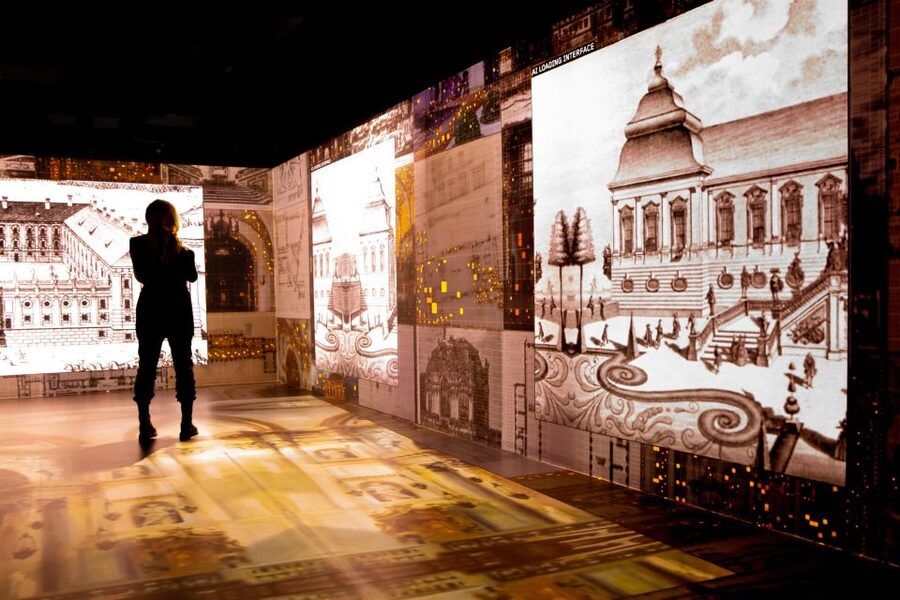
At $27 per person, Mythos Mozart is a moderately priced, one-hour attraction. The value depends on what you want from a museum visit. You’re paying for a purpose-built multimedia experience in a Mozart-linked location, not a long guided tour or a large collection of historical objects.
The strongest value comes from the range of experiences packed into a short visit: a candlelit room, panoramic Vienna scenes, interactive instruments, and the rooftop. The music and visual design carry much of the experience, so you don’t need prior knowledge to follow along. That makes it an easy addition to a city itinerary, particularly when you want a cultural activity that won’t consume half a day.
The trade-off is depth. If you’re hoping for extensive information about Mozart’s life and works, the ticket may feel expensive for what you learn. The exhibition’s emphasis is on mood and multimedia presentation, and the hour can feel short if you linger or want to take everything in at a relaxed pace. For someone mainly seeking an evocative introduction to Mozart, the price is easier to justify.
The ticket covers entry to the Mythos Mozart Immersive Experience. Hotel pickup and drop-off, food, and drinks are not included. Food and drinks can be purchased at the Sky Café & Restaurant.
Who will get the most from it
I’d recommend Mythos Mozart to classical-music fans who want to hear familiar music in a new setting, but you don’t need to be a fan to enjoy it. The visual approach works well for people who are curious about Mozart but don’t know where to start. It can also suit families: the interactive instrument room gives children something to do, and the short duration is manageable.
It’s especially handy on a rainy day or as a compact activity between longer visits. The exhibition doesn’t require a full morning, and it offers a change from Vienna’s churches, palaces, and traditional collections. If you’re traveling with someone who doesn’t share your interest in classical music, the visuals and hands-on room can help bridge the gap.
I’d be more cautious if you want a heavily factual museum, a live performance, or a guided account of Mozart’s career. The English-speaking host or greeter helps welcome you, but the experience is not presented as a conventional guided tour. Go for the sensory treatment of Mozart and Vienna, not for a lecture.
Practical details before you book
Book a time slot in advance and arrive at the Welcome Desk up to 15 minutes before your scheduled visit. Walk-ins may be possible when occupancy allows, but don’t count on that if your schedule is tight. The listed duration is one hour, and starting times depend on availability.
Bring your passport or ID card, and bring a student card if relevant. Pets are not allowed. The attraction is wheelchair accessible. Free cancellation is available up to 24 hours before the visit, and a reserve-now, pay-later option is offered.
Should you book Mythos Mozart?
Book it if you want an hour of music, striking visuals, and a hands-on break from conventional sightseeing. The candle room, 360-degree Vienna scenes, instrument room, and rooftop make for a varied visit, and you don’t need to arrive with a music degree tucked under your arm.
Skip it if your priority is a detailed biography or a traditional museum full of objects and historical explanation. For most curious visitors, though, it’s a worthwhile way to meet Mozart through sound and image, with the added advantage of being in the place where he spent his final year.
FAQ
How long does the Mythos Mozart experience take?
The stated duration is one hour. You may want to allow extra time if you plan to visit the Sky & Roofgarden or stop at the Sky Café & Restaurant.
What is included in the ticket?
The ticket includes entry to the Mythos Mozart experience. Hotel pickup and drop-off, food, and drinks are not included.
Do I need to book a time slot in advance?
All visitors should book a time slot in advance and report to the Welcome Desk up to 15 minutes before it starts. Spontaneous visits may be possible depending on occupancy.
Is the experience guided?
An English-speaking host or greeter is listed. The experience is presented as a sequence of multimedia rooms, rather than a conventional guided tour.
Is Mythos Mozart wheelchair accessible?
Yes. The experience is listed as wheelchair accessible.
Can I bring food or drinks?
Food and drinks are not included with the ticket. You can purchase them at the Sky Café & Restaurant, which has a large roof terrace and panoramic views.
Newest tours in Vienna
- Vienna: Mozart Private Guided Tour★ 5.0 · 4 reviews
- Vienna: ‘Armenia In The Heart Of Austria’ Tour★ 5.0 · 6 reviews
- Vienna: Klimt Villa (Gustav Klimt Atelier & Museum) Ticket★ 4.7 · 50 reviews
- Vienna: Kunsthistorisches Museum Guided Tour incl. admission★ 4.9 · 32 reviews
- Vienna: Luxury Vintage Fashion Walking Tour★ 3.4 · 8 reviews
- Vienna: Johann Strauss – Immersive Audiovisual Experience Ticket★ 4.8 · 60 reviews
- Vienna: Kingdom of Railways Museum Entry Ticket★ 3.6 · 50 reviews
- Vienna: KuK Perfumery Filz – Viennese Perfume Tasting★ 4.3 · 23 reviews
Vienna Classical Concerts, compared.
Vivaldi’s Four Seasons Concert in Karlskirche
Read our review →
Classical Concert in the World-Famous Musikverein
Read our review →
Classical Concert in St. Anne’s Church (Annakirche)
Read our review →
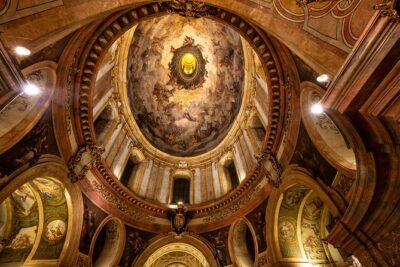
Vienna Classical Concert at St. Peter’s Church
Read our review →Browse the lists this tour appears in