Reviewed · VIENNA TOURS
Vienna: Tickets to Haus der Musik
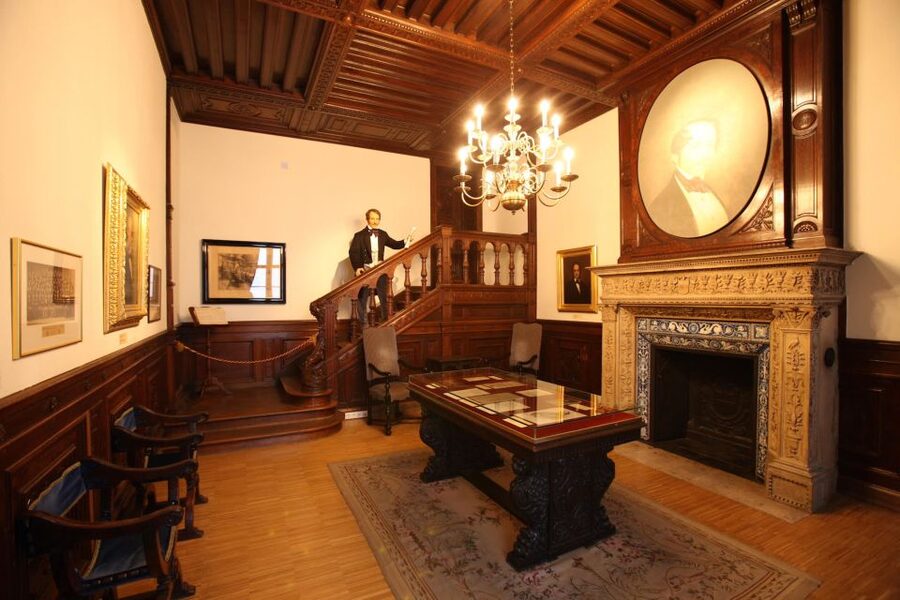
Vienna’s musical past gets a playful, hands-on treatment at Haus der Musik. The museum occupies the former Palais of Archduke Charles, where Otto Nicolai lived when he founded the Vienna Philharmonic in 1842. Inside, you can move from orchestra history to composer stories, then try your hand at conducting the famous ensemble.
I like two things especially: the mix of serious music history and practical experiments with sound, and the fact that the interactive displays give non-musicians an easy way in. The virtual conducting challenge, the dice-made waltz and the Namadeus name game put you in the action instead of leaving you to read labels all day.
One consideration: there is a lot to take in across the museum’s floors. If you like to read every panel and test every exhibit, plan for several hours, not a quick stop. Bring headphones for the smartphone guide, and remember that food and drinks are not included.
Key points
- A Philharmonic origin story: See documents and mementos connected to the Vienna Philharmonic, founded by Otto Nicolai in 1842.
- Seven composers in context: Meet Haydn, Mozart, Beethoven, Schubert, Strauss, Mahler and Schönberg through historic material and modern displays.
- A chance to conduct: Try the virtual conductor activity and face the Vienna Philharmonic on screen.
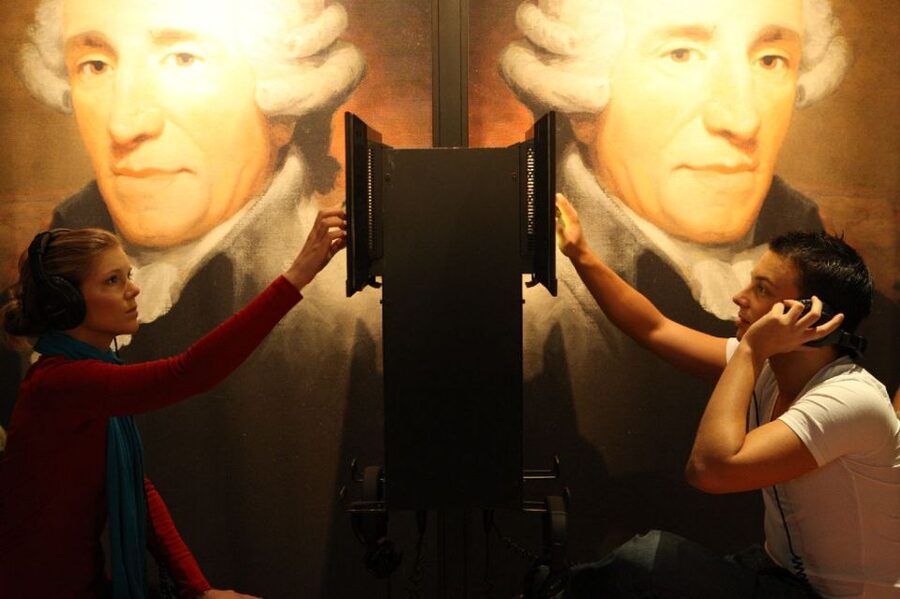
- Sound you can test: Explore how sound works through interactive displays, instruments, noises and experiments.
- Small creative surprises: Compose a waltz with dice or hear your name turned into a Mozart-style composition.
A musical museum in the heart of Vienna
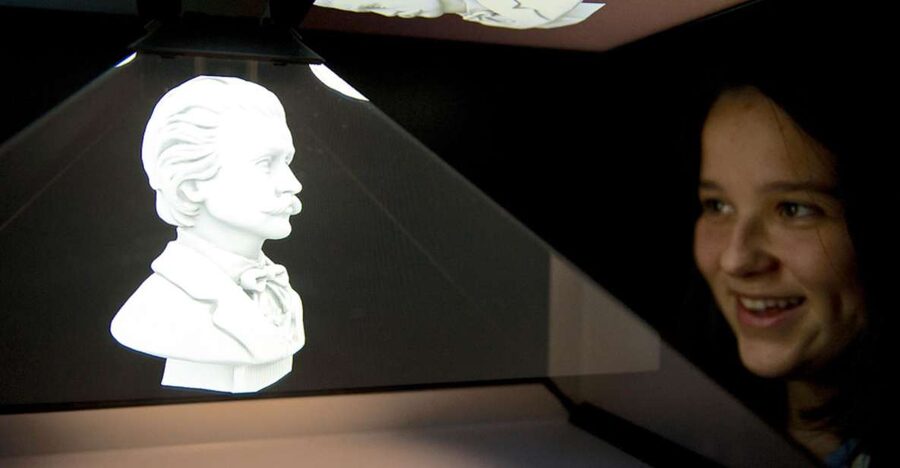
Haus der Musik is at Seilerstätte 30, in central Vienna. Its setting adds a useful link between the city’s musical reputation and the people who helped shape it: Otto Nicolai lived in the former Palais of Archduke Charles when he established the Vienna Philharmonic in 1842.
The museum does not limit itself to a timeline of famous composers. It pairs historic items and documents with activities that let you hear, see and manipulate musical ideas. That range makes it a good choice if your group includes both committed classical listeners and people who would rather press a button than study a portrait.
The museum includes material on the Vienna Philharmonic and four additional floors devoted to music and sound. A temporary exhibition in the inner courtyard adds another angle, with topics that can focus on a musician or a particular period in music history. The exact temporary subject can vary, so treat it as an extra rather than the main reason to visit.
Start with the Vienna Philharmonic
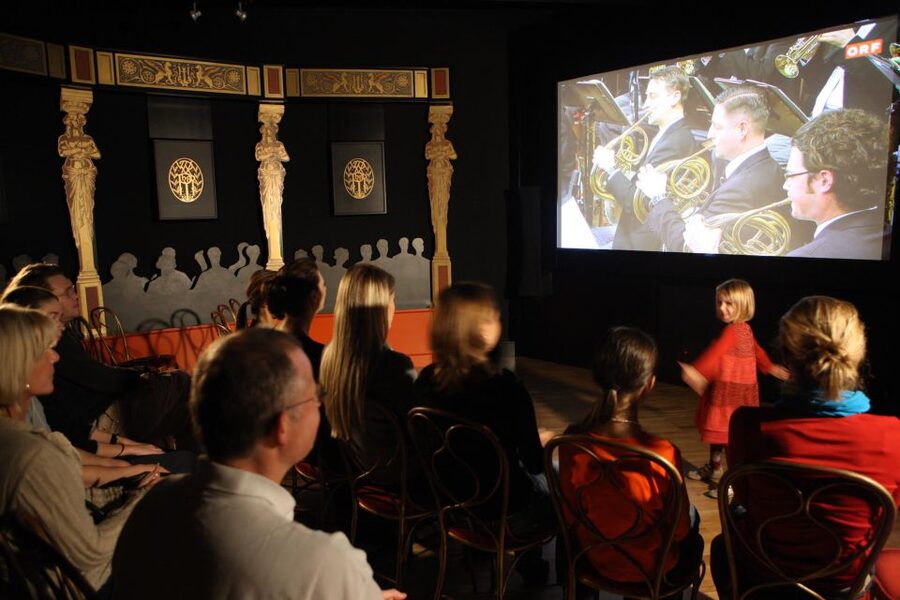
The Philharmonic’s history is a natural place to begin. At the museum dedicated to the orchestra, you can look at documents and keepsakes that connect its past to the building itself. This is a compact way to give the later interactive exhibits a real-world anchor: the orchestra you meet on screen has a long connection to Vienna and to this address.
The museum also offers a chance to hear the Vienna Philharmonic’s New Year’s Concert in HD quality. That matters if you know the concert by reputation but have never had the chance to listen closely. You can focus on the orchestra’s sound before trying the conductor activity yourself.
I would not rush past the historical displays just to reach the games. They help explain why Vienna’s musical story carries such weight, and they give the later composer exhibits a shared context. If you are visiting with children, this section can also be a gentler start before the more active stations.
More tickets and passes in Vienna:
- Vienna: Classic Ensemble Vienna in St. Peter’s Church Ticket
★ 4.7 · 4,819 reviews - Vienna Kunsthistorisches Museum Day Admission Ticket
★ 4.6 · 3,690 reviews - Vienna: Tickets for Mozarthaus Vienna with Audio Guide
★ 4.2 · 2,344 reviews
Meet Haydn, Mozart, Beethoven and the rest
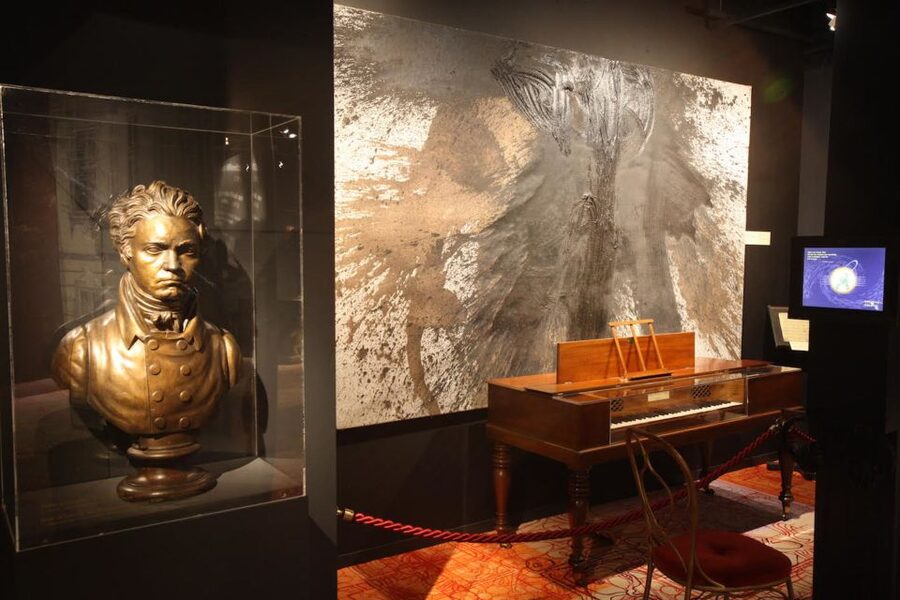
The history level introduces Haydn, Mozart, Beethoven, Schubert, Strauss, Mahler and Schönberg in the settings of their own times. Historic documents, models, costumes, personal objects and modern installations create several ways into each story. You do not need prior musical training to follow the broad arc, but music lovers will find names and works worth lingering over.
The variety is useful. A label can give you the basic facts, while a model or personal object helps make a composer feel less like a name in a concert program. The displays also place individual lives within Vienna’s wider musical culture rather than treating each composer as an isolated genius.
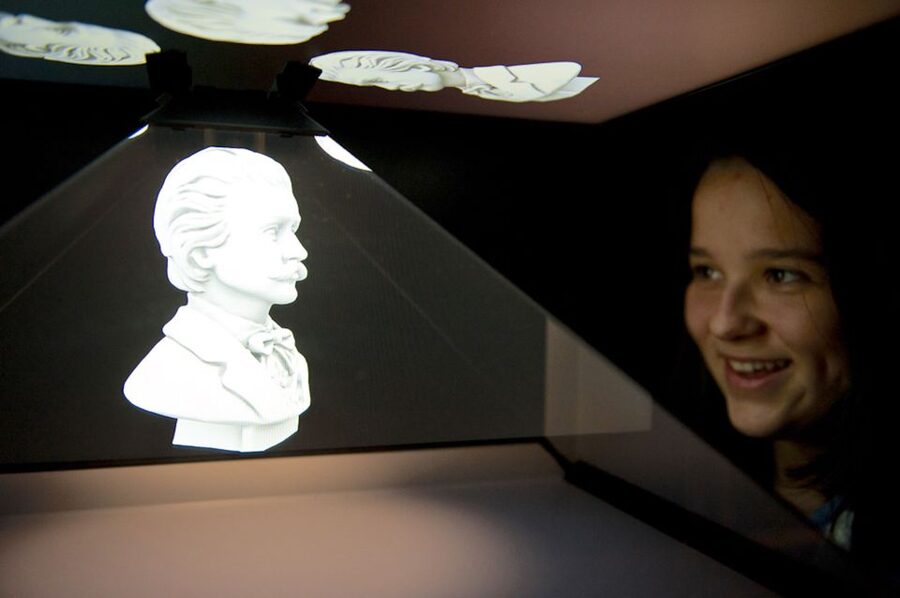
Mozart gets an especially playful turn in the Namadeus game. It turns your name into an original Mozart-style composition, a light-hearted way to connect a famous composer’s musical language with your own visit. If you want a certificate of the result, note that it costs extra and is not part of admission.
The sheer volume of material can be a drawback if you are short on time. You may need to choose between reading in depth and keeping the visit moving, particularly if younger members of your group are eager to reach the interactive stations. A museum map is included, and free floor plans are available at the ticket office.
Take the conductor’s place
The virtual conducting challenge is one of the museum’s most direct invitations to join in. You take the conductor’s role and face the Vienna Philharmonic, testing how well you can guide the orchestra. It gives you a quick feel for the concentration and control involved, even if your experience of conducting begins and ends here.
This activity works well as a shared stop. One person can take the baton while others watch, then swap roles. It is also a good way to break up the more text-heavy parts of the visit, and it gives children and adults a common task rather than separate things to do.
The point is not to pass a test or emerge as a virtuoso. It is to notice how musical direction depends on timing and gesture. That simple change of perspective can make an orchestra performance feel more vivid the next time you hear one.
Experiment with sound, not just music
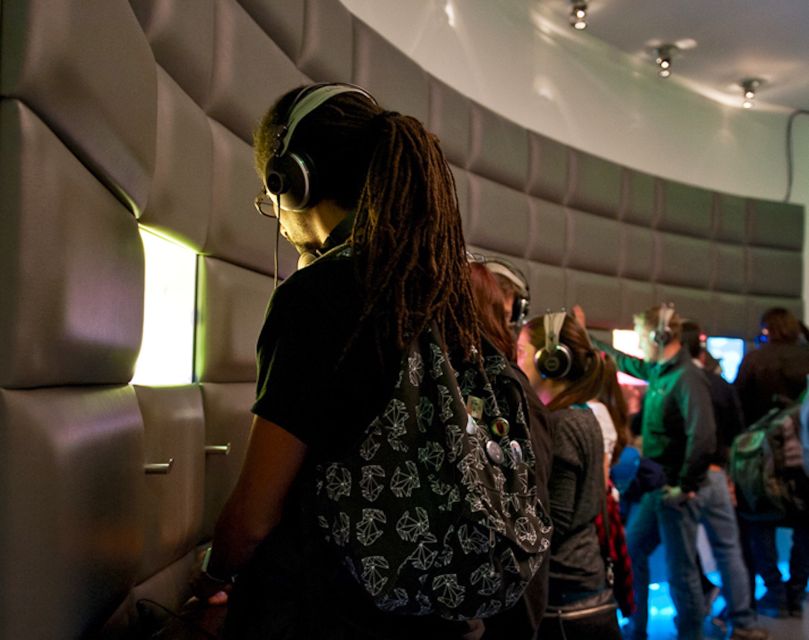
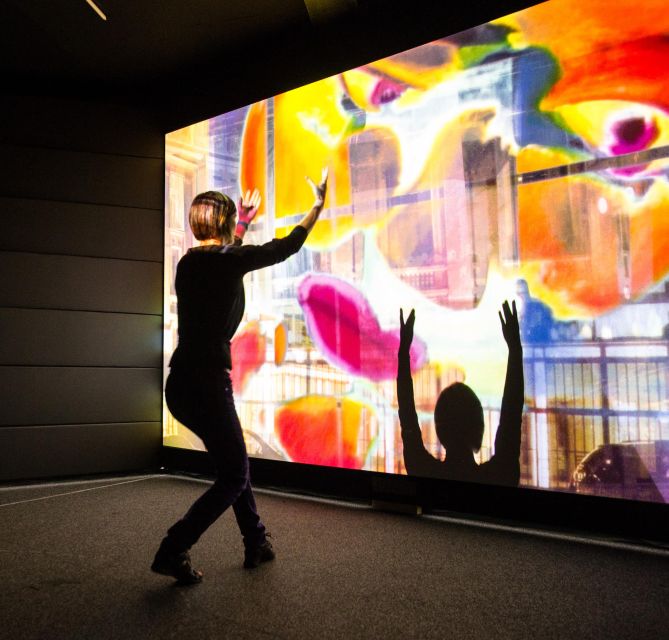
Haus der Musik treats sound as a subject in its own right. Interactive displays invite you to explore noise, instruments and the science of hearing, connecting physics and physiology with music. If you have ever wondered what makes one sound feel different from another, this floor gives you a hands-on way to investigate.
That blend is a real strength. Classical music can seem like a closed world if you think you need years of study to appreciate it; experiments with sound offer a more welcoming entry point. You can engage with the mechanics first, then return to the composers with a better sense of how music is made and heard.
There is plenty to try, so this is a good place to let curiosity set the pace. Some exhibits may appeal more to children, while others will interest adults who enjoy the science behind everyday experiences. The museum’s approach does not assume that everyone arrives already knowing the difference between a composer and a conductor.
Same city, a different kind of day:
- Vienna: Vivaldi’s Four Seasons Concert in Karlskirche
★ 4.7 · 14,951 reviews - Vienna: Spanish Riding School Training
★ 3.9 · 9,281 reviews - Vienna: Skip-the-cashier-desk-line Giant Ferris Wheel Ride
★ 4.5 · 7,859 reviews - Vienna: Schönbrunn Palace & Gardens Skip-the-Line Tour
★ 4.7 · 7,739 reviews
Make a waltz, then hear your name as Mozart
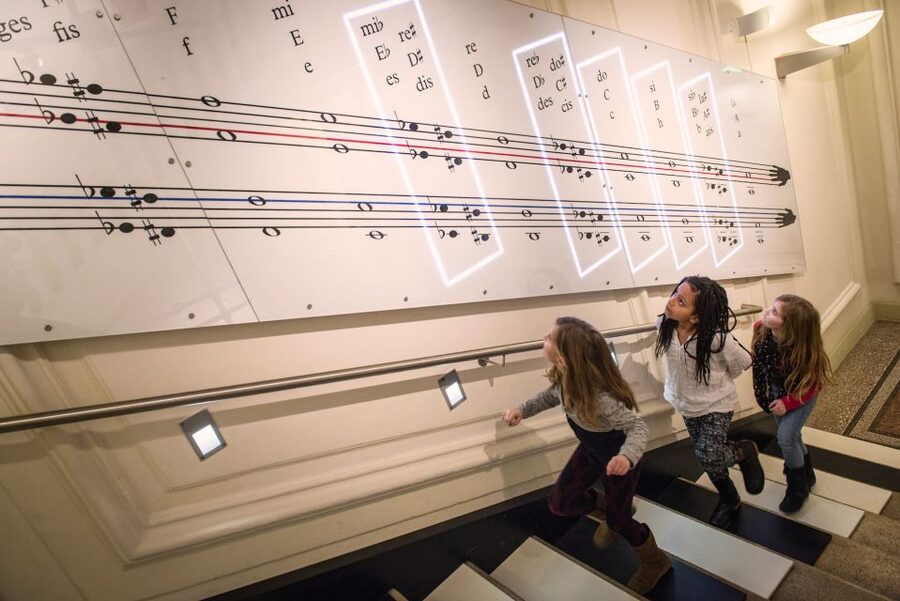
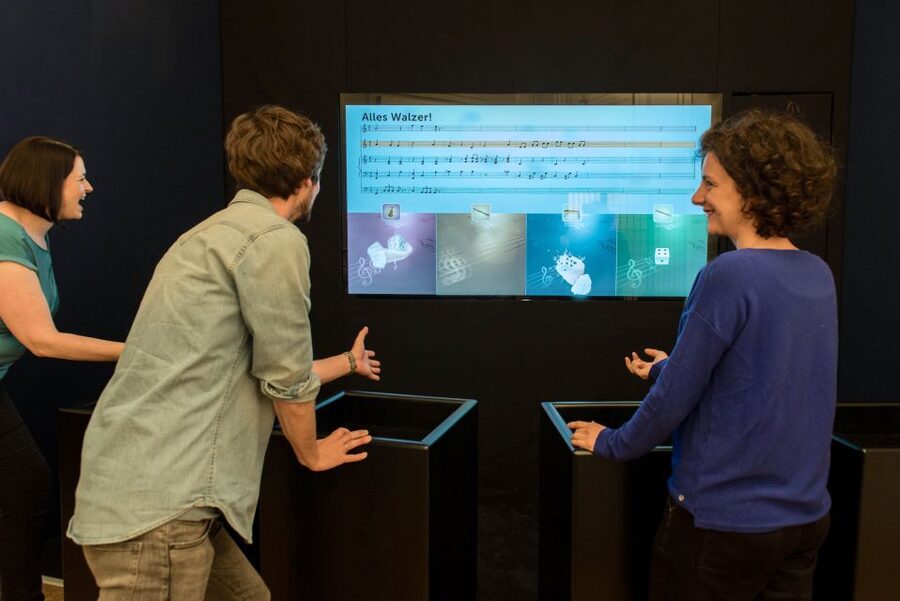
The dice-made waltz is a small, memorable exercise in chance and composition. You throw the dice and use the result to create a waltz, an accessible way to see how musical choices can be arranged into a finished form. You do not need to know notation to take part.
Namadeus offers another personal twist: the game turns your name into a Mozart-style composition. Both activities are playful rather than formal lessons, which is exactly their value. They give you something to do with the ideas you have encountered elsewhere in the museum, and they help make music feel less remote.
These stations can be popular with families, so be prepared to take turns if other people are waiting. There is no need to approach them as serious composing exercises. The pleasure is in trying the idea and hearing what comes out.
Plan for a few hours, not a quick peek
Admission is listed at $22 per person and is valid for one day from first activation. That gives you flexibility to move through the museum at your own pace, but it does not mean the visit itself takes a full day. A few hours is a sensible allowance if you want time for the history displays and the hands-on activities; visitors who stop to explore everything can spend longer.
For the price, you are getting more than a set of composer exhibits. The Philharmonic material, the interactive conductor experience, the sound science and the creative games serve different interests, which helps make the ticket worthwhile for a mixed-age group. The value depends partly on how actively you take part. If you race through the rooms, you will miss much of what makes this museum distinct.
Admission includes a smartphone app guide in eight languages, a children’s app in two languages, a museum map and coat check. Bring your own headphones to use the app. Food and drinks are not included, so plan to take a break outside the museum if you need refreshments.
The museum is wheelchair accessible, with step-free access at the main and side entrances, automatic sliding doors and accessible elevators. Wheelchair-accessible toilets are in the inner courtyard and on the top floor. Admission is free for a person accompanying a visitor who is visually impaired or uses a wheelchair; guide dogs are allowed. Children under three also enter free.
You can cancel up to 24 hours in advance for a full refund, and the reserve-now, pay-later option lets you hold a place without paying immediately. Those terms are useful if your Vienna plans are still shifting, but the more important preparation is simple: bring headphones and leave enough time to explore.
Who will get the most from Haus der Musik?
This is an easy recommendation for families. The exhibits give children things to test and make, while adults can spend more time with the composers, orchestra history and science of sound. The museum is large enough to hold attention across ages, though you may want to agree on a few must-see stops if your group has different energy levels.
Music lovers will find a broad overview of Vienna’s major composers and the Philharmonic’s story. You do not need to be a classical expert, though. The sound experiments and games make the visit worthwhile even if you usually choose another soundtrack.
It also suits visitors looking for an indoor cultural activity that is more active than a conventional museum. The balance is not perfect for everyone: a person hoping for a quiet, object-focused exhibition may find the interactive elements distracting, while a visitor interested only in games may skim past the history that gives the place its substance.
Should you book it?
Book Haus der Musik if you want a flexible museum visit that joins Vienna’s composer heritage to hands-on sound and music activities. It is particularly good for families, curious non-musicians and anyone who wants to try conducting an orchestra rather than only read about one.
Skip it if you have very little time and only want a quick look at one composer, or if interactive exhibits are not your thing. For $22, the range is strong, but you will get more from the ticket if you can give the displays a few hours and arrive ready to experiment.
FAQ
Where is Haus der Musik?
It is at Seilerstätte 30, 1010 Vienna, in the heart of Vienna.
How much does admission cost?
The listed price is $22 per person. Children under the age of three enter free.
How long is the ticket valid?
The ticket is valid for one day from its first activation. The time you spend inside depends on how much of the museum you want to explore.
What is included with admission?
Admission includes access to the museum, a map, coat check and a smartphone app guide in eight languages. A children’s app is available in two languages.
Should I bring anything?
Bring headphones to use the smartphone guide. Food and drinks are not included.
Is the museum wheelchair accessible?
Yes. There is step-free access at the main and side entrances, automatic sliding doors and wheelchair-accessible elevators. Accessible toilets are in the inner courtyard and on the top floor.
Can I bring a guide dog?
Yes. Guide dogs are permitted. Admission is free for a person accompanying a visitor who is visually impaired or uses a wheelchair.
Is the Namadeus certificate included?
No. The Namadeus game lets you hear your name as a Mozart-style composition, but the certificate is not included in admission.
Can I cancel or pay later?
You can cancel up to 24 hours in advance for a full refund. A reserve-now, pay-later option is also available.
Newest tours in Vienna
- Vienna: ‘Armenia In The Heart Of Austria’ Tour★ 5.0 · 6 reviews
- Vienna: Mozart Private Guided Tour★ 5.0 · 4 reviews
- Vienna: Klimt Villa (Gustav Klimt Atelier & Museum) Ticket★ 4.7 · 50 reviews
- Vienna: Kunsthistorisches Museum Guided Tour incl. admission★ 4.9 · 32 reviews
- Vienna: Luxury Vintage Fashion Walking Tour★ 3.4 · 8 reviews
- Vienna: Johann Strauss – Immersive Audiovisual Experience Ticket★ 4.8 · 60 reviews
- Vienna: Kingdom of Railways Museum Entry Ticket★ 3.6 · 50 reviews
- Vienna: KuK Perfumery Filz – Viennese Perfume Tasting★ 4.3 · 23 reviews
Vienna Tours, compared.
Vivaldi’s Four Seasons Concert in Karlskirche
Read our review →
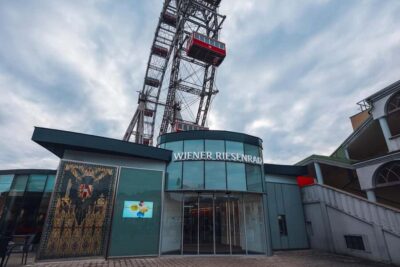
Skip-the-cashier-desk-line Giant Ferris Wheel Ride
Read our review →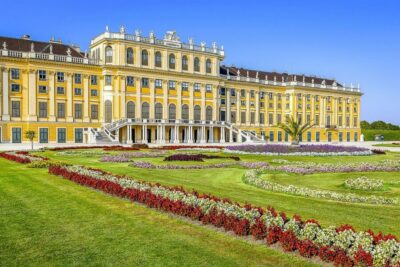
Schönbrunn Palace & Gardens Skip-the-Line Tour
Read our review →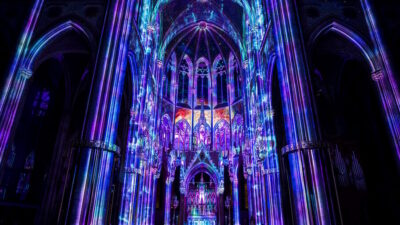
Light of Creation Votive Church Immersive Light Show
Read our review →

Classical Concert in the World-Famous Musikverein
Read our review →