
Reviewed · VIENNA MUSEUM TICKETS
Admission Pass to The Roman Quarter and the Museum Carnuntinum
Carnuntum makes Roman daily life easier to picture than a line of foundations ever could. In the reconstructed quarter, you can step inside furnished homes and a working bathhouse, then visit a museum that puts objects from the ancient city in context.
I like the contrast between walk-in reconstructions and the original finds at the Carnuntinum Museum. I also like that the quarter includes gardens, a playground, and open grounds, giving you room to pause instead of hurrying from exhibit to exhibit.
The main thing to plan for is the distance between the two sites. The visit takes about three hours in total, but travel between locations may add time; a weekend shuttle has operated to help with that. Guided tours are not included in the pass.
What Makes This Visit Worth Your Time
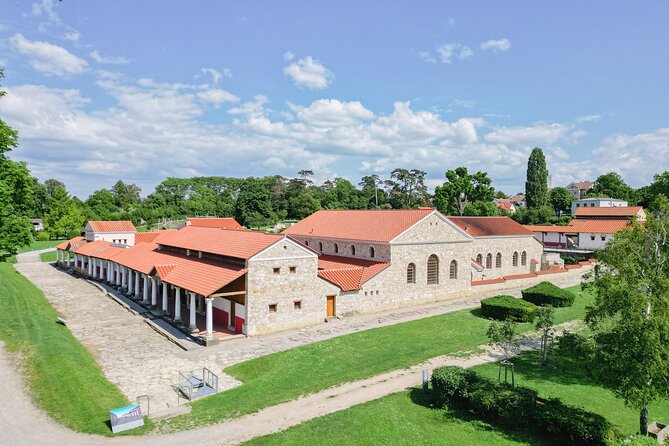
- Four furnished Roman houses let you see domestic spaces, not just foundations.
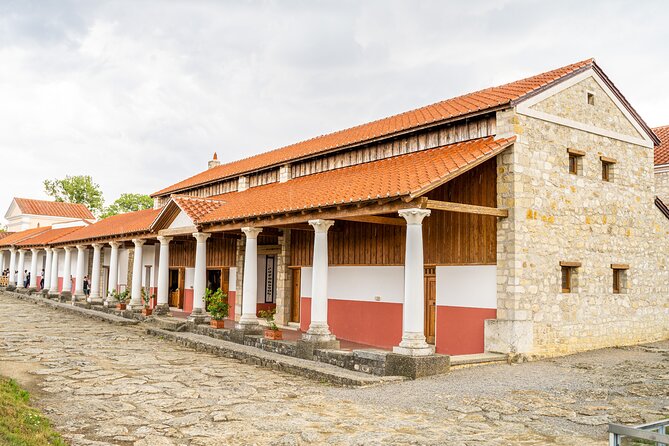
- The Roman Therme is a fully functional bathhouse, with water that splashes in its thermal pool.
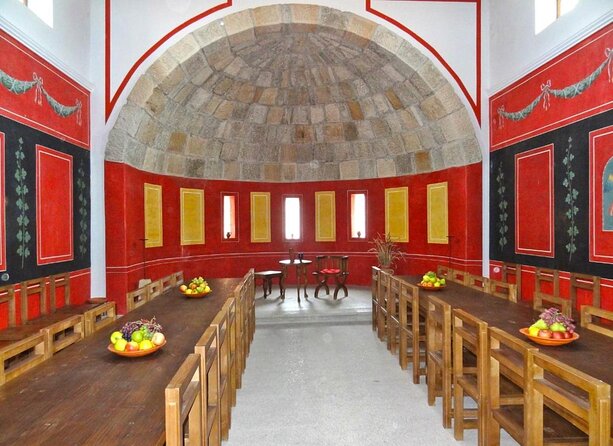
- The villa urbana has murals, while the House of Lucius gives you a garden to explore.
- The Carnuntinum Museum displays finds from the city’s long Roman past in an exhibition about Carnuntum and the Danube frontier.
- A restaurant, playground, trees, and meadows make the Roman Quarter more comfortable for a longer visit, especially with children.
- The $16.21 pass covers admission and taxes for both places, but guided tours are extra.
Walk Through a Roman City, Not Just Its Ruins
Carnuntum sits in Lower Austria, near Vienna, and its appeal is unusually direct: you can enter reconstructed Roman buildings and look around rooms furnished to suggest how people lived. Instead of relying only on signs and imagination, you get a feel for a bathhouse, a city home, and the different spaces people used in daily life.
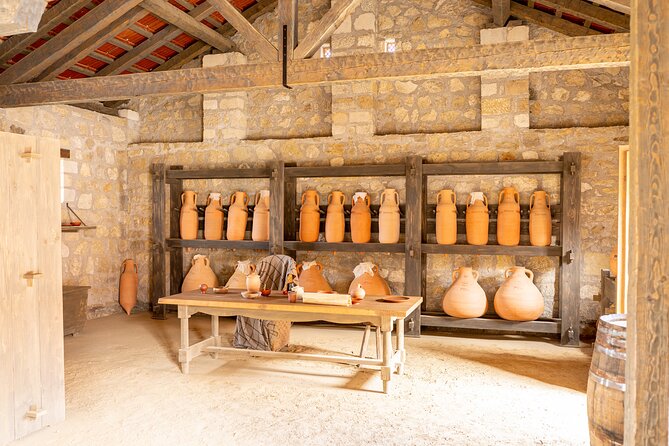
That approach is the visit’s greatest strength. The reconstructions have been praised for their decoration, furnishings, and objects, and the care taken with the interiors helps make the quarter feel more than a collection of empty shells. You can study details at your own pace, rather than viewing everything from behind a barrier.
There is a tradeoff. Reconstructed buildings help you picture Roman life, but they are not the same thing as walking through untouched ancient rooms. If you want original archaeological finds, the museum is essential; if you want to see how a Roman home might have worked, the quarter is the main event.
More museum visits in Vienna:
- Vienna: Skip-the-Line Sisi Museum, Hofburg and Gardens Tour
★ 4.8 · 5,918 reviews - Vienna Kunsthistorisches Museum Day Admission Ticket
★ 4.6 · 3,690 reviews - Tickets for the Albertina Exhibitions
★ 4.7 · 2,126 reviews
The Roman Quarter: Four Houses, Many Small Details
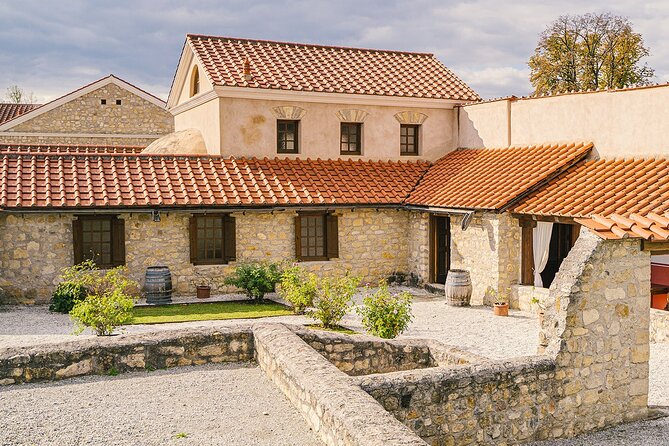
Allow about 1 hour and 20 minutes for the Roman Quarter, though you may want longer if you enjoy looking closely. The site includes four fully functional houses, a visitor center, the Forum Culinarium restaurant, a children’s playground, and a broad outdoor area with trees and meadows.
Start by treating the buildings as places to explore, not a checklist to race through. The named houses each offer a different angle on Roman life: the Roman Therme, a bathhouse; the villa urbana, a city palace; the house of an oil merchant; and the House of Lucius, described as a bourgeois home. Seeing them together gives you a useful sense of how domestic spaces could vary.
The bathhouse is a particularly good stop because it is functional, with water moving in the thermal bath. That detail gives the rooms a practical purpose. You are not just looking at a plan of where people bathed; you can see the setting and imagine the routine.
At the villa urbana, look for the murals. The painted walls are among the details that make the reconstruction memorable, and they help you picture a home as a decorated living space rather than a bare architectural outline. The House of Lucius has a garden, a quieter counterpoint to the bathhouse and palace.
The quarter’s scale and outdoor setting are part of its appeal, but they also affect how you should plan. The area is large, and you may spend more time walking than you expect. Wear shoes suited to a site with houses, paths, and open grounds, and leave time to sit or pause rather than trying to squeeze every stop into a strict schedule.
For families, the playground is a useful feature, not just an extra line on a list. It gives children a chance to reset between historical stops, while the open space makes the visit less confining than a museum-only outing. The restaurant can also make the quarter a more comfortable place to linger, though the pass price does not include meals.
The Carnuntinum Museum: Objects Behind the Reconstruction
Set aside about one hour for the Carnuntinum Museum. It holds finds connected with 2,000 years of Roman history in Carnuntum, and its current exhibition is called Weltstadt am Donaulimes, or Metropolis at the Danube Limes. The exhibition presents the city’s history, its inhabitants, and its place within the UNESCO World Heritage Site near Vienna.
The museum works best as a partner to the reconstructed quarter. The houses give you an idea of rooms and routines; objects in the museum help connect that picture to material evidence from the ancient city. If you visit only the reconstructions, you miss the finds. If you visit only the museum, you lose the unusual chance to walk through furnished Roman spaces.
The displays have been described as theatrical as well as informative. That can make the museum engaging, but the style may not suit everyone. If you prefer quiet, object-by-object interpretation, allow yourself time to read and look closely; if you enjoy a more presented, designed experience, the exhibition may be part of the fun.
The museum is also where the broader story comes into view. Carnuntum was not simply a cluster of homes: its past is linked to Roman life along the Danube frontier. The exhibition’s focus on residents and the wider site gives the visit more context than the houses alone can provide.
Timing, Distances, and the Three-Hour Plan
The advertised visit is about three hours, with roughly 1 hour 20 minutes in the Roman Quarter and one hour in the museum. Those stated visit times total less than three hours, leaving some room for transitions, orientation, and short pauses. Still, do not assume that the sites are side by side: the distance between them is a practical consideration.
A weekend shuttle has been set up to help visitors move between locations during the season described. Check its current schedule before you set out, since the shuttle is not listed as part of the admission pass and the information provided does not give exact departure times. Public transportation is available nearby, but the details of a particular route are not specified.
The sites’ published opening period is April 23 through November 15, 2025, daily from 9 a.m. to 5 p.m. Those dates are season-specific, so check current opening information before planning a visit outside that period or in a later year.
A summer recreation festival may change the feel of the day. The event can draw large crowds and includes theatrical scenes around an emperor figure. That may add energy for some visitors, while others may prefer a quieter visit; if atmosphere matters to you, find out whether an event is scheduled for your date.
Same city, a different kind of day:
- Vienna: Vivaldi’s Four Seasons Concert in Karlskirche
★ 4.7 · 14,951 reviews - Vienna: Spanish Riding School Training
★ 3.9 · 9,281 reviews - Vienna: Skip-the-cashier-desk-line Giant Ferris Wheel Ride
★ 4.5 · 7,859 reviews - Vienna: Schönbrunn Palace & Gardens Skip-the-Line Tour
★ 4.7 · 7,739 reviews
What $16.21 Buys You
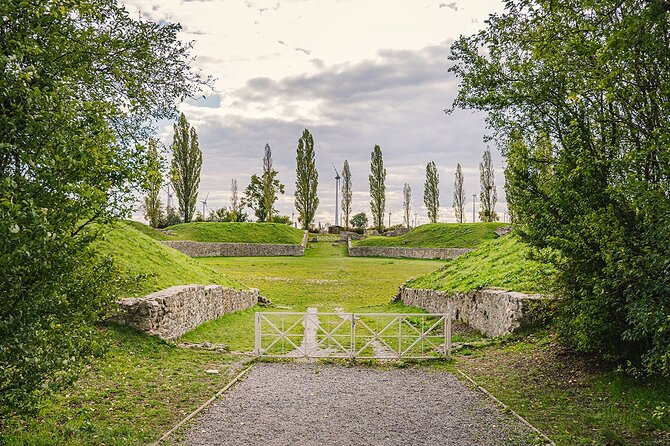
At $16.21 per person, the pass covers admission to both the Roman Quarter and the Carnuntinum Museum, with taxes included. The value comes from having two complementary sites in one visit: reconstructed homes and a working bathhouse outdoors, followed by museum displays of archaeological finds and the city’s story.
The price does not include guided tours. That matters if you want a guide to connect the architecture and objects for you, or if you prefer a structured visit. You can still explore independently, but the information provided does not establish what guided options are available on your chosen date, so check directly before relying on one.
For a self-guided visit, the pass looks like fair value if you plan to see both locations and give them time. The quarter alone may suit you if you are most interested in rooms and reconstructions, but the museum adds context and makes the admission more worthwhile for anyone curious about the finds.
The experience has a 4.3 out of 5 rating from six ratings, a small sample that offers only a rough signal. The strongest points are consistent with the site itself: detailed reconstructions, attractive presentation, clean facilities, and a sense that Roman life is easier to picture here. One low rating objects to a summer festival’s theatrical tone, which is useful to know if you dislike staged historical events.
Who Will Get the Most From Carnuntum
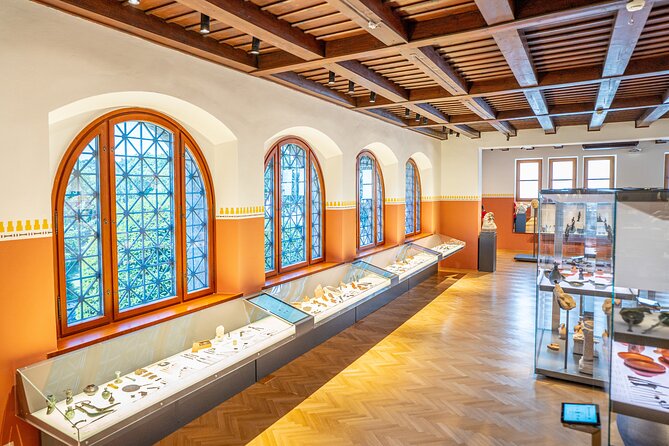
I would recommend Carnuntum to anyone with an interest in Roman domestic life, especially if you have already visited sites where the main experience is looking at foundations. Here, you can move through reconstructed rooms and compare them with objects in a museum. That combination makes the history easier to grasp without requiring specialist knowledge.
Families may appreciate the open grounds and playground, along with the variety of spaces to explore. The visit is not just a sequence of indoor displays, and children have room to move. Still, the total time and the distance between locations mean you should build in breaks and avoid an overly tight schedule.
It also suits visitors who want an outing beyond central Vienna. The location is in Lower Austria, and public transportation is nearby, but you should plan the journey and the transfer between sites rather than assuming the pass handles transport. Most people can participate, and service animals are allowed.
You may be less keen on the experience if you want a guided tour included, have little interest in reconstructions, or need a very short stop. The visit works best when you can give both sites their due. The 4.3 rating is encouraging, but with just six ratings, your own interests are a better guide than the score.
Should You Book This Pass?
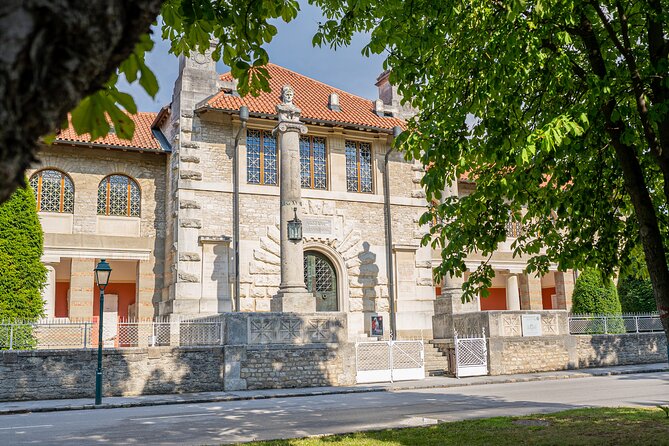
Book it if you want to see Roman life from two angles: reconstructed houses you can walk through and museum finds that give the city historical context. The bathhouse, murals, furnished interiors, and House of Lucius’s garden are the details most likely to reward a slow visit.
Before booking, check the opening dates for your travel year, confirm how you will get between the locations, and decide whether a summer festival suits your taste. At $16.21, it is a sensible choice for a three-hour history outing, particularly if you will visit both sites. If you want a guide, remember that guided tours are not included.
FAQ
How long should I allow for the visit?
Plan for about three hours. The Roman Quarter is estimated at 1 hour 20 minutes and the museum at one hour, with additional time useful for transitions and pauses.
What does the $16.21 pass include?
It covers admission to the Roman Quarter and the Carnuntinum Museum, along with all fees and taxes.
Are guided tours included?
No. Guided tours are not included in the pass.
When are the sites open?
The published season runs from April 23 to November 15, 2025, with daily hours of 9 a.m. to 5 p.m. Check current information before visiting in another season or year.
Is there a shuttle between the sites?
A shuttle bus has operated on weekends to help with the distance between locations. Exact times are not provided, so check the current schedule before your visit.
Can I bring a service animal?
Yes. Service animals are allowed.
Can I cancel for a refund?
Yes, if you cancel at least 24 hours before the experience’s start time. Cancellations made less than 24 hours beforehand are not refundable.
Newest tours in Vienna
- Vienna: ‘Armenia In The Heart Of Austria’ Tour★ 5.0 · 6 reviews
- Vienna: Mozart Private Guided Tour★ 5.0 · 4 reviews
- Vienna: Klimt Villa (Gustav Klimt Atelier & Museum) Ticket★ 4.7 · 50 reviews
- Vienna: Kunsthistorisches Museum Guided Tour incl. admission★ 4.9 · 32 reviews
- Vienna: Luxury Vintage Fashion Walking Tour★ 3.4 · 8 reviews
- Vienna: Johann Strauss – Immersive Audiovisual Experience Ticket★ 4.8 · 60 reviews
- Vienna: Kingdom of Railways Museum Entry Ticket★ 3.6 · 50 reviews
- Vienna: KuK Perfumery Filz – Viennese Perfume Tasting★ 4.3 · 23 reviews
Vienna Museum Tickets, compared.

Skip-the-Line Sisi Museum, Hofburg and Gardens Tour
Read our review →
Vienna Kunsthistorisches Museum Day Admission Ticket
Read our review →

Chocolate Workshop in Chocolate Museum w/ Tasting
Read our review →

St. Stephen’s Cathedral & Dom Museum Wien Tickets
Read our review →

Browse the lists this tour appears in